
What Is California Sober? The Meaning, Risks, and Questions to Ask
Oct 21, 2026
What if the label “sober” doesn’t tell you whether a recovery approach is right for you? If you’ve searched “what is California sober,” you’ve probably noticed that people use the term in different ways. It often means avoiding alcohol and some other drugs while continuing to use cannabis, and sometimes psychedelics. But there’s no official clinical definition, so the label alone can’t tell you whether a choice is safe or sustainable.
If you’re wondering whether replacing one substance with another is helping, that’s a fair question, not a reason to judge yourself. Your goals, your history, and the way substances affect your life all matter. What feels manageable for someone who’s sober-curious may carry different risks for someone with a substance use disorder.
This article explains common meanings of California sober, explores potential risks without shaming you, and offers questions to help you reflect on your own patterns. You’ll also learn when it may be time to seek qualified support rather than relying on a label to define your recovery. You deserve clarity and support, wherever you’re starting from.
Key Takeaways
- Learn what is California sober commonly understood to mean, and why people may use the label differently.
- Compare everyday ideas of sobriety, including avoiding alcohol and abstaining from all non-prescribed intoxicating substances.
- Look past the label to notice whether substance use is affecting your wellbeing, responsibilities, or goals.
- Use reflection questions to clarify what you want, spot patterns, and consider a next step without treating it like a pass-or-fail test.
- Explore support that fits your needs, and learn when a qualified healthcare professional may be important.
What Does California Sober Mean? Start With the Common Definition
If you’re asking what is California sober, the common answer is avoiding alcohol while continuing to use cannabis or another substance. People use the phrase differently, though, and there’s no standardized definition that settles every conversation.
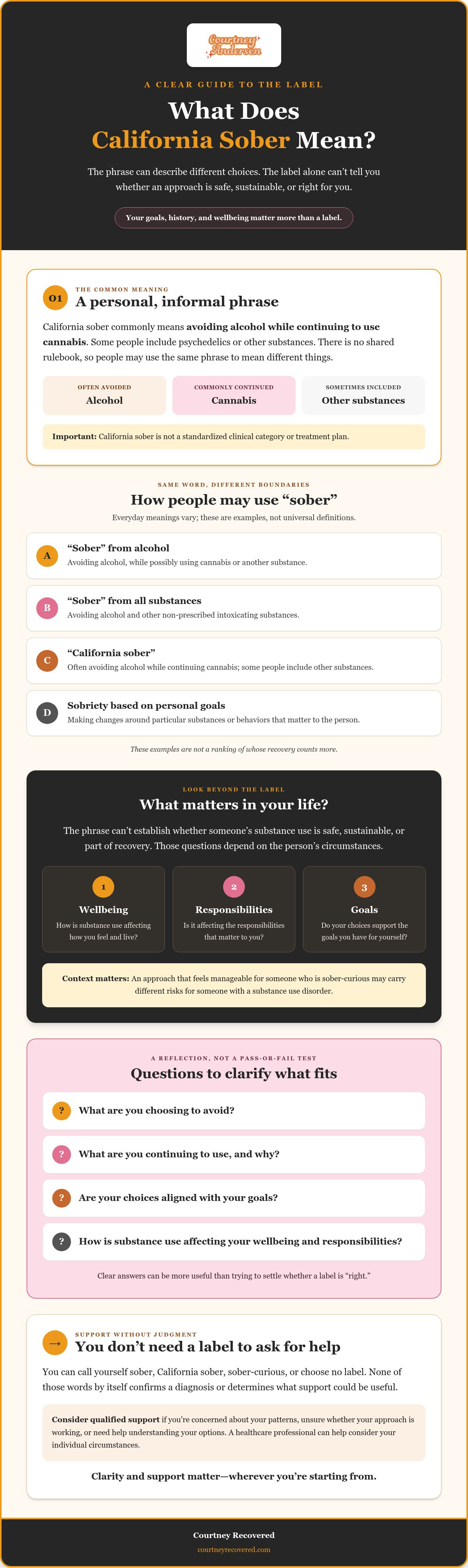
California sober is an informal, personal label for avoiding some substances, often alcohol, while continuing to use cannabis or another substance. The exact meaning depends on the person.
That flexibility helps the term catch on, and it also makes it confusing. One person may use it to describe a change they feel good about; another may mean something quite different. The label alone doesn’t establish whether someone’s substance use is safe, whether they meet a clinical definition of recovery, or whether they have a substance use disorder. Those questions depend on a person’s circumstances, not a catchy phrase.
Which substances do people usually mean?
Cannabis is most commonly associated with California sober. Some people use the phrase for a lifestyle that avoids alcohol but includes cannabis; others may include psychedelics or other substances. There’s no shared rulebook, so don’t assume everyone using the label has made the same choices or set the same boundaries. If the distinction matters, ask what the person means rather than guessing.
Is California sober an official recovery term?
No. It’s informal language, not a standardized clinical category or treatment plan. A California sober entry can offer a quick sense of the phrase, but a dictionary definition can’t assess an individual’s health or recovery needs.
Personal identity words and professional assessments serve different purposes. You might describe yourself as sober, California sober, sober-curious, or choose no label at all. None of those words, by themselves, confirm a diagnosis or determine what kind of support could be useful. You don’t need to win an argument about whether you’re “really sober” before taking your concerns seriously.
Try being specific with yourself: What are you choosing to avoid? What are you still using, and why? Clear answers can be more useful than the label, especially if you’re trying to understand whether your current approach aligns with your goals. Next, consider what your choices are actually doing in your life.
California Sober vs. Sober: Why the Label Depends on Your Meaning
People use “sober” to describe different choices. One person may mean they don’t drink alcohol; another may mean they avoid all non-prescribed intoxicating substances. Neither phrase tells the whole story. If you’re asking what is California sober compared with being sober, the answer depends on how each person defines those words and what their recovery goals are.
| Everyday use of the term | What someone might mean |
|---|---|
| “Sober” from alcohol | Avoiding alcohol, while possibly using cannabis or another substance. |
| “Sober” from all substances | Avoiding alcohol and other non-prescribed intoxicating substances. |
| “California sober” | Often avoiding alcohol while continuing to use cannabis; some people include other substances. |
| Sobriety based on personal goals | Making changes around particular substances or behaviors that matter to the person. |
These are examples of everyday usage, not universal definitions or a ranking of whose recovery counts more. The same word can land differently in support groups and treatment settings. Some communities use “sobriety” to mean abstaining from all intoxicating substances; others may focus on alcohol or a person’s own recovery goals. If a term matters in a particular setting, ask how that group uses it.
What does sobriety mean to different people?
For one person, sobriety may mean no alcohol. For another, it may mean avoiding all non-prescribed intoxicating substances. Someone else may describe their recovery through the changes they’re working toward. These differences don’t make one person more deserving of respect. They do make it helpful to be clear about what you mean, especially when talking with a support group or health professional.
Does California sober mean someone is in recovery?
The phrase alone can’t establish whether a person is in recovery or whether their current approach is working. It also can’t diagnose a substance use disorder. A more useful starting point is to consider the person’s stated goals alongside their well-being and the consequences of their substance use. Are their choices supporting the life they want, or creating concerns they’d like help understanding?
A recovery label can describe part of someone’s story, but it can’t show their full goals, experiences, or needs. You don’t have to settle on the “right” word before asking for support. If reflection and accountability would help, you can explore non-clinical sobriety support. Coaching and community support aren’t a substitute for medical care or treatment.
Can California Sober Be Risky? Look Beyond the Label
Changing what you use doesn’t automatically resolve concerns about how substances are affecting you. Someone might stop drinking but find that cannabis use is becoming harder to manage, or that another substance is creating new problems. The label can’t show whether use is affecting health, safety, or day-to-day life.
Cannabis can affect attention, coordination, and reaction time, which may make activities like driving unsafe. The CDC also describes possible unwanted effects on mental and physical health. Effects vary, and cannabis isn’t a risk-free substitute or a proven treatment for alcohol use disorder. A personal preference may explain a choice, but it isn’t evidence that the choice is safe.
What signs suggest your current approach deserves a closer look?
Notice what’s happening without turning your observations into a self-diagnosis. For example, ask yourself:
- Do cravings or plans to use feel difficult to manage?
- Are you using more than you intend, or finding it hard to stick to limits you set?
- Is use affecting your relationships, work, mood, sleep, or everyday responsibilities?
- Does it seem to be pulling you away from your personal goals?
A “yes” doesn’t prove you have a disorder. It does give you a reason to pause and consider what support could help. If your use feels difficult to manage, a qualified healthcare professional can help you assess what’s going on without relying on a label.
When should someone seek medical guidance?
Talk with a qualified clinician about substance use, health conditions, or possible interactions with medications. This matters if you’re considering a change and aren’t sure how it could affect your health. In particular, alcohol withdrawal can be dangerous. If you drink heavily or may be physically dependent on alcohol, seek medical advice before stopping rather than trying to manage withdrawal alone.
If you have severe symptoms or immediate danger, call for urgent help. Contact local emergency services if someone is in immediate danger or experiencing severe symptoms such as a seizure, extreme confusion, or loss of consciousness. Don’t wait for a label to give you permission to ask for help.
If your question is what is California sober, keep the focus on more than the phrase: what you’re using, what you’re experiencing, and whether your choices support your wellbeing. Those details can help you decide what kind of next step makes sense.
How to Think Through Whether California Sober Fits Your Goals
You don’t have to decide whether California Sober is the “right” label before getting curious about your own experience. Start with what you want to change, then check whether your current choices are helping. This is reflection, not a test that can certify whether you’re sober or in recovery.
Questions to ask yourself without judgment
Give yourself room to answer honestly, without turning one difficult night or one easy week into the whole story. Consider:
- What do I hope will change? Maybe you want to stop drinking, feel more present, improve your health, or change your relationship with another substance.
- Does my use feel intentional and manageable? Notice whether you can follow the limits you set, and whether you’re using in ways that fit your goals.
- What happens over time? Look at effects on your mood, sleep, relationships, work, and daily responsibilities, not just how you feel in the moment.
- What support would make this clearer? You might want trusted company, a conversation with a clinician, or practical accountability.
A simple log can help you notice patterns. Record what you used, what was happening around it, and how you felt afterward. Keep it nonjudgmental. The point isn’t to score yourself, but to see whether your choices line up with what matters to you. If you’re questioning your drinking pattern, this gray area drinking guide can offer another way to reflect.
What support can help you get clearer?
For questions about health, medication, or substance-related concerns, a qualified clinician can help you understand your options. Peer support and sobriety coaching are different: they can offer connection, reflection, or accountability, but they aren’t medical care or treatment. If you’re looking for connection with others, explore online sober community support.
You don’t have to figure it all out alone, and you don’t need to wait for things to feel unmanageable. If personalized, non-clinical support sounds useful, explore 1:1 sobriety coaching as one option alongside any professional care you may need.
You Don't Need a Label to Get Support for Your Next Step
You can ask for support before you’ve chosen a word for your experience, and before anything reaches a crisis point. Maybe you’re unsure whether your current approach feels sustainable, or you simply want to talk through a change. Either way, you don’t need to prove that you’re “sober enough” to take your concern seriously.
What non-clinical sobriety coaching can offer
Personalized sobriety coaching can provide space to reflect on your goals, notice patterns, and build accountability as you shape a sober lifestyle. A peer community can offer connection with people who understand the ups and downs of making changes. These are non-clinical forms of support, not medical advice, diagnosis, detox, or inpatient rehabilitation.
If you have questions about your health, medication, or withdrawal, talk with a qualified healthcare professional. Coaching and peer support don’t replace medical or licensed clinical care, and alcohol withdrawal can be dangerous for someone who is physically dependent. Get medical guidance before stopping heavy or dependent alcohol use.
A gentle next step, whatever you call it
Keep it small. Write down one concern, goal, or question you’d like to bring to a trusted support person. For example: “I want to understand why I keep drinking more than I planned,” or “I’m not sure whether my choices match the changes I want.” Putting it into words can make the next conversation feel less overwhelming.
If you’d like a place to begin exploring practical ideas, browse these sobriety tools and resources. If personalized reflection and accountability sound useful, you can also explore 1:1 sobriety coaching as a non-clinical support option.
So, what is California sober? It’s a label people use in different ways, but it doesn’t have to decide your next move. Curiosity and honesty about what’s working for you matter more than finding the perfect label. Start with the question you’re ready to ask, and take it one step at a time.
Choose Your Next Step With Clarity
So, what is California sober? It’s a flexible, informal label, not a guarantee that an approach is safe, sustainable, or right for you. The meaning can vary from person to person, so look beyond the word: get clear on your goals, notice how your choices affect daily life, and seek qualified medical guidance when health concerns come up.
You don’t need to settle the question of whether you’re “really sober” before asking for support. A small, honest next step could be writing down what you want to change, then talking it through with someone you trust. If personalized, non-clinical support feels useful, Courtney Recovered offers 1:1 sobriety coaching, the Sobriety Circle community, and practical recovery resources. These options can support reflection and connection, but they don’t replace medical care or treatment.
Explore Courtney Andersen’s 1:1 sobriety coaching and community support if you’d like personalized, non-clinical support for your next step. You’re allowed to figure it out as you go. Curiosity, honesty, and support can take you further than finding the perfect label.
Frequently Asked Questions
What is California sober?
California sober commonly describes avoiding alcohol while continuing to use cannabis, though some people use the phrase more broadly. There’s no single agreed definition, so ask what someone means rather than assuming. The label describes a personal approach, not whether it’s safe or beneficial for that person, and it doesn’t confirm a diagnosis or a particular recovery status. The person’s goals, health, and experience matter more than the phrase alone.
Is California sober considered sober?
It depends on how someone defines sobriety and the context in which they’re using the word. Some people mean alcohol-free; others mean avoiding all intoxicating substances. Recovery communities and professionals may use different language, too. Rather than debating whether a label “counts,” clarify what the person hopes to change and consider whether their substance use aligns with their goals and supports their wellbeing.
Can you be California sober and still be in recovery?
People describe their experiences in different ways, and the phrase alone can’t confirm or rule out recovery. What matters for an individual is whether their approach aligns with their goals and supports their wellbeing. If substance use feels hard to control or is causing harm, a qualified clinician can help assess the situation and discuss options. You don’t need to settle on a label before asking for help.
Is California sober safe?
There’s no one-size-fits-all answer. Risk depends on the substance, how it’s used, a person’s health, and other circumstances. Avoid assuming cannabis or another substance is harmless simply because you’re avoiding alcohol. If you have concerns about health effects, medication interactions, impairment, or dependence, speak with a qualified clinician who can consider your individual situation. A label isn’t a safety assessment.
Can cannabis help someone stop drinking?
Don’t assume cannabis is a proven or appropriate treatment for alcohol use disorder. Evidence and individual circumstances matter, and replacing one substance with another can bring different risks, including unwanted effects or difficulty managing use. A healthcare professional can discuss evidence-based options and personal health concerns. If you’re thinking about stopping alcohol and withdrawal may be a risk, seek medical advice before making changes.
Should I stop drinking on my own if I want to be California sober?
If you drink heavily or may be physically dependent on alcohol, don’t assume it’s safe to stop without medical guidance. Alcohol withdrawal can be dangerous, so contact a healthcare professional to discuss a safe plan before making a change. Seek emergency help for severe symptoms or immediate danger. Support from a coach or community may offer connection, but it doesn’t replace medical care.
What should I do if California sober is not working for me?
Start by noticing what feels difficult and whether your substance use matches your goals. You don’t have to prove anything or settle on a label before asking for help. A qualified clinician can assess health and substance-related concerns, while peer community or non-clinical coaching may offer additional reflection and accountability. If you feel unsafe or have urgent symptoms, seek emergency help.
I want you to feel sober NOT boring!
Kickstart your sobriety with my free 2-day video workshop series to master your sober mindset and have FUN in your sobriety journey!


