
Evening Routine to Replace Drinking: Build a Sober Night That Feels Like Yours
Oct 23, 2026
What if the best way to get through an evening craving isn’t to find a perfect substitute drink, but to figure out what you need in that moment? If your usual drink marked the end of the day, eased stress, or filled a quiet stretch, it makes sense that evenings can feel strange without it. An evening routine to replace drinking works better when it replaces the familiar role alcohol played, not just what’s in your glass.
Generic hobby lists can be hard to use when an urge hits at the same time or after the same daily trigger. You need a plan that fits your real life, including nights when you’re tired, restless, or not in the mood for a big change. Small, repeatable choices count.
Here, you’ll learn how to build a flexible wind-down routine, respond to cravings without relying on willpower alone, and adjust when an evening doesn’t go to plan. We’ll look at ways to make the new routine feel rewarding rather than like a punishment, and how peer or personalized support can help if you’re feeling stuck or isolated. Your sober night can feel like yours again, one evening at a time.
Key Takeaways
- Build an evening routine to replace drinking by meeting the needs alcohol used to fill, not just swapping one drink for another.
- Try a flexible sequence of transition, nourishment, a chosen activity, and wind-down, adjusting it to fit your real evenings.
- Choose alternatives based on what you need in the moment, whether that’s comfort, movement, creativity, connection, or quiet.
- When a craving shows up, name it, shift your surroundings, choose a source of support, and check in with yourself again.
- Review what’s working and seek peer, coaching, or medical support when a routine alone doesn’t feel like enough.
Why evenings can make drinking feel like the default
By the time the day winds down, you may already know which glass you’ll reach for or what you’ll pour after dinner. That familiar drink can become an automatic part of the evening, linked to comfort, routine, or a shift out of work mode. It doesn’t mean you’re weak or that you’ve failed. It means a familiar pattern has taken hold.
A replacement routine is a repeatable sequence that meets some of the needs drinking seemed to meet. It doesn’t have to copy the old ritual, and it won’t look the same for everyone. The goal is to notice what you’re looking for, then create other ways to respond. An evening routine to replace drinking starts with curiosity, not judgment.
What need does the evening drink seem to meet?
Pause and ask what you hoped alcohol would change. Were you looking for decompression after a demanding day, a reward for getting through it, distraction from uncomfortable feelings, a taste you enjoy, or a sense of connection? Your reason might shift from one night to the next, and you define your goals.
Try a quick journal prompt: What happened? What did I feel? What did I hope drinking would change? You’re collecting clues, not building a case against yourself.
Spot the cue before the craving takes over
Sometimes the urge arrives alongside a familiar cue: a certain time, walking through the kitchen, stress after work, loneliness in a quiet house, or sitting in the same spot where you usually drink. Repeated pairings can make a setting or activity feel like the natural next step. Stimulus control describes how surroundings can cue learned behaviors, which is one reason a small change in your evening setup may help interrupt autopilot.
Notice patterns without turning them into labels. Write down when the urge tends to show up and what was happening just beforehand. A cue or urge may point to a habit or a need, but it isn’t a diagnosis on its own.
An urge is information, not a diagnosis. A routine also isn’t a substitute for medical care. If you experience intense withdrawal or other physical symptoms when you stop or cut back, seek guidance from a healthcare professional rather than trying to manage them with a new evening plan alone.
How to build an evening routine that replaces drinking’s role
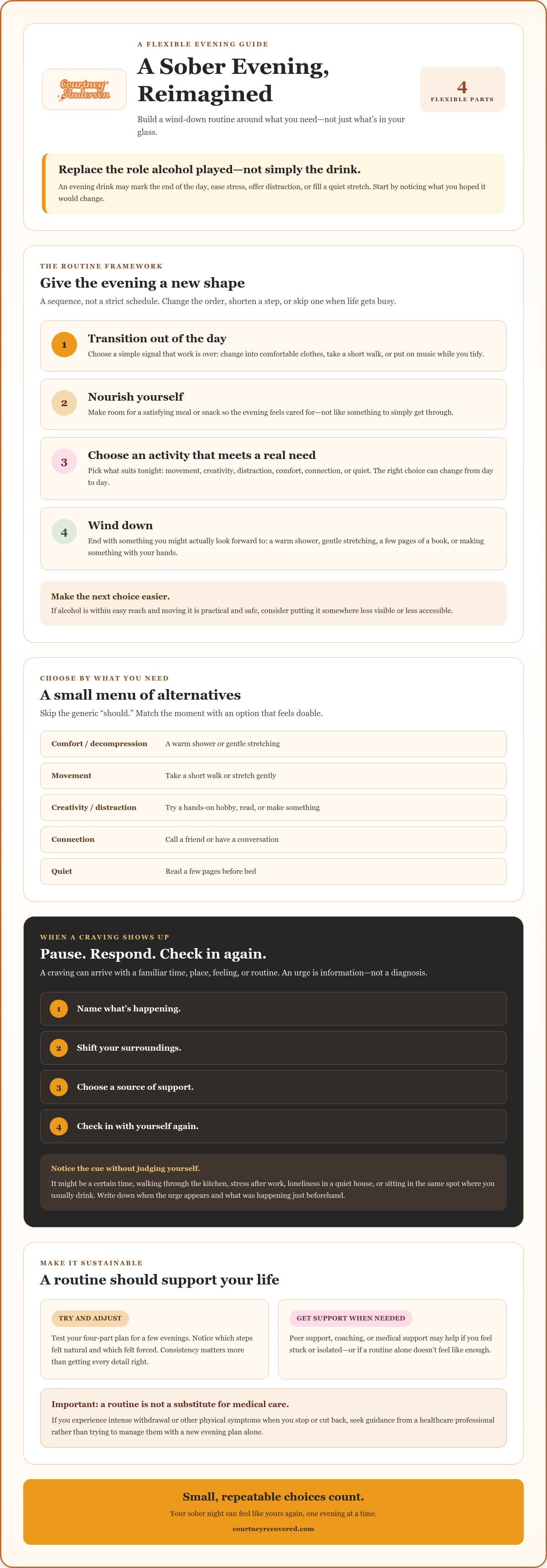
A routine doesn’t need to be elaborate to give your evening a new shape. Try four flexible parts: transition out of the day, nourish yourself, choose an activity that meets a real need, then wind down. Think of it as a sequence, not a strict schedule. You can change the order, shorten a step, or skip one when life gets busy.
Shift gears, fuel yourself, do something that matters, then let the day settle. That’s the framework. Consistency matters more than getting every detail right, so start with a version you can repeat. For example, you might change clothes after work, make dinner, spend some time on a hands-on hobby or call a friend, then read before bed. Use the timing that fits your responsibilities and energy.
Create a transition between work and personal time
Give yourself a simple signal that the workday is over. Change into comfortable clothes, take a short walk, or put on music while you tidy up. Choose one cue that fits your home, energy, and responsibilities. If alcohol is within easy reach and moving it is practical and safe, consider putting it somewhere less visible or less accessible. Make the next choice easier, not your evening more complicated.
Next, make room for nourishment. A satisfying meal or snack can make the evening feel cared for rather than like something to simply get through. Then pick an activity based on what you want from the night: stretching or a shower for decompression, reading or a creative hobby for distraction, or a conversation for connection. The right option may change from day to day.
Choose a wind-down activity that feels rewarding
Don’t assign yourself an activity just because it sounds like the “healthy” choice. Pick something you might actually look forward to: a warm shower, gentle stretching, a few pages of a book, or making something with your hands. If you want ideas for a fuller life beyond old drinking rituals, explore ideas for building a life after sobriety.
Try your four-part plan for a few evenings, then notice which steps felt natural and which felt forced. Your evening routine to replace drinking should support your life, not become another standard you can fail. If you’d like help tailoring routines and accountability to your situation, you can learn about 1:1 sobriety coaching.
Compare evening alternatives by what you need in the moment
The most useful alternative isn’t automatically the most popular one. Match the activity to what you’re looking for tonight, and consider the effort and setting it requires. Use this comparison to choose a starting point, not to grade yourself.
| Option | Need it may meet | Effort | Setting | Possible limitation |
|---|---|---|---|---|
| Sensory replacement, such as a favorite snack, tea, or sparkling water | Taste, comfort, or a familiar ritual | Low | Home or on the go | A drink ritual may feel too similar for some people |
| Gentle movement, like stretching or a walk | Decompression or a change of energy | Low to moderate | At home or somewhere accessible outdoors | May not suit low energy, mobility, weather, or safety needs |
| Creative activity, such as drawing, cooking, or a hands-on hobby | Distraction, focus, or a sense of accomplishment | Low to moderate | Usually at home | Getting started can feel like work when you’re tired |
| Connection, like texting someone you trust | Company or reassurance | Low to moderate | Anywhere with privacy | The person may not be available right away |
| Quiet rest, such as a shower, reading, or an engaging show | Calm or a break from demands | Low | Often at home | Quiet may leave you alone with difficult thoughts |
A nonalcoholic drink can preserve the satisfying glass-in-hand ritual if that feels supportive. For someone else, the taste, packaging, or pouring routine may bring alcohol to mind, so changing the cue altogether may feel better. Choose what fits your needs and goals. Don’t rely on intoxicating substances as a recovery strategy, and remember that no one beverage works for everyone.
If you want to relax, connect, or change the scene
For decompression, try a shower, gentle stretching, or a show that holds your attention. If loneliness is the bigger feeling, text someone you trust or consider a peer-support space. When home itself brings up strong cues, a safe change of scene, such as moving to another room or taking a walk in a familiar, accessible place, may help. Keep your comfort and safety in view.
If the first alternative doesn’t help
One activity can’t meet every need, and it doesn’t have to bring instant relief to be worth trying. Give a short stretch, a snack, or a quick call a little room, then check in: do you feel any different, or would another kind of support fit better? Switching strategies isn’t failure. For more options, explore sobriety tools and resources as you shape an evening routine that works for you.
What to do when an evening craving shows up
A craving can feel uncomfortable, loud, or closely tied to a specific moment. You don’t have to pretend it’s easy, and you don’t need to solve the whole night at once. Try this pause-and-plan sequence: name the urge, change your context, choose support, then reassess. It won’t guarantee the feeling disappears on a timetable. It gives you a next step while you decide what you need.
Make a small plan for the moment the urge hits
First, put words to what’s happening: “I’m stressed,” “I feel lonely,” or “I want a break.” Ask what would help right now. Then change one thing around you, such as moving to another room, stepping outside if it’s safe, or starting a simple task. If it feels safe and appropriate, put distance between yourself and alcohol while you contact someone you trust.
Keep a backup plan somewhere easy to find for nights when your usual routine isn’t available. It might include one alternate activity, a trusted person to contact, and a place you can go that feels safe. The plan doesn’t have to be perfect. It just needs to make the next helpful choice easier.
After you’ve tried a step, check in again: what are you feeling now, and what support would help next? You might stay with your plan, switch activities, or reach out to someone else. An evening routine to replace drinking can help structure your night, but a craving is not a test you have to pass alone.
Know when a routine is not enough
Alcohol withdrawal can be dangerous, and the risk varies from person to person. If physical dependence may be possible, talk with a qualified clinician before stopping or making a major change to your drinking. A new routine isn’t a safe substitute for medical guidance.
Seizures, hallucinations, or severe confusion require immediate medical attention. Seek urgent care or contact emergency services. For a non-diagnostic reflection on drinking patterns and when they may feel burdensome, read about gray area drinking and when a habit becomes a burden.
If you want personalized accountability as you build a plan for difficult evenings, explore 1:1 sobriety coaching options. Coaching can support routine-building, but it isn’t medical care and can’t replace a clinician’s guidance on withdrawal or health concerns.
Make your alcohol-free evenings easier to sustain with support
A routine is something you can adjust, not another rule you have to get perfectly right. Once a week, take a few minutes to ask: What helped? What felt forced? What needs changing? Maybe cooking felt grounding, but a planned workout was too much after a long day. Keep what worked, swap what didn’t, and let the plan evolve with you.
Build a routine that can flex with real life
Create a minimum version for low-energy nights and a fuller version for evenings with more time. Your minimum might be changing into comfortable clothes, eating something satisfying, and choosing one calming activity. Your fuller plan could include a walk, a meal, time with someone you care about, and a longer wind-down. Keep activity ideas and trusted support contacts easy to find. Adjusting the routine isn’t failing; it’s making it fit.
Choose support that matches what you need
Sometimes a written plan is enough to help you stay intentional. Other times, accountability or connection with people who understand can make evenings feel less isolating. Peer community and personalized coaching are different from medical care, and the right fit depends on what you’re looking for.
Courtney Recovered’s 1:1 sobriety coaching offers personalized guidance and accountability for people who want individual support with their goals. It isn’t diagnosis or medical treatment. The Sobriety Circle is a membership-based peer community and another option for connection, though comfort and fit vary from person to person. If you want individualized support, explore 1:1 sobriety coaching.
If you may be physically dependent on alcohol or have health concerns, talk with a qualified clinician about medical guidance. A routine, coaching, or peer community can’t replace that care. And if your current plan isn’t holding up, that’s a reason to look for more support, not to blame yourself.
Building an evening routine to replace drinking is a process of testing what supports you and making practical changes. For a next step, explore sobriety coaching and support and see what feels aligned with your needs.
Make tonight the start of a new rhythm
A satisfying sober evening doesn’t have to follow a perfect schedule. Build a flexible routine around what you need, whether that’s a little decompression, a rewarding activity, or connection with someone who gets it. When a craving shows up, pause, choose a next step, and reach for support if the moment feels bigger than your plan.
Your evening routine to replace drinking can evolve as you learn what works. Start small, notice what helps, and adjust without turning a tough night into a verdict on your progress. Remember, a routine can be one helpful tool, but it isn’t a substitute for medical guidance when you need it.
If personalized accountability, peer connection, or practical resources would make this next step feel less lonely, explore supportive sobriety coaching and community. Courtney Recovered offers 1:1 sobriety coaching, the Sobriety Circle peer community, and resources like the Sober Toolkit. You don’t have to figure out every evening at once. Keep building a night that feels more like yours.
Frequently Asked Questions
What can I do instead of drinking at night?
Choose an activity that meets the need you’d usually reach for alcohol to meet. For comfort, try a satisfying snack, a shower, or a favorite show. If you want connection, text someone you trust or join a peer-support space. If you need a change of pace, take a safe walk or work on a hands-on hobby. Test different options; there’s no single replacement that works for everyone.
How do I stop craving alcohol in the evening?
You may not be able to switch a craving off instantly, but you can plan how to respond to it. Name what you’re feeling, change your surroundings if it’s safe, and contact someone you trust. Then reassess what you need. Notice patterns in the time, place, or mood that accompany urges. If you may be physically dependent on alcohol, seek medical guidance before stopping or cutting back.
What is a good evening routine for someone trying to stop drinking?
A good routine is one you can adapt and repeat. Try creating a transition out of work or daily responsibilities, eating something nourishing, choosing an activity that feels rewarding, and making space to wind down. The order and timing can vary. An evening routine to replace drinking should fit your needs and energy, not become a rigid schedule or a substitute for medical care when you need it.
Can a nighttime routine help me drink less?
A nighttime routine may help you make more intentional choices by changing familiar cues and giving the evening a different structure. It can also help you identify what you’re seeking, such as decompression, distraction, or connection. But a routine doesn’t guarantee you’ll drink less, and it may not be enough on its own. If changing your drinking feels difficult, consider talking with a qualified clinician or seeking other appropriate support.
What should I do if I feel anxious or restless after not drinking?
Anxiety or restlessness can have different causes, so don’t assume a routine will address the issue. If you think you may be physically dependent on alcohol, contact a qualified clinician before stopping or cutting back, since withdrawal can be dangerous. Seek urgent medical attention for seizures, hallucinations, or severe confusion. If symptoms feel concerning, worsening, or hard to manage, reach out to a healthcare professional for guidance.
Are nonalcoholic drinks a good replacement for drinking?
They can help some people, especially if holding a special drink preserves a ritual they enjoy. For others, the taste, packaging, or familiar pouring routine may bring up unwanted associations, so a different activity or drink may feel better. Choose based on your own preferences and goals. Non-alcoholic drinks aren’t a universal solution, and they shouldn’t be treated as a substitute for medical support if you need it.
When should I ask for professional help to stop drinking?
Ask a healthcare professional for guidance if you’re concerned about your drinking, find it difficult to stop or cut back, or experience physical symptoms when you do. If physical dependence may be possible, get medical advice before stopping because withdrawal can be dangerous. Seizures, hallucinations, and severe confusion need immediate medical attention. Coaching and peer support, such as Courtney Recovered’s 1:1 Sobriety Coaching and Sobriety Circle, offer support but aren’t medical care.
I want you to feel sober NOT boring!
Kickstart your sobriety with my free 2-day video workshop series to master your sober mindset and have FUN in your sobriety journey!


