
Beyond the Rock Bottom: A Modern Approach to Sobriety in 2026
Oct 19, 2026
What if sobriety isn’t a punishment for hitting rock bottom, but a choice that helps you feel more like yourself? You don’t have to call yourself an alcoholic to question your drinking. Maybe you’re tired of another Day 1, rehearsing how to be “the sober one” at dinner, or dragging yourself through work after a night you can barely remember. A modern approach to sobriety starts with that honest feeling, not a label.
Functioning while hungover isn’t the same as thriving. Choosing an alcohol-free life doesn’t have to mean giving up fun, connection, or your social life. It can mean making room for clearer mornings, steadier energy, and new ways to enjoy yourself without alcohol calling the shots.
This article looks at sobriety as a personal choice, not a clinical punishment. You’ll find ways to reflect on your drinking, handle social pressure, and build routines that support the life you want. We’ll also explore how practical support and a community can make change feel less lonely.
Key Takeaways
- Think of a modern approach to sobriety as a proactive choice focused on what you want to gain, not only what you’re giving up.
- Notice when “functioning” while drinking may be taking more from your energy, time, or well-being than you want.
- Choose support that fits your needs, from personalized coaching to a community where you can share the experience.
- Build practical habits and use resources that support your alcohol-free life beyond the decision to stop drinking.
- Treat sobriety as a personal journey. You can take the next step with support instead of figuring it all out alone.
Redefining the Relationship: What is a Modern Approach to Sobriety?
Sobriety doesn’t have to begin with a crisis, a label, or a dramatic rock-bottom story. For many people, it starts with a quieter question: “Is alcohol adding something to my life, or am I just used to reaching for it?” A modern approach to sobriety treats that question as a reason to reflect and make a proactive choice about your well-being.
A basic definition of sobriety can center on not being intoxicated, but your personal experience can be about more than what you stop doing. Modern sobriety can be a lifestyle change that creates room for greater clarity, energy, and time. Those aren’t guaranteed outcomes. They’re possibilities to explore as you build a life that feels more like yours.
From Deprivation to Liberation
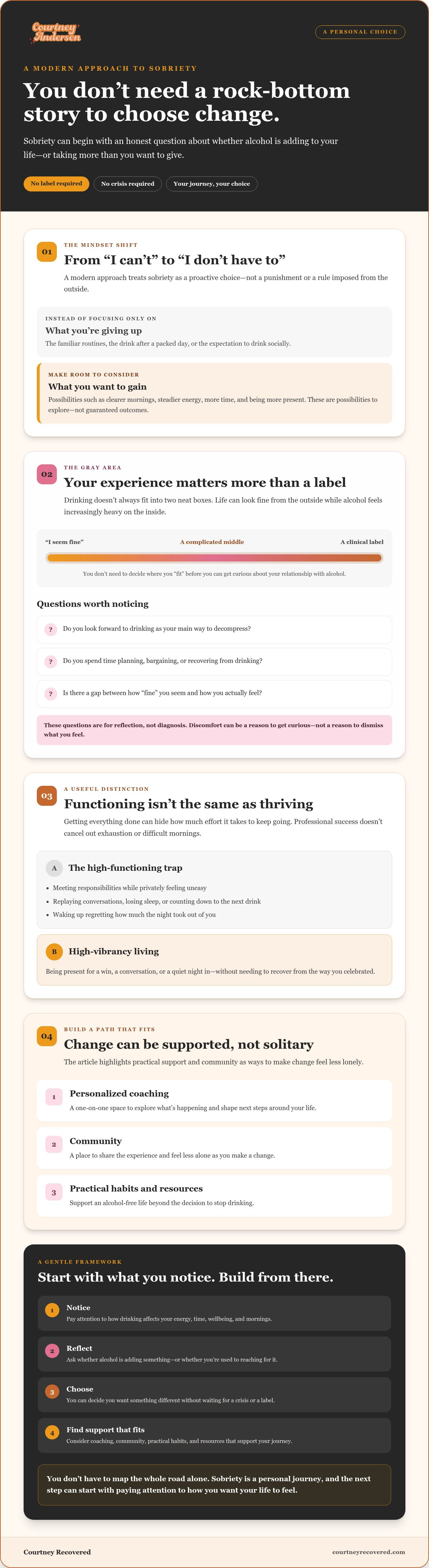
Here’s the mindset shift: “I can’t drink” can feel like a rule imposed from the outside, while “I don’t have to drink” makes room for choice. Instead, you decide what deserves your time and attention. That distinction can make early change feel more hopeful, especially when familiar routines or social plans feel strange at first.
In professional settings, clearer mornings and being more present may matter in everyday ways. You might show up for a meeting, follow through on plans, or spend an evening without calculating how tomorrow will feel. You don’t need a grand announcement. The point isn’t to make your life smaller. It’s to build a life you don’t need to escape.
Why the ‘Rock Bottom’ Narrative is Outdated
Waiting until things get “bad enough” can keep you stuck in negotiations: “I’m fine,” “I’ll cut back next week,” or “It’s not affecting my work.” But “fine” can still mean replaying conversations, losing sleep, or counting down to the next drink. Gray area drinking can be hard to recognize because life may look functional from the outside while drinking feels increasingly heavy on the inside.
You don’t need to wait for a crisis to give yourself permission to change. If alcohol is taking more than you want to give, that’s enough reason to get curious. Choosing sobriety before a crisis isn’t overreacting. It’s paying attention to how you want your life to feel and choosing to move toward it.
The Gray Area: Understanding the Spectrum of Drinking
Drinking doesn’t always fit into two neat boxes: “social drinker” or “clinical alcoholic.” There’s a complicated middle where someone can meet deadlines, care for family, and look fine while privately feeling uneasy about alcohol. Maybe you keep promising yourself you’ll drink less, planning ahead for when you can pour a drink, or waking up regretting how much last night took out of you. That feeling deserves attention, even if the rest of your life looks polished.
For some high-achieving women, alcohol can start to feel like a reward after a packed day: the glass that marks the end of work, quiets stress, or signals that it’s time to relax. It may seem like a small ritual until you notice how often you rely on it to switch off. The question isn’t whether you’re successful enough to “count” as having a problem. It’s whether your relationship with alcohol feels right to you.
Breaking the Binary: You Don’t Have to Be an ‘Alcoholic’ to Quit
Labels help some people make sense of their experience, but they aren’t a permission slip you need before changing your drinking. A modern approach to sobriety invites you to look at the relationship itself without settling on a label first. Ask yourself: How much mental space does alcohol take up? Do you bargain about how much you’ll drink, plan around it, or feel frustrated when you don’t stick to your own limits? You don’t need a diagnosis to decide you want something different.
- Do you look forward to drinking as your main way to decompress?
- Do you spend time planning, negotiating, or recovering from drinking?
- Is there a gap between how “fine” you seem and how you actually feel?
These questions aren’t a diagnosis. They’re a way to hear yourself more clearly. If your answers bring up discomfort, get curious instead of talking yourself out of it.
High-Functioning vs. High-Vibrancy Living
Here’s the high-functioning trap: getting everything done can hide how much effort it takes to keep going. Professional success doesn’t cancel out exhaustion, difficult mornings, or the feeling that alcohol has become your off switch. High-vibrancy living means being present for a win, a conversation, or a quiet night in without needing to recover from the way you celebrated.
You don’t have to map the whole road alone. One-on-one sobriety coaching can provide a personalized space to explore what’s happening and shape next steps around your life. To learn about available support, explore sobriety support and consider what kind of help would fit.
Modern Tools vs. Traditional Methods: Finding Your Path
There isn’t one doorway into sobriety or one kind of support that works for everyone. Traditional recovery programs, including 12-step groups, have helped many people find structure and connection. Clinical care can be important for people who need professional assessment or treatment. A modern approach to sobriety also makes room for lifestyle-focused coaching and peer community, including for people questioning their drinking without identifying with a clinical label.
These options aren’t interchangeable. Coaching and community can help you build routines, navigate social situations, and stay connected to your goals, but they don’t diagnose or treat health conditions. If you’re concerned about your health or unsure what support you need, consider speaking with a qualified healthcare professional. Choosing support isn’t about picking a side. It’s about finding a path that fits your circumstances and values.
Why the 12-Step Model Isn’t the Only Path
12-step programs offer structure and shared fellowship. At the same time, language around powerlessness or a higher power won’t resonate with everyone. Instead, look for an approach that emphasizes personal agency, self-trust, or practical lifestyle change. Ask yourself what helps you feel understood, what beliefs feel true to you, and what kind of support you’ll actually use. The best fit respects your needs, not one you choose out of pressure.
The Power of Coaching and Peer Support
A sobriety coach can help you turn intentions into everyday choices. Think of coaching as personalized support for setting goals, noticing patterns, and planning for challenging moments. It’s practical support, not a replacement for clinical care.
Peer support offers something different: the relief of being around people who understand the awkward first social event, the urge to bargain with yourself, or the loneliness of making a change others don’t see. A community like the Sobriety Circle can offer a place to share experiences and feel less alone. That connection can matter when you’re used to appearing capable even when you feel overwhelmed.
Practice also adds value to your approach. Neuroplasticity describes the brain’s capacity to adapt as we learn and repeat behaviors. Small, repeated choices, such as pausing before responding to a drinking trigger or creating a new after-work ritual, can help you build different habits over time. No single method guarantees a particular outcome, and one-size-fits-all advice rarely accounts for your work, relationships, values, and daily pressures. Look for support that makes room for your real life.
Building Your Alcohol-Free Life: Practical Modern Strategies
Sobriety isn’t a switch you flip and then never think about again. It involves everyday choices, supportive routines, and practice in real-life moments. A modern approach to sobriety goes beyond a pep talk: it helps you create a personal toolkit for situations where old habits tend to show up.
The first weeks and months can bring unexpected feelings, social nerves, and moments when you question your decision. Your experience and timeline are your own, so don’t treat a calendar as a pass-or-fail test. Focus on the next choice, not perfection. If you have a setback, it doesn’t erase what you’ve learned. The Stop Starting Over mindset is about looking at what happened and using that insight to choose your next step.
Create a Toolkit You’ll Actually Use
The Sober Toolkit can support daily recovery maintenance, not just difficult days. Keep it practical: choose a few habits and supports you can return to when life gets busy.
- Morning: Protect a little space before the day takes over. Review your intention or make a plan for a situation you expect to find stressful.
- Evening: Create a wind-down routine that doesn’t revolve around pouring a drink. A walk, a favorite show, or a check-in with someone supportive can mark the transition out of work mode.
- Keep learning: “Quit-lit,” including the Sober Vibes Book, can offer language and perspective as you make sense of your changing relationship with alcohol.
Explore sobriety tools and resources, then choose what fits your life. A toolkit works best when it’s personal, not packed with habits you’ll resent.
Navigate Social Situations with Confidence
For the “Why aren’t you drinking?” question, prepare a short answer: “I’m taking a break,” “I feel better without it,” or simply, “I’m good with this, thanks.” You don’t owe anyone your full story. Before a wedding or bachelorette party, decide what you’ll order, who you can check in with, and when you’ll leave if the night stops feeling good. A plan isn’t a buzzkill. It’s a way to have your own back.
You don’t have to practice these responses alone. An online sober community can make the learning curve feel less isolating. To see what support might suit you, explore sobriety support options.
Taking the Next Step: Your Transition to a Vibrant Life
A modern approach to sobriety isn’t about following someone else’s script. It’s a process of noticing what you want more of, learning what supports you, and making choices that move you toward a life that feels good to you. Change doesn’t require you to prove you’ve hit a breaking point. It can begin with curiosity about what’s possible without alcohol.
You don’t have to figure it all out alone. Support can help turn a private intention into everyday practice, especially when familiar routines, social pressure, or self-doubt show up. The destination isn’t a life defined by what you’ve stopped doing. It’s a life shaped by your priorities, relationships, and own version of fun.
The Importance of Accountability
A trusted mentor can be someone in your corner: a person who listens without judgment, helps you stay connected to your reasons, and encourages you to take the next step when your motivation dips. Accountability isn’t about being policed or getting everything right. It’s having a place to be honest, reflect, and keep showing up.
The Sobriety Circle offers community for people who don’t want to make this change in isolation. Shared experiences can ease the loneliness of changing a familiar part of your life. Consistent connection can help you move from “I’m trying to quit” toward building a sober identity, one choice at a time. It doesn’t mean every day will feel easy. It means you have support as you learn what works for you.
Stop Starting Over: The Reset You Deserve
If you’ve had a Day 1 before, you haven’t failed at change. You’ve learned something about what makes it hard to sustain. The Stop Starting Over approach is about stepping out of the all-or-nothing loop. Instead of treating a setback as proof you can’t do this, pause, consider what was happening, and choose a supportive next move. Progress can include course corrections.
The bigger goal is to build a life you don’t need to escape with a drink. That might mean finding new ways to unwind, choosing people who respect your decision, and making room for mornings and moments when you’re fully present. You don’t have to wait until you feel perfectly ready. Start with the next honest step, then let support help you keep going.
Ready to start? Let’s do this together.
Choose the Life You Want to Wake Up For
You don’t need a dramatic rock bottom or the perfect label to choose a different relationship with alcohol. A modern approach to sobriety means paying attention to what you want more of, then building a life that makes room for it. Clarity, energy, connection, and joy can be meaningful reasons to begin.
You don’t have to make the shift alone. Courtney Andersen, author of the Sober Vibes Book and founder of the Sobriety Circle community, supports people navigating gray-area drinking, including professional women. Her work reflects the idea that changing your drinking can be a positive, supported choice rather than a punishment.
If you’re tired of repeating Day 1, take one small step toward support. Learn about the Sobriety Circle.
Your next chapter doesn’t have to look like anyone else’s. It can start with one honest decision and grow into a life you’re excited to be present for.
Frequently Asked Questions
What is a modern approach to sobriety?
A modern approach to sobriety treats an alcohol-free life as a personal choice, not a punishment reserved for a crisis. It can focus on what you want to gain, such as clearer mornings, more energy, or time for what matters. Your path might include practical routines, coaching, peer support, or other resources that fit your needs. The goal is to build a life you feel good being present for.
Do I have to go to AA to stay sober?
No, AA isn’t the only support option. Some people appreciate its structure and fellowship, while others prefer one-on-one coaching, peer communities, or a combination of supports. Consider what feels aligned with your values and what you’re likely to keep using. Courtney Recovered offers 1:1 Sobriety Coaching and the Sobriety Circle. These are coaching and community supports, not clinical care. A qualified healthcare professional can help you assess health-related concerns.
What is gray area drinking?
Gray area drinking describes a troubling or complicated relationship with alcohol that may not fit someone’s idea of “social drinking” or a clinical diagnosis. You might keep up with work and responsibilities yet spend a lot of mental energy planning drinks, setting limits, or recovering afterward. The term isn’t a diagnosis. It can help you name a concern and reflect on whether drinking is taking more from your life than you want.
How do I deal with social pressure to drink?
Prepare a brief response that feels natural, such as “I’m taking a break,” “I feel better without it,” or “I’m good with this, thanks.” You don’t owe anyone a detailed explanation. Before a wedding or work event, decide what you’ll order, who you can check in with, and how you’ll leave if you’re uncomfortable. Practicing your response beforehand can make the moment feel less awkward and help you stay focused on enjoying the event.
Can I stay sober without calling myself an alcoholic?
Yes. You don’t need to adopt a particular label to decide you want to stop drinking. Labels may help some people describe their experience, but they aren’t required to make a change. You can focus on what you notice: whether alcohol affects your energy, mood, routines, or sense of control. If you’re concerned about your health or unsure what support you need, talk to a qualified healthcare professional.
How long does it take for the brain to reset after quitting drinking?
There isn’t one reliable timeline that applies to everyone. Changes in how you feel can depend on factors such as your drinking history, health, sleep, and stress, and “reset” isn’t a precise medical milestone. Notice your experience over time rather than expecting a specific deadline. If you have health concerns or feel unwell after stopping, contact a qualified healthcare professional for guidance tailored to you.
What are the best books for getting sober in 2026?
The best book is one that speaks to your experience and offers ideas you can use. The Sober Vibes Book is a Courtney Recovered resource and can be a starting point for exploring an alcohol-free life. Look for a tone and perspective that feel supportive rather than shaming. Books can offer insight and encouragement, while community or coaching may provide more personal support.
Is sobriety coaching worth it?
Sobriety coaching may be useful if you want personalized support, accountability, and help turning intentions into everyday choices. It can be relevant if you’re questioning your drinking but don’t connect with a one-size-fits-all approach. Coaching isn’t a diagnosis or substitute for clinical care. Courtney Recovered offers 1:1 Sobriety Coaching tailored to an individual’s goals and sobriety journey. Consider what you want help with before deciding whether coaching fits.
I want you to feel sober NOT boring!
Kickstart your sobriety with my free 2-day video workshop series to master your sober mindset and have FUN in your sobriety journey!


