
Staying Sober During the Holidays: A Real-Life Plan for 2026
Oct 27, 2026
What if staying sober during the holidays didn’t mean sitting out the fun or relying on willpower alone? You can show up, feel included, and protect your sobriety. Still, when family traditions revolve around alcohol, a casual “Want a drink?” can bring pressure, complicated feelings, or a lot of history.
If you’re already wondering how you’ll handle the party, family questions, or quiet moments when grief or loneliness hits, you’re not overthinking it. Holiday plans can change, and setting a boundary doesn’t make you responsible for everyone else’s reaction.
This guide will help you plan for gatherings, drink offers, cravings, and tough emotions, including what to do if you need to leave or reach out for support. You’ll find practical ways to enjoy the parts of the season that matter to you, stay connected without drinking, and choose your next steady step if the day doesn’t go to plan.
Key Takeaways
- Staying sober during the holidays can feel complicated when events, family expectations, grief, or disrupted routines challenge your plans.
- Review your calendar ahead of time and decide which gatherings feel manageable, what boundaries you want, and how you’ll get home.
- Prepare a few simple responses to drink offers, and decide where you can step away or how you’ll leave without giving a personal explanation.
- If cravings or unexpected emotions show up, pause, name what you need, contact someone supportive, and choose your next safe step.
- Trusted people, peer community, and personalized sobriety coaching can help you feel more connected through the season and beyond.
Why Staying Sober During the Holidays Can Feel So Complicated
If holiday plans are making you nervous, that doesn’t mean you’re doing sobriety wrong. The season can bring a crowded calendar, familiar traditions, and people who expect things to stay the same. A plan that feels solid in an ordinary week may feel harder when alcohol is part of the gathering or your usual routines are disrupted.
There can be more going on than the drinks on the table. Grief may feel sharper when someone is missing. Family dynamics can bring old tension, while travel or hosting can leave you tired and out of rhythm. Rather than judging yourself for noticing the pressure, take an honest look at what’s affecting you.
- Social pressure: work parties, family meals, or repeated drink offers.
- Emotional weight: grief, loneliness, conflict, or feeling out of place.
- Routine changes: travel, late nights, hosting, or less time for habits that help you feel steady.
- Expectations: worry that saying no will disappoint someone or invite questions.
A difficult holiday moment is a reason to use support, not shame. If you’re still figuring out what sobriety means for you, a foundational overview of sobriety can offer context without defining what your own path has to look like.
Which holiday moments feel riskiest for you?
Get specific before making plans. Is it the work party after a long day, a particular family meal, the drive or flight, hosting relatives, or the quiet hours alone afterward? Notice which people, times, or feelings tend to raise the pressure. This isn’t about labeling a person or gathering as automatically unsafe. It’s a way to see what you may want to prepare for.
You don’t have to choose between sobriety and belonging
It can feel as if your only choices are to attend everything or avoid everyone. There’s a middle ground. You might keep a tradition that feels meaningful, skip a gathering that feels like too much, or make a brief appearance and leave when you’re ready. Changing your plans isn’t rude or a failure. You can make room for connection and take care of yourself at the same time.
Belonging doesn’t require you to ignore your needs. Choose the traditions that still feel like yours and let the rest change. That isn’t missing the holidays. It’s making space for a version of them you can enjoy.
Build Your Holiday Sobriety Plan Before the Invitations Arrive
A plan doesn’t have to predict every twist in the season. It gives you a few steady choices to lean on before you’re tired, caught off guard, or in the middle of a gathering. For staying sober during the holidays, start with what’s already on your calendar, then decide how to handle each event.
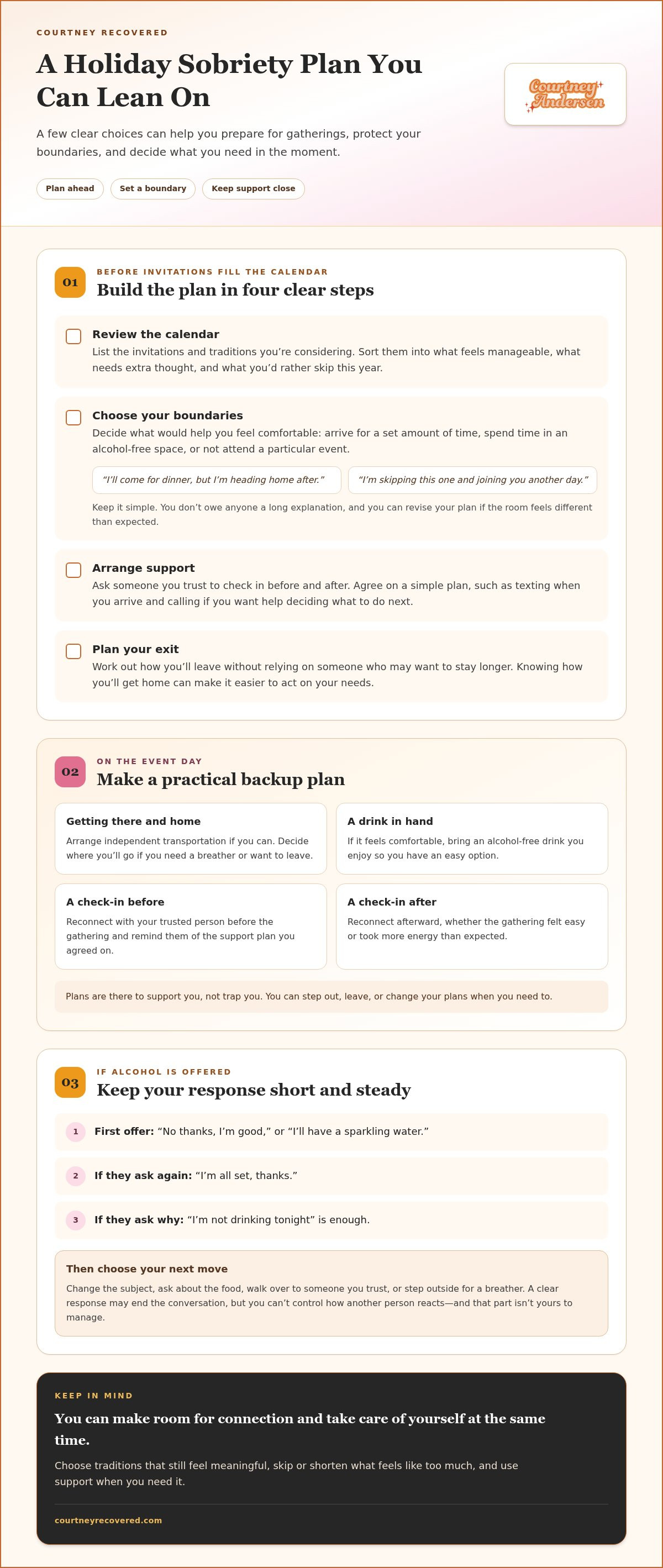
- Review the calendar. List the invitations and traditions you’re considering. Mark what feels manageable, what needs extra thought, and what you’d rather skip this year.
- Choose your boundaries. Decide what would help you feel comfortable, such as arriving for a set amount of time, spending time in an alcohol-free space, or not attending a particular event.
- Arrange support. Ask someone you trust to check in before and after a gathering. Agree on a simple plan, such as texting when you arrive and calling if you want help deciding what to do next.
- Plan your exit. Work out how you’ll leave without relying on someone who may want to stay longer. Knowing how you’ll get home can make it easier to act on your needs.
For more ideas to prepare and find practical support, explore this sobriety tools and resources guide.
Set boundaries that feel clear and doable
Keep your boundary simple enough to remember and say out loud. You might decide, “I’ll come for dinner, but I’m heading home after,” or “I’m skipping this one and joining you another day.” You don’t owe anyone a long explanation. Boundaries can change, too. If the room feels different from what you expected, you can step out or revise your plan.
Make a practical event-day backup plan
Think through small logistics before the day gets busy. Arrange independent transportation if you can, and decide where you’ll go if you need a breather or want to leave. If it feels comfortable, bring an alcohol-free drink you enjoy so you have an easy option in hand. Check in with your trusted person before the event, then reconnect afterward, whether the gathering felt easy or took more energy than expected.
Plans work best when they support you, not trap you. If extra connection would help, you can explore sobriety support and resources as part of building support around the season.
Handling Alcohol and Holiday Pressure in the Moment
A drink offer can feel loaded, especially if someone keeps asking after you’ve said no. You don’t have to win a debate or explain your whole story. Choose a response that feels natural, then turn your attention back to the gathering or to what you need next.
Respond to drink offers without turning them into a debate
Try a short line and keep it simple: “No thanks, I’m good,” or “I’ll have a sparkling water.” If someone offers again, repeat your answer: “I’m all set, thanks.” If they ask why, “I’m not drinking tonight” is enough. You can change the subject, ask about the food, or walk over to someone you trust. A clear response may end the conversation, but it can’t control how another person reacts. That part isn’t yours to manage.
If you’d rather have something in your hand, choose a nonalcoholic drink that works for you. If the conversation or atmosphere becomes uncomfortable, step outside for a breather, find a supportive person, or use the way out you planned. Check in with yourself: are you feeling tense, pressured, or ready to go? Those feelings are useful information, not a reason to judge yourself.
Choose a version of the gathering that works for you
You have more options than staying all night or skipping every celebration. Staying sober during the holidays can mean making a short visit, joining an alcohol-free activity, or declining an event that doesn’t feel right for you now. You can choose differently for each invitation. Choose the version that best supports your needs today, not the one that makes other people most comfortable.
You can protect your sobriety and choose how long you stay. If you arrive and realize the event feels harder than expected, you can leave without waiting for the perfect moment or a universally approved reason. Follow your backup plan, reach out to your check-in person, and take the next step that helps you feel steady. No self-lecture required.
If you want ongoing encouragement as you make choices that fit your sober life, explore sobriety support options.
When Family Stress, Cravings, or Unexpected Changes Shake Your Plan
A family comment lands harder than expected. Your travel plans change, you’re suddenly alone, or grief takes over a day you thought would feel joyful. These moments can change how staying sober during the holidays feels, even if you prepared ahead. A tough moment doesn’t mean your plan is ruined. It may be time to pause and respond to what’s happening now.
Try this simple reset: pause, name what you need, contact someone supportive, and choose the next safe step. Maybe you need a quiet minute, a meal, company, or a way to leave. You don’t have to solve the whole day at once. Focus on what would help you through the next moment.
If an urge or emotion catches you off guard
Step into a quieter space if you can. Slow down, notice what you’re feeling, and text or call a trusted support person. A change of scene may help, too: move to another room, take a short walk, or head home if staying feels unhelpful. These steps aren’t guaranteed to make an urge or distress disappear. They can give you room to decide what support you need next.
If you’re worried about withdrawal or have immediate concerns about your safety, seek help from a qualified medical professional or emergency service. Coaching and peer support can offer connection, but they aren’t a substitute for medical care.
If you drink after setting an intention not to
Shame won’t make the next choice easier. If you drink, focus on safety and support rather than punishment. Stop drinking, avoid driving, and reach out to someone you trust or a qualified professional to talk through what happened and what would help now. One difficult moment doesn’t have to define the rest of your holiday, and it doesn’t erase your worth.
If you’re caught in a familiar cycle of deciding to stop and then feeling stuck, you can explore support for breaking the cycle of starting over. The next step can be small: tell someone what happened, ask them to stay connected, or make a plan for the next few hours.
You don’t have to figure it all out alone. Explore personalized sobriety coaching for support and accountability as you work toward the sober life you want.
Stay Connected Beyond the Holiday: Support for the Sober Life You Want
The holiday plan is one piece of the picture. Staying sober during the holidays can also be a chance to notice what kind of support helps you feel connected, grounded, and more like yourself. That support might come from a trusted friend, a peer community, personalized coaching, or qualified professional care, depending on what you need.
Choose support that matches what you need right now
Maybe you want one-on-one encouragement and accountability as you work through personal goals. 1:1 Sobriety Coaching offers personalized support, while the Sobriety Circle brings people together for shared experience and community. Structured programs such as Stop Starting Over and The After offer additional guidance through different stages of the sobriety journey. You might choose one option or combine them. These are supportive options for sobriety, not medical treatment. If you have medical concerns, including concerns about withdrawal, seek help from a qualified medical professional.
If peer connection sounds helpful, this online sober community guide can help you explore ways to feel less alone. You don’t need to wait for a difficult moment to reach out. Building connection before the next celebration can make it easier to ask for support when you want it.
Carry the parts that worked into the next celebration
After the holiday, take a few minutes to reflect without grading yourself. Write down what helped, what felt hard, and what you’d like to adjust next time. Perhaps a shorter visit felt right, a check-in helped you feel supported, or a certain tradition brought unexpected comfort. Keep what worked and change what didn’t fit.
Progress isn’t a perfect holiday record. It’s learning what supports you and letting other people be part of the journey. Choose one manageable next step today: tell a trusted person what kind of support you’d welcome, or explore a community where shared experience matters. A sober holiday can still hold laughter, connection, comfort, and real joy. Explore sobriety support at Courtney Andersen as you build the kind of sober life you want.
Make This Holiday Season Your Own
Staying sober during the holidays doesn’t require a perfect plan. It helps to choose gatherings that feel right for you, set boundaries you can adjust, and know who you’ll contact if the day gets tough. If something doesn’t go as planned, focus on the next supportive step instead of turning one hard moment into a verdict on your progress.
You don’t have to do it all alone. Personalized 1:1 Sobriety Coaching offers individual support and accountability, while the Sobriety Circle brings a community together through shared recovery resources. These are supportive options, not medical treatment.
Take one manageable step today: tell someone what kind of support would help, or explore the community and coaching options at Courtney Andersen. Explore supportive coaching and community options. Your holiday can still hold connection, laughter, and moments that feel fully yours.
Frequently Asked Questions
How do I stay sober during the holidays when everyone around me is drinking?
Make a plan with choices in place before you arrive. Decide what you’ll drink instead, who you can check in with, and how you’ll leave if the gathering becomes uncomfortable. Keep a short response ready, such as “No thanks, I’m good,” and remember you can step away or head home. Staying sober during the holidays doesn’t mean you have to handle every moment alone.
Can I go to a holiday party if I am newly sober?
You can go if it feels manageable and you have support, but you don’t have to attend to prove anything. Think about what the event will be like, whether you can leave independently, and who you could contact if you feel pressured. You might choose a brief visit, bring an alcohol-free drink, or skip the party. Your needs can guide the decision, and you can change your mind.
What should I say when family members ask why I am not drinking?
Keep your answer as brief as you like. Try “I’m not drinking tonight,” “I feel better without it,” or simply, “No thanks.” You don’t owe anyone personal details or a full explanation. If someone keeps asking, repeat your response, change the subject, or move toward a person you trust. You can be clear and kind while keeping your reasons private.
What can I do if I feel a craving at a holiday gathering?
Pause and focus on the next helpful step, rather than expecting yourself to push through the whole event. Step into a quieter space, get some distance from alcohol, and contact someone you trust. You might change rooms, take a short walk, or leave if staying feels unhelpful. These actions may not make the craving disappear, but they can help you make a considered choice and access support.
Is it okay to skip holiday events to protect my sobriety?
Yes. Skipping an event can be a reasonable way to care for yourself, not a rejection of the people who invited you. You can also choose a middle option, such as attending briefly, joining an alcohol-free activity, or making plans with someone another day. Different gatherings may call for different decisions. You’re allowed to choose what feels supportive now and adjust your plans as needed.
What should I do if I drink after planning to stay sober during the holidays?
Focus on safety and support, not punishment. If you’ve been drinking, don’t drive. Contact someone you trust and consider what would help you stay safe now. Reach out to a qualified professional if you need help deciding what to do next. A difficult moment doesn’t mean the whole holiday is ruined or that you’re beyond support. If you’re worried about withdrawal or immediate safety, seek qualified medical help.
How can I support someone who is staying sober during the holidays?
Make it easier for them to be included without making drinking the focus. Offer alcohol-free options, accept a “no thanks” without asking for an explanation, and ask what would help them feel comfortable. Don’t pressure them to stay if they want to leave. You can also suggest an activity that doesn’t revolve around alcohol. Respect and flexibility can help your loved one feel welcome and supported.
I want you to feel sober NOT boring!
Kickstart your sobriety with my free 2-day video workshop series to master your sober mindset and have FUN in your sobriety journey!


