
Sober Coach vs. Sponsor: What Is the Difference, and Which Do You Need?
Oct 22, 2026
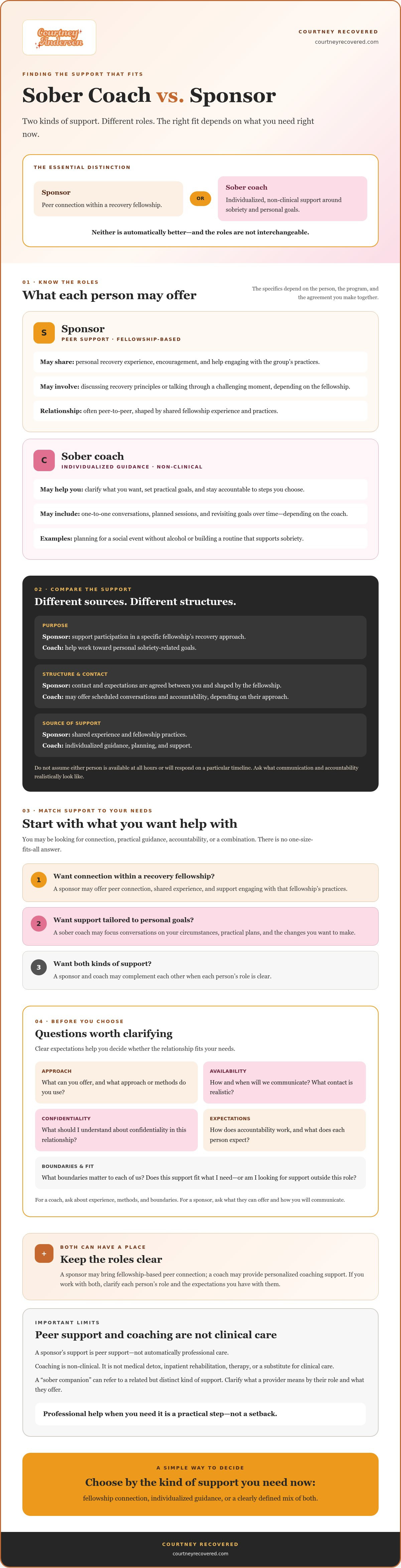
What if choosing support isn’t about finding the “right” person, but figuring out what kind of help you need right now? If you’re weighing sober coach vs sponsor, you may want accountability without pressure, practical guidance without judgment, or simply someone who gets it. That uncertainty makes sense. These roles can overlap in spirit, but they aren’t interchangeable: a sponsor offers peer connection within a recovery fellowship, while a sober coach provides individualized, non-clinical support around sobriety and personal goals. Neither is automatically better.
This guide explains what each role can offer and how to decide what fits your goals, preferences, and current needs. We’ll compare the way sponsors and coaches work, consider when having both might make sense, and cover questions to ask before choosing a coach. We’ll also explain the limits of peer support and coaching. Neither replaces medical or mental health care. Seeking professional help when you need it is practical, not a setback.
Key Takeaways
- The sober coach vs sponsor choice depends on the support you want: peer connection within a fellowship, individualized guidance, or a mix of both.
- Compare the purpose, structure, and source of support each relationship offers.
- Before choosing, clarify your needs and ask about approach, availability, confidentiality, expectations, and boundaries.
- You may be able to work with both a sponsor and a coach, as long as each person’s role is clear.
- Know when peer support or coaching may not be enough and professional care could be an important next step.
Sober Coach vs. Sponsor: What Does Each Role Actually Mean?
Choosing who to turn to can feel confusing, especially when you want support but aren’t sure what each role involves. A sponsor is generally a peer in a recovery fellowship who offers support within that fellowship’s approach. A sober coach may provide individualized guidance and accountability around sobriety and everyday goals. The details depend on the person, the program, and the agreement you make together.
A sponsor brings peer support within a fellowship; a sober coach offers personalized support shaped around your goals. That’s the basic distinction, not a rule that every sponsor or coach follows in exactly the same way.
What does a sobriety sponsor typically do?
A sponsor may share their recovery experience, offer encouragement, and help another fellowship member engage with the group’s practices. Depending on the fellowship, this could mean discussing recovery principles or talking through a challenging moment. Sponsorship is peer support, not automatically professional care.
Expectations differ across fellowships and individual relationships. Before committing, ask what a potential sponsor can offer, how you’ll communicate, and what boundaries matter to each of you. If you’re looking for support outside the fellowship’s approach, clarify that early so you can decide whether the relationship meets your needs.
What does a sober coach typically do?
A sober coach may use one-to-one conversations to help you clarify what you want, set practical goals, and stay accountable to steps you choose. For example, you might talk through how to handle a social event without alcohol or build a routine that supports your sobriety. The approach, structure, and qualifications can vary, so ask about a coach’s experience, methods, and boundaries before deciding whether the fit feels right.
Coaching is non-clinical support. It isn’t medical detox, inpatient rehabilitation, therapy, or a substitute for clinical care. The term Sober companion can refer to a related but distinct kind of support, so clarify exactly what a provider means by their role and what they offer. A good fit starts with clear expectations, not assumptions.
How a Sober Coach and Sponsor Support Recovery Differently
Both relationships can help you feel less alone and more intentional about sobriety, but the support may look different day to day. A sponsor often shares experience and guidance within a fellowship’s recovery framework. A coach may offer more individualized conversations focused on your goals and the practical changes you want to make. Neither approach is automatically a better fit. Consider whether you want a shared fellowship framework, support tailored to your circumstances, or both.
| Area | Sponsor | Sober coach |
|---|---|---|
| Typical purpose | Support participation in a specific fellowship’s recovery approach. | Help work toward personal sobriety-related goals. |
| Relationship | Often peer-to-peer, with shared fellowship experience. | May be a personalized coaching relationship. |
| Structure | Contact and expectations are agreed between the people involved and shaped by the fellowship. | May include scheduled conversations and accountability, depending on the coach’s approach. |
| Source of support | Shared experience and fellowship practices. | Individualized guidance, planning, and support. |
Structure, accountability, and personal attention
A coaching relationship may be organized around planned sessions and goals you revisit over time. With a sponsor, you’ll typically agree together on how and when to connect, within the norms of your fellowship and the boundaries you both set. Don’t assume either person is available at all hours or will respond on a particular timeline. Ask what contact looks like, how accountability works, and what each person can realistically offer. If regular check-ins matter to you, make that expectation explicit before starting.
Shared experience, guidance, and recovery frameworks
A sponsor may draw on lived experience and their fellowship's practices. That shared framework can be meaningful if you want to connect with others who understand that path. Peer support can include connection based on shared experience, while coaching conversations may focus more directly on your circumstances and goals. For example, you might discuss a personal routine or plan for a social situation. The exact approach depends on the coach.
These roles can differ and complement each other: one may offer fellowship-based peer connection, while the other may provide personalized coaching support. Choose based on what feels useful, and check boundaries and expectations rather than assuming a title tells you everything. If you’re exploring individualized support, you can learn more about 1:1 sobriety coaching.
Sober Coach vs. Sponsor: Which Support Fits Your Situation?
Instead of asking which role is “better,” start with a more useful question: what kind of support would help you feel more connected and supported right now? You might want a recovery community and guidance shaped by a particular fellowship. Or you may want focused conversations about your own goals and the everyday changes you’re working toward. Write down what you want help with, then compare that list with what each person or service actually offers. One choice doesn’t have to rule out the other.
The Substance Abuse and Mental Health Services Administration (SAMHSA) distinguishes 12-step sponsorship from peer recovery support, which may help people explore their own recovery pathway and connect with broader community resources. That difference can be a useful starting point, but your preferences and the specific people or groups involved matter, too.
When peer connection or a sponsor may feel like a fit
If being part of a fellowship appeals to you, a sponsor may offer a one-to-one connection grounded in that group’s practices and shared experience. You might value hearing from someone who understands the fellowship from the inside, alongside the wider sense of connection that can come from participating in the group. This option may fit especially well if you want support that is connected to the fellowship’s approach.
Before committing, learn how the fellowship works and what sponsorship typically involves there. Ask about expectations, communication, and boundaries. Finding someone you feel comfortable with may take time. It’s okay to keep looking for a compatible fit rather than treating the first connection as your only option.
When personalized sober coaching may feel like a fit
If you’d prefer focused conversations centered on your circumstances, individualized coaching may be worth exploring. You might want help turning a broad intention, such as building a sober social life, into practical goals and steps you can track. Coaching approaches vary, so ask about the coach’s experience, how they structure support, and their professional boundaries. A clear explanation of what coaching can and can’t address can help you decide whether it matches what you’re seeking.
For a closer look at what tailored support can involve, read about 1:1 sobriety coaching. It’s one possible support option, not a promise of any particular outcome or a replacement for care beyond a coach’s scope.
You can choose a sponsor, a coach, or both. Some people appreciate fellowship connection alongside individualized accountability; others prefer to begin with one kind of support and reassess later. Let your needs, comfort, and the boundaries each person can offer guide the decision. The goal isn’t to find a guaranteed formula. It’s to make a thoughtful choice that feels workable for you right now.
Questions to Ask Before Choosing a Sponsor or Sober Coach
Choosing support doesn’t have to be a leap of faith. Use a simple sequence: clarify what you need, understand what the role involves, ask direct questions, then notice whether the answers and boundaries feel comfortable. The sober coach vs sponsor decision isn’t always either-or. You may start with one relationship, explore both, or change direction as your needs shift.
Before you decide, consider what you want help with right now. Are you looking for connection within a fellowship, personalized goal-setting, or both? You can also ask how each person handles privacy and what they do if a concern comes up. If you’re weighing coaching against clinical services, read more about recovery coaching and rehab differences to understand the distinction in scope.
Questions to ask a potential sponsor
Ask about their experience in the fellowship and what sponsorship means within that specific group. You might ask, “How do you prefer to communicate?” or “What boundaries should we agree on?” It’s also fair to ask how they handle disagreement or what you should do if the relationship doesn’t feel like a fit. A sponsor relationship is personal, and you can seek another sponsor if it isn’t working for you.
Questions to ask a sober coach
Get specific about the service before starting. Ask what conversations typically cover, how you’ll set and review goals, and what support falls outside the coach’s scope. Check their relevant experience and qualifications rather than assuming a title guarantees particular credentials. Ask how they handle privacy, what availability they can realistically offer, and how they address concerns. Confirm that the service is coaching, not clinical treatment, and discuss referral options if your needs go beyond that role.
If you’re considering both kinds of support, ask each how they’ll keep their roles clear. A sponsor and coach don’t need to provide the same thing, and neither should be expected to act as a clinician. Clear expectations can help you draw on each relationship without confusion or pressure.
Once you’ve considered your needs, the approach, and the boundaries, you can decide whether personalized support feels like a useful next step. Explore personalized sobriety coaching with Courtney Andersen.
Can You Have a Sponsor and a Sober Coach at the Same Time?
Yes, some people choose more than one kind of support. You don’t have to treat the sober coach vs sponsor question as an either-or decision. A sponsor may offer connection within a fellowship, while coaching may provide individualized support around personal goals. A qualified healthcare professional has a different role: assessing health concerns and providing clinical care. Which supports are available and useful will depend on your needs and circumstances.
How different kinds of support can complement each other
Think about what you want from each relationship. Fellowship participation might give you a sense of shared identity and connection. Coaching may give you a space to focus on personal goals and practical accountability. If you want connection beyond a sponsor relationship, learn more about an online sober community. A community can offer peer connection, but it isn’t automatically a replacement for a sponsor or professional care.
If you work with both a sponsor and a coach, talk openly with each about your goals and boundaries. You might explain that you’re seeking fellowship guidance from your sponsor and personal goal-setting support from your coach. Neither person should be expected to provide clinical care. Clear roles help prevent mixed expectations and let you decide what you’re comfortable sharing with each person.
When to seek professional or urgent medical help
A sponsor or coach can offer support, but neither is a substitute for medical assessment or treatment. If you’re worried about withdrawal, have severe symptoms, or face another health risk, contact a qualified medical professional promptly. Withdrawal can require medical attention, so don’t rely on coaching or peer support alone to decide what’s safe.
If you or someone else is in immediate danger, contact local emergency services. That’s the right move for an urgent health crisis, not a sign that you’ve failed at recovery. Peer connection and coaching can be part of a wider support network, alongside healthcare professionals who address medical or mental health needs.
You can build support one step at a time. If community or personalized coaching could help, Courtney Andersen offers the Sobriety Circle and 1:1 Sobriety Coaching as optional forms of support. Take a look when you’re ready, and choose what fits your needs and boundaries.
Choose Support That Meets You Where You Are
The sober coach vs sponsor decision isn’t about finding one universally “right” option. A sponsor may offer peer connection through a fellowship, while a coach may provide personalized support and accountability around your goals. You can also consider both, with clear expectations about what each person can offer.
Start with what you need now, then ask questions about approach, boundaries, and fit. Coaching and peer support aren’t substitutes for medical or clinical care when your health needs it.
If individualized guidance feels like a helpful next step, Courtney Andersen offers personalized 1:1 sobriety coaching focused on support and accountability. The Sobriety Circle is another option for community and shared resources. Explore personalized sobriety coaching and see what feels right for you.
You don’t have to map out your whole recovery journey today. One thoughtful step toward the support you need is a real start.
Frequently Asked Questions
What is the difference between a sober coach and a sponsor?
A sponsor typically offers peer support within a recovery fellowship, while a sober coach may provide personalized guidance and accountability around sobriety-related goals. A sponsor’s approach is often shaped by the fellowship’s practices and shared experience. Coaching may focus more directly on your circumstances and goals. Expectations vary, so ask what each person can offer, how you’ll communicate, and where their role ends before deciding what feels right.
Is a sober coach the same as a sponsor?
No. A sponsor is generally a peer who supports another member within a recovery fellowship, while a sober coach offers individualized coaching support. Both may encourage reflection and accountability, but their approaches and expectations can differ. A coach isn’t automatically a clinician, and a sponsor isn’t automatically a professional coach or therapist. Ask about experience, boundaries, and the specific support offered rather than relying on a title alone.
Can you have a sober coach and a sponsor at the same time?
Yes, you may choose to work with both if they’re available and each relationship fits your needs. A sponsor might support your participation in a fellowship, while a coach may help you focus on personal goals. Be clear with each person about what you’re seeking and what you’re comfortable sharing. Neither should be expected to provide medical or clinical care beyond their role.
Do you need a sponsor to stay sober?
No single support option is right or required for everyone. Some people value a sponsor and fellowship connection; others look for different forms of peer, coaching, or professional support. Consider what feels accessible and useful to you, and remember that your needs may change over time. A sponsor can be one source of encouragement, but no particular choice can guarantee sobriety or replace care you may need.
What should I ask before choosing a sober coach?
Ask what coaching sessions cover, how you’ll set and review goals, and what support is outside the coach’s scope. Find out about relevant experience and qualifications, privacy practices, communication expectations, and how concerns are handled. Clarify whether the service is coaching rather than therapy or other clinical treatment. The title alone doesn’t tell you everything, so take time to understand the approach and decide whether its boundaries feel clear.
Can a sober coach help with alcohol withdrawal?
A sober coach can’t assess or treat alcohol withdrawal. If you’re concerned about withdrawal, experiencing severe symptoms, or facing another health risk, contact a qualified medical professional promptly. Withdrawal may require medical attention, so don’t rely on a coach or sponsor to determine what’s safe. If there’s immediate danger, contact your local emergency services. Coaching may offer non-clinical support, but it isn’t a substitute for medical help.
Is sober coaching a replacement for rehab or therapy?
No. Sober coaching is non-clinical support and isn’t a replacement for medical assessment, treatment, rehabilitation, or therapy. A coach may help with personal goals and accountability, but their role has limits. If you’re unsure what kind of care you need, speak with a qualified healthcare professional who can assess your situation. Coaching may be one part of a broader support plan, alongside peer connection and professional care when appropriate.
I want you to feel sober NOT boring!
Kickstart your sobriety with my free 2-day video workshop series to master your sober mindset and have FUN in your sobriety journey!


