
Sober and Lonely? Why Your Isolation is Actually a Sign of Growth
Aug 11, 2026
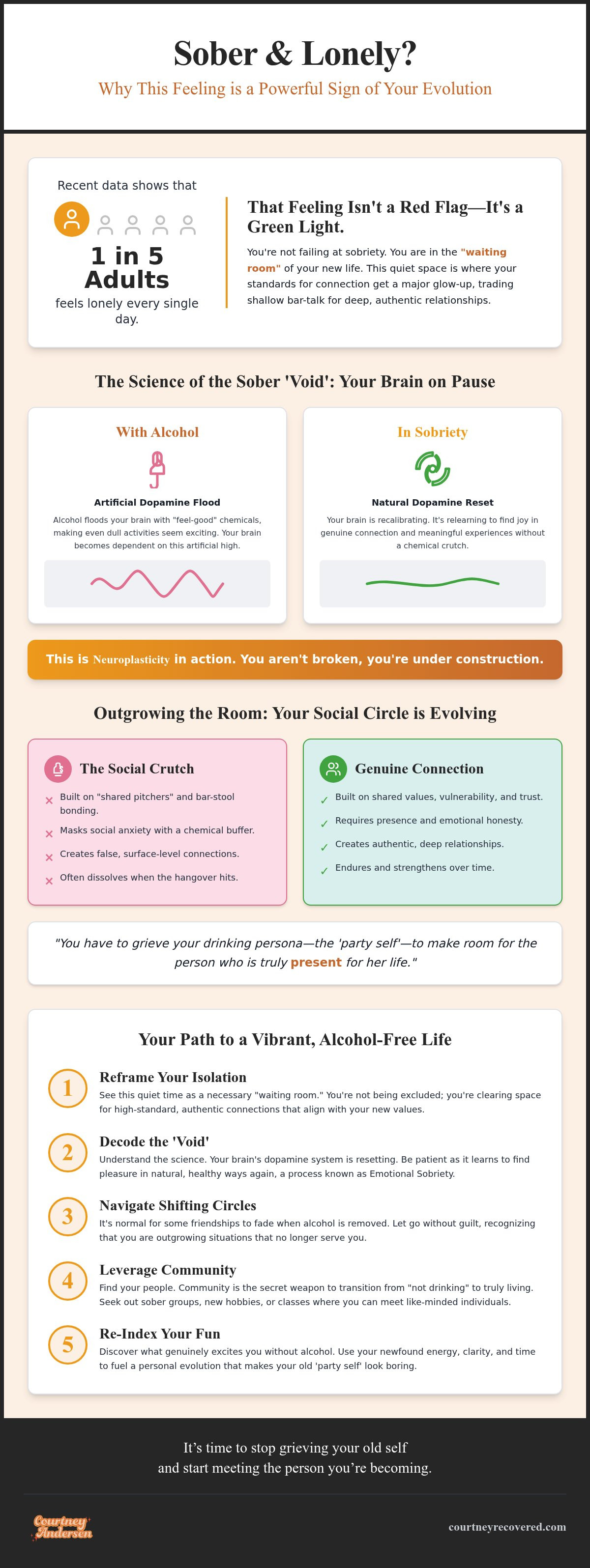
What if that crushing feeling of being sober and lonely is actually the most reliable proof that you're finally evolving? It’s a total gut-punch when the "fun" version of yourself feels like a stranger and Friday nights are suddenly filled with deep boredom instead of bar hops. You might feel like a total outcast while everyone else is still clinking glasses, and with recent data showing that 1 in 5 adults feels lonely every single day, it’s easy to fear you’re the only one struggling to find your place in this quiet new world.
I get it because I've been there. That hollow silence isn't a sign that you've ruined your social life; it's the sound of your world clearing out the clutter to make room for something better. You're going to discover why your current isolation is actually a massive milestone of growth and a normal part of the transition. We will dive into the "why" behind the void and look at high-energy, practical strategies to build a vibrant, alcohol-free community that doesn't require liquid courage to enjoy. It’s time to stop grieving your old self and start meeting the person you’re becoming.
Key Takeaways
- Reframe your current isolation as a necessary "waiting room" where you trade shallow bar-talk for high-standard, authentic connections.
- Decode the science of the sober "void" to understand why your brain feels disconnected and how to naturally jumpstart your dopamine.
- Learn to navigate shifting social circles without guilt, identifying who stays and who goes once the booze is out of the equation.
- Stop feeling sober and lonely by leveraging community as your secret weapon to transition from "not drinking" to actually living a vibrant life.
- Discover practical ways to re-index your fun and use your newfound energy to fuel a personal evolution that makes your old "party self" look boring.
Why Sobriety Feels So Lonely (and Why It’s Actually a Good Sign)
You’re sitting on your couch on a Friday night, scrolling through social media, and everyone else seems to be having the time of their lives. You feel sober and lonely, and that loud voice in your head starts whispering that you’ve made a huge mistake. Stop right there. That feeling isn't a red flag; it's a massive green light. You are currently in the "waiting room" of your new life. It’s that awkward, quiet space between the person you used to be and the powerhouse you are becoming. Most people mistake this silence for failure, but it’s actually the sound of your life clearing out the clutter.
The truth is that you aren't lonely because you've become boring. You’re lonely because your standards for connection just had a major glow-up. Alcohol used to be the glue that held mediocre conversations together. It provided a "false connection" that dissolved the second the hangover hit. Now, you’re looking for the real deal, and that takes time to build. You aren't doing it wrong; you are finally doing it right by refusing to settle for surface-level "bar-stool bonding" that leaves you feeling empty the next morning.
The Myth of the 'Boring' Sober Life
The biggest lie the alcohol industry sells us is that booze equals fun. In reality, alcohol just numbs your brain enough to make repetitive, loud, and expensive activities feel tolerable. When you remove the substance, you realize those "wild nights" were actually pretty dull. To understand what loneliness is in this specific context, we have to look at the gap between your old habits and your new values. Sober Loneliness is the space between who you were and who you are becoming. It’s a temporary recalibration period where your brain is learning how to find joy in things that actually matter.
Alcohol as a Social Crutch vs. Genuine Connection
For high-performers, alcohol is often the ultimate social crutch. It masks social anxiety and lets you "turn off" your brain after a high-pressure day. But that "off switch" also kills your ability to form genuine intimacy. Sober friendships are built on shared values and actual vulnerability, not just shared pitchers. You might feel the peak of this social transition during your first 90 days because your social muscles are still weak. You're learning to stand on your own two feet without the liquid courage. While it feels shaky now, the connections you make on this side of the bottle will actually be built to last.
The Science of the Sober 'Void': Dopamine and the Connection Gap
If you feel like the world has suddenly lost its color, you aren't imagining things. Your brain is essentially a radio that has been blasted at max volume for years. Alcohol artificially floods your system with dopamine, that "feel-good" chemical that makes even a boring bar feel like the center of the universe. When you quit, your brain is still expecting that massive surge. Without it, normal social interactions can feel "flat" or "gray" because your receptors are essentially desensitized. This is why being sober and lonely feels so heavy at first. Your brain is recalibrating, trying to find the signal again after the static has cleared.
The good news is that your brain is incredibly resilient. Through neuroplasticity, you are literally relearning how to enjoy people and experiences without a chemical buffer. This is where "Emotional Sobriety" comes in. It’s the practice of sitting with the discomfort of the "void" without reaching for a drink to fill it. Research into the experience of loneliness for recovering alcoholics shows that this phase is a common hurdle, but it's also where the real transformation happens. You aren't broken; you are just under construction. It takes time for your natural dopamine levels to reset so that a simple dinner with a friend feels as rewarding as a night out used to.
Grieving Your Drinking Persona
Let’s be honest: your drinking persona was probably a blast at times. Maybe she was the one who danced on tables or always had the best stories. Acknowledging that "Party Girl You" was a real part of your identity is vital for moving forward. You are allowed to mourn her. You might go through the classic grief cycle: denial that you even need to quit, anger that you can't "drink like a normal person," and eventually, the loneliness of acceptance. You have to say goodbye to your old self to make room for the person who is actually present for her life.
The High-Functioning Trap: Loneliness in Success
If you’re a high-performer, this loneliness can feel like a secret shame. You’re "on" all day at work, crushing deadlines and leading teams, only to go home to a quiet house where you used to reward yourself with a bottle of wine. This "secret cycle" of drinking alone is a hallmark of Gray Area Drinking: When Your Habit Becomes a Burden. Now that the bottle is gone, the silence of your success can feel deafening. You don't have to navigate this transition in isolation. If the silence is getting too loud, joining a community like the Sobriety Circle can help you bridge that connection gap with people who actually get it.
Outgrowing the Room: Navigating Shifting Social Circles
When you stop drinking, you don't just lose a habit; you lose a filter. Many of the people you called friends were actually just "activity partners" whose shared interest began and ended at the bottom of a glass. This is the "Bar-Friend Filter" in action. It is painful to realize that some connections were built on nothing but shared hangovers, but clearing these out is how you stop being sober and lonely in the long run. You are making room for people who actually like you, not just the version of you that buys the next round.
Your sobriety is a mirror. When you turn down a glass, some people see it as a silent judgment of their own habits. It makes them squirm. They might try to "help" you relax or insist that "just one drink" won't hurt. It's vital to realize this isn't about you. It's about their own discomfort with the status quo you've dared to disrupt. Setting boundaries doesn't mean you have to build a wall around your life. It means you are finally protecting your energy. You can still love people who drink, but you don't have to stay in toxic environments that thrive on shared hangovers.
When Friends Don't 'Get' the New You
You need a game plan for those first few dinners. When the "Why aren't you drinking?" question pops up, keep it short and punchy. Try: "I'm on a major health kick and feeling too good to stop now," or "I've officially retired from my drinking career." You don't owe anyone a medical history. For more tactical advice on handling these moments, check out How to Be Sober and Social Without Losing Your Mind. When loved ones pressure you, remember they usually miss the old "predictable" you. Hold your ground with kindness but zero wiggle room; they will eventually get used to the new version.
Creating Your New Social Blueprint
Stop trying to fit your new, vibrant life into old, dark rooms. Nightlife is designed for drinking; lifestyle is designed for living. Swap the 10 PM bar meet-up for a 9 AM hike, a morning yoga class, or a coffee date where you can actually hear each other speak. Use the "early exit" superpower. Once the repetitive stories start and the room gets sloppy, leave. You will wake up at 7 AM feeling like a million bucks while everyone else is still searching for Advil. Identify your "Safe People." These are the friends who ask what mocktail you want instead of asking why you aren't drinking. They are the foundation of your new social world.
Practical Strategies to Reclaim Your Social Spark
If you’re tired of feeling sober and lonely, it's time to stop waiting for fun to find you and start engineering it yourself. Your brain is essentially waiting for new instructions. Think of this as re-indexing your life; you are updating the search terms for what "fun" actually looks like. Instead of scrolling through "happy hour" specials, you’re looking for high-energy morning hikes or skill-building workshops. This is the foundation of your "Sober Glow-Up." You are using the hours you used to spend drinking to evolve into a version of yourself that doesn't need a chemical escape.
When you have to face high-trigger social events like weddings or corporate galas, don't go in unarmed. Use the Sober Toolkit to navigate those tricky moments when the champagne starts circling. Winning the social game also starts with a "Sober First" morning routine. By front-loading your day with movement and purpose, you’ll find that evening loneliness loses its bite because you’ve already filled your cup with actual achievements. You aren't just "not drinking" anymore; you are building a life that you don't want to blur out.
The 5-Step Social Reset
Start by auditing your contact list. Be ruthless. Who inspires you to be better, and who just drains your battery? Once you’ve cleared the dead weight, commit to one "Sober First" activity every week. This could be a sunrise yoga session, a coffee date, or a local workshop. Use this extra time to focus on the physical wins that come with a clean lifestyle. Quitting alcohol is a total game-changer for your appearance. Check out The Sobriety Glow-Up to see why sobriety is the ultimate beauty move for 2026.
Breaking the 'Boredom' Cycle
We often mistake peace for boredom because we are so used to the chaos of drinking. Learn to distinguish between being lonely and simply being at peace. If the silence feels too heavy, move your body immediately. Physical movement is the fastest way to boost your natural dopamine levels and clear the mental fog. Remember that boredom is the birthplace of creativity in recovery. When you aren't numbing out, your brain finally has the space to dream, build, and connect on a level you never thought possible. This downtime is where your new, vibrant identity is actually forged.
Ready to fast-track your social evolution and find your people? My 1:1 Sobriety Coaching is the shortcut you need to find your spark and stop starting over.
Finding Your People: Why Community is the Secret Weapon
Isolation is the single biggest threat to your long-term sobriety. While we’ve established that feeling sober and lonely is a normal part of the growth process, staying in that isolation too long can lead you right back to the bottle. There is a massive, life-changing difference between simply "not drinking" and actually "living sober" through community. Not drinking is a restrictive act of willpower that often feels like you’re being punished. Living sober is a vibrant, expansive experience where your social life actually gets better, deeper, and more exciting. Community is the bridge that takes you from the "void" of early sobriety into a reality where you are truly seen and supported.
When you have a crew that understands the nuances of your evolution, the pressure to "fit in" with your old drinking circles evaporates. You no longer have to explain yourself because you are surrounded by people who are speaking the same language. This shared energy is the antidote to the boredom we discussed earlier. It turns those quiet nights into opportunities for real connection and collective growth. You aren't just surviving the weekend anymore; you are actually enjoying it with people who value the real you.
The Power of the Sobriety Circle
Think of the Sobriety Circle as your new VIP lounge. It is an exclusive, high-energy space where the "tough love" is real and the celebrations are even louder. In this circle, shared experience removes the lingering shame of being sober and lonely. You’ll find women who have navigated the same awkward parties and the same quiet Friday nights, proving that you aren't an outcast; you’re just part of a new, elite crew. We use the "Stop Starting Over" philosophy to build a foundation so strong that you never have to repeat Day 1 again. It is about creating a lifestyle where you don't need to escape because your reality is already fulfilling.
Investment in Yourself: 1:1 Coaching
If you want to skip the trial-and-error phase, personalized support is the ultimate shortcut. Having a mentor who acts like a "cool older sister" gives you the roadmap you’ve been missing. You don't have to figure out the social scripts or the identity shifts by yourself. This isn't clinical therapy; it's a high-performance strategy for your life. For a deeper look at how a mentor can accelerate your growth, check out 1 on 1 Sobriety Coaching: Your Personalized Roadmap. This investment in yourself is what turns the fear of isolation into the confidence of a new, connected reality.
Ready to stop being lonely and start being vibrant? Join the movement today. You have already outgrown the old rooms, and now it is time to find the people who are actually on your level.
Your Vibrant New Life is Just Getting Started
You have officially outgrown the rooms that were too small for your potential anyway. Feeling sober and lonely isn't a sign that you're failing; it's the ultimate proof that you're evolving past a version of yourself that no longer fits. By understanding the science of the dopamine void and reclaiming your social spark through high-energy morning routines, you have already started the work. You are trading those hollow bar-stool friendships for a life built on real intimacy and actual, unfiltered fun.
It is time to stop navigating this transition in a vacuum. You deserve a roadmap and a crew that actually gets it. Whether you want to join a community of high-achieving women in the Sobriety Circle, access the Sober Toolkit today, or get 1:1 coaching tailored to your lifestyle, the support you need is right here. You don't have to do this alone.
Ready to find your tribe? Join the Sobriety Circle and never feel 'sober and lonely' again.
You’ve got this, and I am right here with you. The best version of your life is waiting on the other side of this quiet phase, and it is going to be more vibrant than you ever imagined.
Common Questions About Navigating Sober Loneliness
Is it normal to feel lonely after quitting drinking?
It is absolutely normal to feel lonely after you stop drinking because your entire social infrastructure has likely been built around alcohol. You’re not just losing a drink; you’re losing a "mask" that made surface-level connections feel deeper than they actually were. This period of isolation is simply your brain and lifestyle recalibrating to find more authentic ways to connect with people who actually see you for who you are.
How long does the 'lonely phase' of sobriety last?
The most intense part of the "lonely phase" typically peaks during the first 90 days as your brain's dopamine receptors begin to reset. While the timeline is different for everyone, you’ll usually feel a massive shift once you start intentionally replacing old bar habits with new, "Sober First" activities. The silence eventually stops feeling heavy and starts feeling peaceful as you build a community that doesn't rely on hangovers to function.
What should I do when my old friends keep inviting me to bars?
You should be honest and direct by suggesting a new activity that doesn't center on drinking, like a morning coffee or a weekend hike. If they insist on the bar, it’s okay to pass on the invite. You are outgrowing certain rooms, and that is a sign of massive growth. True friends will eventually adapt to your new lifestyle, but you have to prioritize your peace over their comfort during this transition.
Can I still be fun at parties if I'm sober?
You can actually be the most interesting person in the room because you’re fully present and not repeating the same story three times. Being sober and lonely at a party usually only happens when you’re trying to force yourself to stay in rooms that have become objectively boring. Once you find your "Sober Glow-Up" confidence, you’ll realize that "fun" comes from your energy and presence, not from what’s in your glass.
How do I find a sober community that isn't AA?
You can find a vibrant, modern community by joining spaces like the Sobriety Circle, which focuses on high-achieving women and celebration rather than a clinical atmosphere. There are also local hobby groups, sober-curious meetups, and fitness communities that don't revolve around alcohol. Look for groups that prioritize personal evolution and shared values instead of just focusing on the "not drinking" part of the equation.
What are some things to do instead of drinking when I'm bored and lonely?
You should immediately move your body to naturally boost your dopamine levels, whether that’s a quick walk or a high-energy workout. Use your extra time to dive into a hobby you used to love or start a "Sober First" morning routine that makes you excited to wake up early. Boredom is just your brain’s way of saying it finally has the space to create something new, so don't be afraid to fill it.
Why do I feel more lonely now than when I was drinking alone?
You feel more lonely now because you are finally sober and lonely enough to actually experience your emotions instead of numbing them with a bottle. Drinking alone provided a "false presence" that made the isolation feel tolerable. Now that the buffer is gone, you’re feeling the real gap in your connections, which is the necessary first step toward building a social life that is actually fulfilling and authentic.
I want you to feel sober NOT boring!
Kickstart your sobriety with my free 2-day video workshop series to master your sober mindset and have FUN in your sobriety journey!


