
Online Recovery Community: Find Support That Fits Your Sobriety in 2026
Nov 02, 2026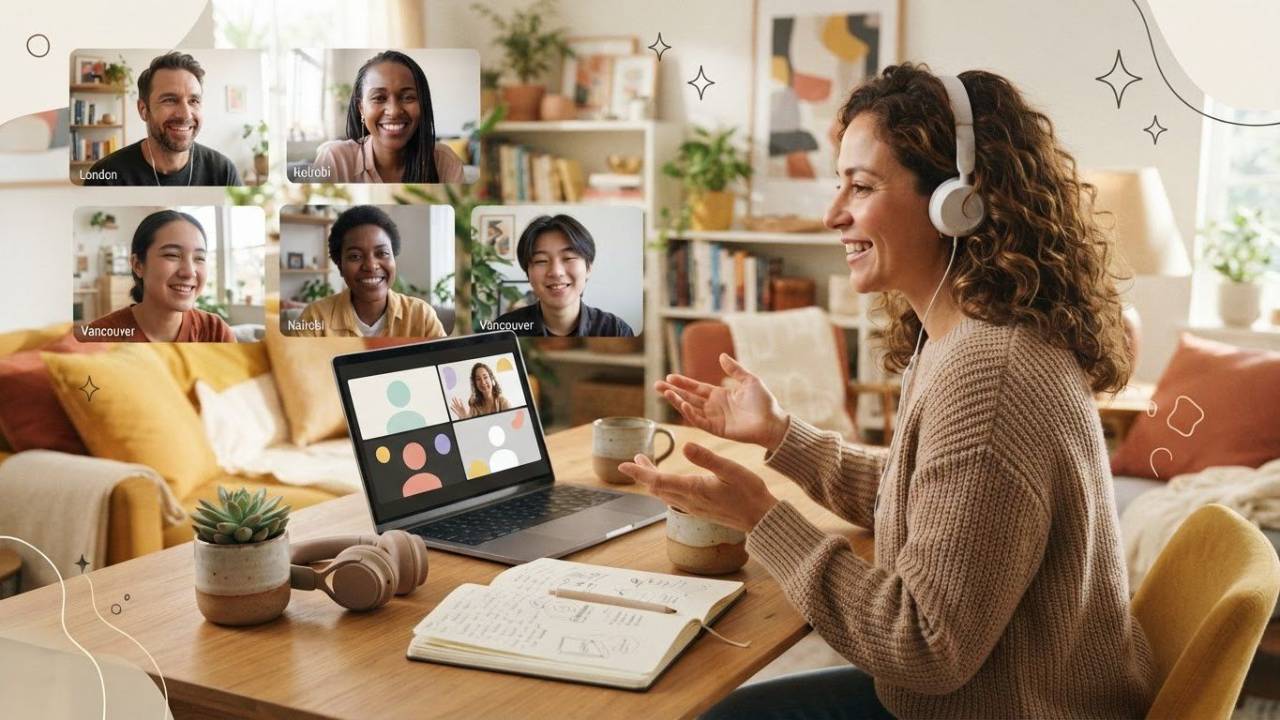
What if finding support didn’t mean squeezing yourself into a recovery path that doesn’t feel like yours? An online recovery community can offer connection and encouragement from people who understand. You may still wonder whether a virtual group will feel personal, welcoming, or safe.
If you’ve felt alone in sobriety, or wished friends and family understood more, you’re not asking for too much. You deserve support that fits your life and feels comfortable to show up for. It helps to know what you’re choosing: a peer community offers shared experience, coaching brings individual guidance, and clinical care addresses medical or mental health needs. These supports can play different roles in a recovery plan.
This guide explains what an online recovery community can offer, how to find a good fit, and how to make community support part of a realistic routine. We’ll also look at Courtney Recovered’s membership-based Sobriety Circle, which offers group support and shared resources, alongside structured programs and individual coaching. There’s no single right way to build connection. The goal is support that meets you where you are.
Key Takeaways
- An online recovery community can offer peer connection and shared experience when sobriety feels lonely.
- Compare peer groups, membership communities, coaching, and educational resources to find support that fits your needs.
- You can ease in by reviewing group expectations, listening first, and joining at a manageable pace.
- The Sobriety Circle is a membership-based community offering group support and shared recovery resources.
- Community, coaching, and clinical care serve different roles. Consider how each might fit into your broader recovery plan.
What an Online Recovery Community Offers When You Feel Alone
You don’t need a polished recovery story to deserve connection. Maybe you’re curious about sobriety, newly alcohol-free, or having a hard day and wishing someone understood without asking you to explain everything. An online recovery community gives you a digital space to connect with peers, share experiences, find encouragement, and learn from people navigating similar questions.
That connection can matter in ordinary moments: reading a post when you feel out of step with friends, hearing how someone handled a social event, or sharing a small win that matters to you. You can take part in ways that feel comfortable. You don’t have to pretend recovery is always easy or follow someone else’s version of the journey.
What makes a recovery community different from a treatment program?
A peer community centers on people supporting one another through shared experience. It isn’t a place to receive a diagnosis or medical treatment. Members may offer encouragement, discuss what has helped them, and point each other toward resources, but personal stories aren’t professional assessments or prescriptions.
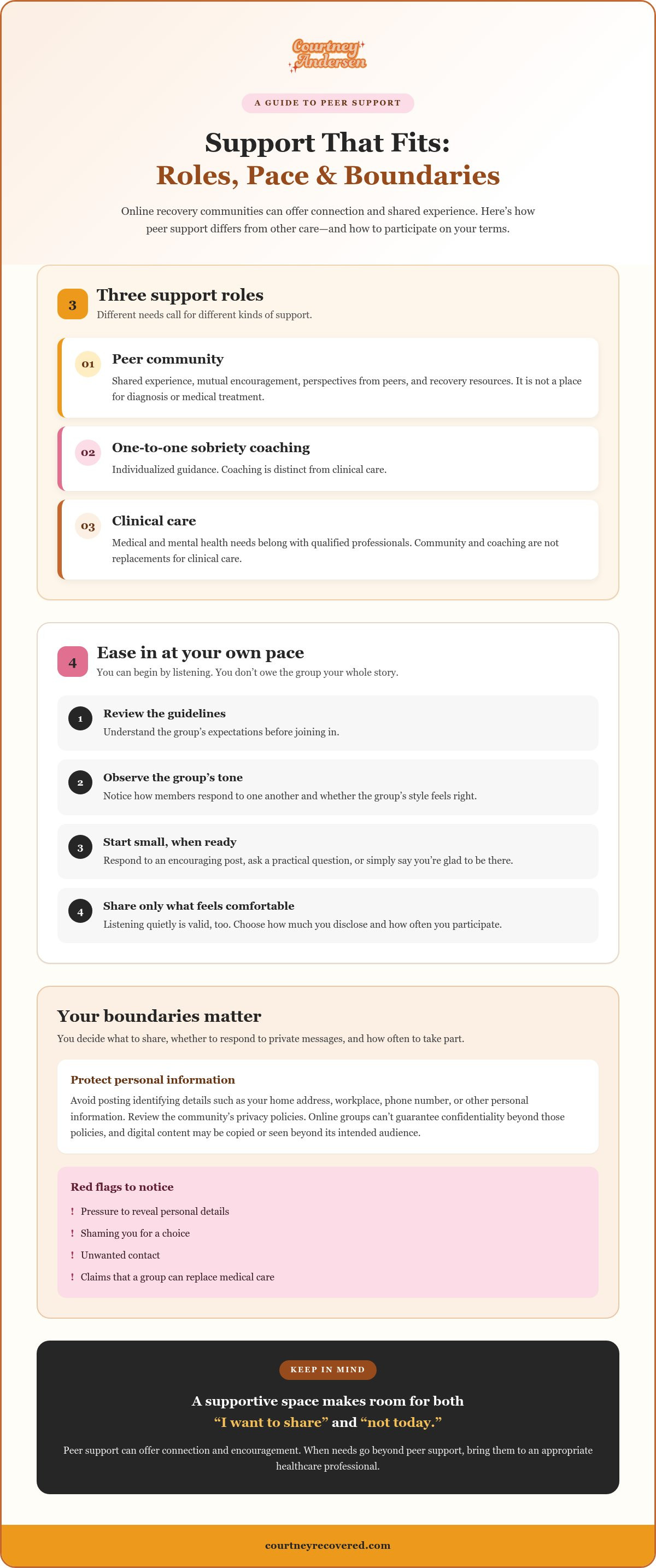
Community support offers peer connection; one-to-one sobriety coaching offers individualized guidance; clinical care addresses medical and mental health needs. Coaching and community participation are distinct from clinical care, and neither should be treated as a replacement for it. Peer support can sit alongside other recovery resources, including professional care where appropriate.
Peer groups differ in focus and approach. Some center on sharing personal experiences; others use discussion prompts or practical exercises to help members reflect. In either case, the value comes from mutual support and hearing perspectives from people with lived experience. A group can offer connection and ideas, while decisions about medical or mental health needs belong in conversations with qualified professionals.
Who might feel at home in an online community?
You might be exploring whether alcohol still fits your life, taking early steps toward sobriety, or maintaining an alcohol-free life and looking for connection that stays relevant. You might also want support beyond your immediate social circle, especially if the people closest to you care but don’t quite understand what you’re experiencing.
No single readiness level or recovery path is required to benefit from listening and learning. Some people want to speak up right away; others prefer to read quietly before joining the conversation. Both are valid ways to begin. A supportive space leaves room for different experiences without pressuring everyone to use the same language, reach the same milestones, or tell their story before they’re ready.
If a community doesn’t feel like a fit, that doesn’t mean connection isn’t for you. You may be looking for a different format, tone, or kind of support. Start with what you need today: a place to feel understood, practical ideas from peers, or encouragement to keep building a life that feels good alcohol-free. You’re allowed to find your people at your own pace.
What Supportive Online Recovery Community Participation Can Look Like
A helpful group doesn’t expect you to perform recovery perfectly. Look for respectful conversation, encouragement without pressure, and shared resources members can consider. A welcoming community also makes room for different experiences. Members may have different goals, histories, and ways of describing sobriety without needing to agree on every detail.
Pay attention to how people respond when someone shares a tough moment. Do others listen, or rush to judge and tell them what to do? Can members disagree respectfully? The day-to-day tone matters as much as a group’s description. In a healthy online recovery community, you shouldn’t have to prove you belong.
How can you participate before you feel ready to share?
Take time to observe before joining in. Read the group guidelines, notice how members speak to one another, and see what kinds of questions or experiences come up. Listening first can help you understand the group’s rhythm and decide whether its style feels right. You don’t need to arrive with a speech prepared.
When you want to participate, start small. Respond to an encouraging post, ask a practical question about handling a social situation, or simply say you’re glad to be there. You don’t owe the group your whole story. Share only what feels useful and comfortable.
What healthy boundaries should an online group respect?
Your boundaries belong to you. Choose what you disclose, whether you respond to private messages, and how often you participate. Before posting, leave out details that could identify you, such as your home address, workplace, phone number, or other personal information. Read the community’s privacy policies, too. Online groups can’t guarantee confidentiality beyond those policies, and anything shared digitally may be copied or seen by more than its intended audience.
Notice red flags: pressure to reveal personal details, shaming when you make a choice, unwanted contact, or claims that a group can replace medical care. Peer support can be encouraging, but it isn’t healthcare. A peer community offers shared support, while professional healthcare addresses medical and mental health needs. If a conversation raises needs beyond peer encouragement, consider bringing them to an appropriate healthcare professional.
A group should make room for your “not today” as much as your “I want to share.” The Sobriety Circle community offers group support and shared resources. You can participate at a pace that feels right for you.
How to Compare Online Recovery Community Formats and Find Your Fit
“Support” can mean a group of people sharing honestly, a community with ongoing resources, a focused conversation with a coach, or material you explore on your own. These formats offer different kinds of connection and structure. Rather than searching for one universally best option, consider what would help most right now and what you’re likely to keep using.
This comparison of common options can help you identify what you want to explore. Exact formats vary.
| Format | Purpose | Interaction style | Structure and support |
|---|---|---|---|
| Peer group | Shared experience and mutual encouragement | Members talk and learn from one another | Group-based; structure depends on the group |
| Membership community | Ongoing connection and shared resources | Group interaction and community participation | Group-based; membership provides a continuing community setting |
| Coaching | Individualized guidance around personal goals | One-to-one conversation | Individual support; not clinical treatment |
| Educational resources | Information, ideas, and self-guided learning | Usually independent, with limited or no peer interaction | Flexible; the reader explores material at their own pace |
Peer group, membership community, or one-to-one coaching?
A peer group may suit you if hearing how others handle everyday sobriety questions helps you feel less alone. A membership community may be a better fit if you want group connection alongside shared resources over time. Courtney Recovered’s Sobriety Circle is a membership-based community offering group support and shared resources.
Coaching offers individualized guidance when you want focused attention on your goals or decisions. It isn’t a substitute for medical or mental health care. If you’re considering one-to-one support, the 1:1 sobriety coaching guide explains how it differs from group support.
Educational resources work differently. A book, toolkit, or structured program can give you ideas to reflect on without requiring group participation. This can be useful if you prefer to learn privately, or as a complement to conversations with peers or a coach.
Which format may match your current needs?
Start with the kind of support you’re looking for. If you want to hear “I’ve been there,” consider peer interaction. If you want more personal attention, consider an individual format. If you need ideas to revisit on your own schedule, educational resources may be a comfortable place to start.
Then consider your comfort and consistency. Would you rather listen in a group, speak directly with someone, or read and reflect? What kind of participation feels realistic alongside work, family, and rest? An online recovery community can complement coaching or independent learning, and those formats can complement each other too. You’re building a support mix, not choosing a single path forever.
How to Join an Online Recovery Community at Your Own Pace
Joining doesn’t have to mean jumping into a personal introduction or committing to a packed schedule. Treat it as a small experiment: learn what the group is about, notice how it feels, and decide what level of participation works for you. You can adjust as your needs change.
What should you look for before joining?
Start with the community’s stated purpose. Is it centered on peer connection, shared resources, education, or another kind of support? Read the participation expectations and guidelines so you know how members interact and what the space is designed to offer.
Look for language that makes room for different experiences, rather than using shame or pressure to push people toward one version of recovery. Review how the group describes privacy and member boundaries, too. Understanding what the community says about confidentiality can help you make informed choices, but it can’t guarantee that everything shared online will stay private.
Once you’ve reviewed the basics, take time to observe. Notice whether members respond respectfully and whether the conversations feel useful. You might jot down questions before deciding whether to participate: “Can I read without sharing at first?” and “Does this group’s purpose match what I’m looking for?”
How do you make community support part of real life?
Build a routine around your actual schedule, not an idealized version. Choose a manageable point in your day or week to check in, based on the community’s format and your availability. You might read a discussion during a quiet moment or join a group conversation when it fits. There’s no universal frequency.
Pair participation with a routine you already value, such as reflecting on your week or planning for a social event. This gives community support a natural place in your life without turning it into another obligation. If you miss a check-in, you haven’t failed. Start again when it feels useful.
After spending some time with the group, ask yourself: Do I feel respected? Am I finding something useful here? Does the way I participate feel manageable? If your answers shift, you’re allowed to change your routine, take a break, or look for a different kind of support. The right fit should feel sustainable, not like another standard you have to meet.
Your needs may shift as sobriety becomes part of everyday life. Life after sobriety guidance can help you think about the support and routines you want to carry forward. If group connection feels like a good next step, explore the Sobriety Circle community for shared support and resources.
Find Your People in the Courtney Andersen Sobriety Circle
Want support that feels less like going it alone and more like finding people who get it? Courtney Recovered’s Sobriety Circle is a membership-based community offering group support and shared resources. It’s for people who want connection as they explore sobriety or continue building an alcohol-free life.
What does the Sobriety Circle bring to an online recovery journey?
The Circle brings together membership, group support, and shared resources. That can give connection a place in your recovery routine, whether you’re looking for encouragement, a chance to learn from other people’s experiences, or resources to explore at your own pace. You don’t need to arrive with everything figured out. Curiosity about community is a meaningful place to start.
Every person’s experience is different, and no community can promise a particular result. The value is having a space centered on shared support, rather than trying to make every decision or celebrate every win by yourself. The Sobriety Circle suits people looking for group-based connection as part of a broader support plan.
Before joining any online recovery community, clarify what you hope to find. Are you looking for peer connection, shared resources, or both? Knowing your answer can make it easier to decide whether the Circle’s community-based format matches what you want right now. Learn about the group and choose how community fits alongside your other supports.
When might individual coaching or practical resources also help?
Group connection isn’t the only way to get support. One-to-one sobriety coaching offers individualized guidance, while practical resources offer ideas you can consider independently. Courtney Andersen also offers the structured programs Stop Starting Over and The After. Each format provides a different way to explore support, and your needs can help guide which one fits.
If you’re collecting practical ideas for your routine, the sobriety tools and resources guide can help you consider what might be useful. Community membership and coaching are peer or coaching supports, not clinical care; neither provides medical detox or inpatient rehabilitation. If you need medical or mental health care, community support doesn’t replace it.
You don’t have to map out your whole recovery plan today. Start with the kind of connection you’re seeking, then take one step that feels doable. Explore the Sobriety Circle and community support to see how group connection can fit into your support plan.
Take One Small Step Toward More Connection
You don’t need your entire recovery plan mapped out before reaching for support. Start with the kind of connection you’d like more of, then choose one manageable step that feels right for this moment. An online recovery community can be part of a fuller support mix, alongside one-to-one guidance or resources you explore on your own.
If you’re drawn to group connection, Courtney Andersen's membership-based Sobriety Circle offers group support and shared resources. For a different kind of structure, Courtney Recovered also offers one-to-one sobriety coaching and programs including Stop Starting Over and The After. Each can play a different role in your support plan.
You’re allowed to begin with curiosity, take your time, and adjust as you learn what helps. Explore the Sobriety Circle and find your people. A more connected next chapter can start with one small choice, and you deserve to make it at your own pace.
Frequently Asked Questions
Is an online recovery community effective?
An online recovery community can offer connection, perspective, and encouragement, but the experience depends on whether the group suits your needs and feels respectful. Treat it as one support option, not a guaranteed outcome or a measure of whether recovery is “working.” For example, you might use a group to feel less alone before a challenging event, then decide whether its conversations are helpful enough to keep returning to.
Can I join an online recovery community if I am not sure I want to quit drinking?
Yes, you can look for support while you’re still figuring out what you want. You might join to listen, ask questions, or reflect on how alcohol fits into your life without making a commitment or sharing more than you’re ready to. Before participating, check whether the group welcomes people at different stages. If its expectations don’t match where you are, it’s okay to explore other forms of support.
How do I know whether an online recovery community is a good fit?
Notice how you feel after spending time there. Do you feel heard, or pressured to follow someone else’s choices? Are conversations useful and respectful, including when members disagree? Consider practical fit, too: whether the group’s format works with your schedule and whether you feel comfortable participating. Observe first, then reassess after a few interactions. A mismatch is information, not a personal failure.
Are online recovery communities anonymous?
Some communities may let members use a screen name, but don’t assume participation is fully anonymous or confidential. Read the group’s privacy information and understand what details may be visible to other members. Avoid posting identifying information, such as your full name, address, workplace, or phone number. If you’re unsure about a detail, leave it out. Protecting your privacy is a reasonable boundary, not a lack of trust.
Can I use an online recovery community and attend AA or another support group?
Yes, you can combine an online community with AA or another support group if that mix feels useful. Different spaces may offer different perspectives, meeting styles, or opportunities to connect. You might attend an in-person group and use an online group when travel or timing makes attendance difficult. Notice what each adds to your routine, and adjust if the combination feels overwhelming or isn’t meeting your needs.
What should I do if I need more help than an online community can provide?
Reach out to a qualified healthcare professional if you have medical concerns, severe withdrawal symptoms, or mental health needs that peer support can’t address. An online group and sobriety coaching are not substitutes for clinical care. If you may be in immediate danger, contact your local emergency services. Asking for professional help is a strong next step, and you can still value peer connection alongside appropriate care.
I want you to feel sober NOT boring!
Kickstart your sobriety with my free 2-day video workshop series to master your sober mindset and have FUN in your sobriety journey!


