
The Ultimate Guide to Non 12-Step Recovery Programs in 2026
Sep 12, 2026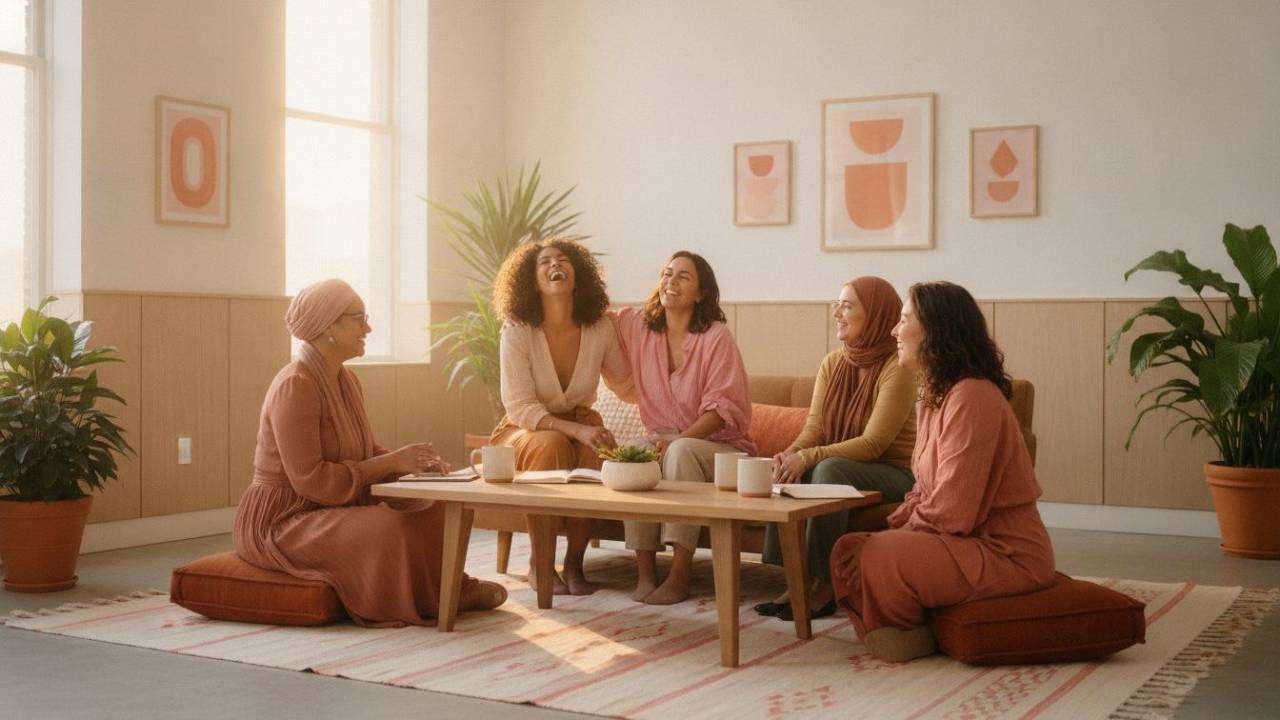
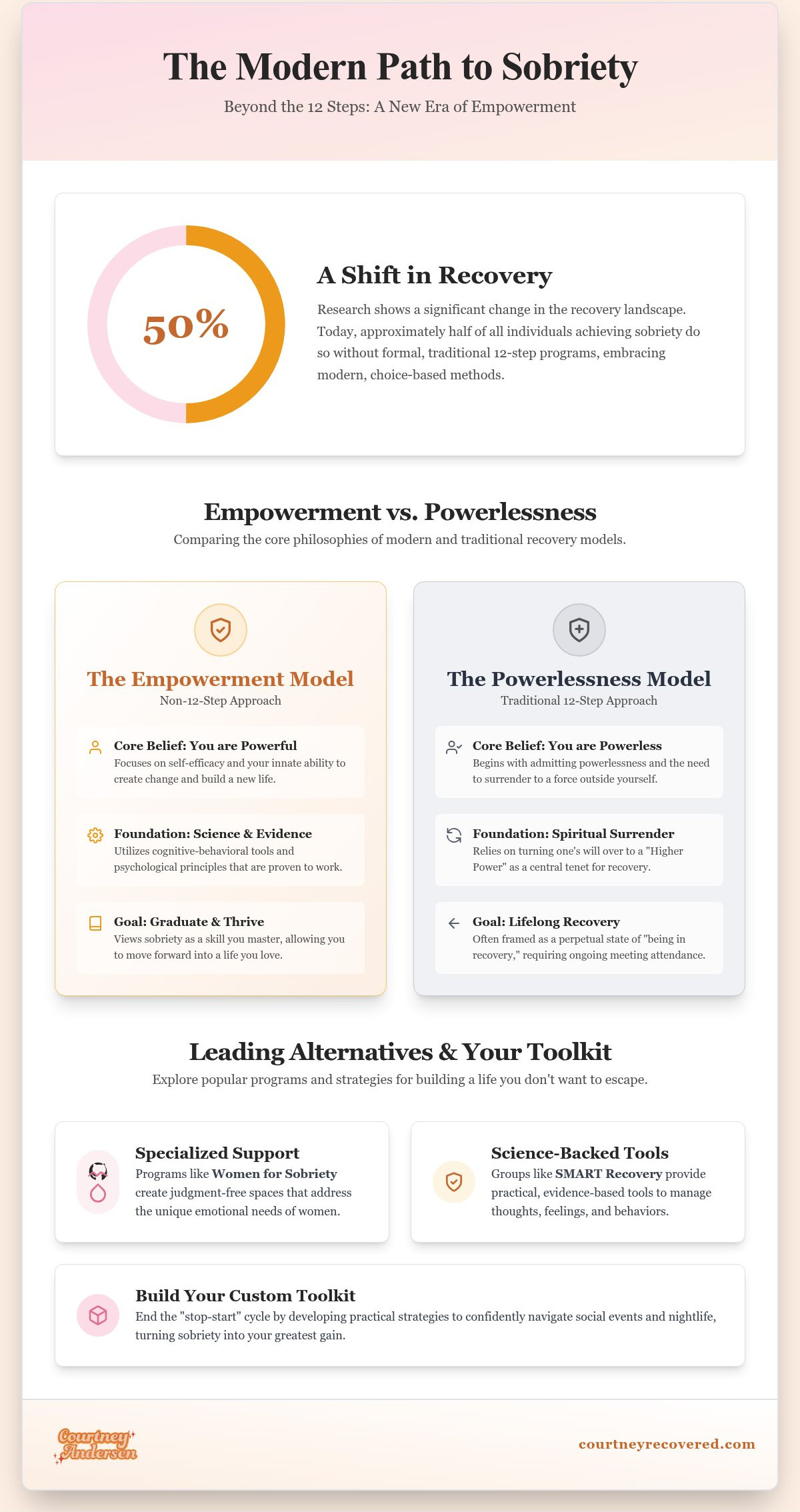
You aren't a broken machine that needs a higher power to fix you. You're a powerhouse who just needs the right set of tools to reclaim your life. If you've ever sat in a drafty basement feeling like you had to shrink your personality just to stay sober, you're not alone. The traditional "one size fits all" approach often feels more like a heavy weight than a helping hand. That's why non-12-step recovery programs are exploding in popularity in 2026. Research shows that about half of individuals in recovery now achieve it without formal, traditional treatment. They're choosing personal autonomy over the old, restrictive idea of powerlessness.
I get it because I've been there. You want a life that feels like a massive upgrade, not a constant sacrifice. You're looking for a community of like-minded women and science-based tools to build a reality you don't want to escape. This guide breaks down modern alternatives like SMART Recovery and Women for Sobriety that focus on self-empowerment. We'll explore how to handle social situations with confidence and transform your sobriety into your greatest gain. It's time to stop surrendering and start living.
Key Takeaways
- Learn why shifting your mindset from "powerless" to "powerful" is the game-changer you need for a sustainable, choice-based recovery journey.
- Discover how non-12-step recovery programs like SMART Recovery use science-backed tools to help you reclaim your autonomy and your life.
- Explore specialized support options that prioritize women's unique emotional needs in a vibrantly optimistic, judgment-free space.
- Get practical strategies for building a custom sobriety toolkit so you can confidently navigate social events and nightlife without feeling like you're missing out.
- Find out how to end the "stop-start" cycle for good and transition into a life where being alcohol-free feels like a massive gain.
Beyond the Basement: What are Non-12-Step Recovery Programs?
Let's get real. For decades, the only roadmap to sobriety involved a basement, a circle of chairs, and a heavy dose of spiritual surrender. But it's 2026, and the world has changed. Non-12-step recovery is a secular, evidence-based path to sobriety that emphasizes individual agency. It's not about admitting you're "broken" or waiting for a miracle from above. Instead, these programs treat sobriety like a skill you can learn and a lifestyle you can design. This approach is for the high-achieving women and the "AA-adjacent" crowd who know they want better but refuse to shrink themselves to get it.
If you're a professional woman or someone navigating the slippery slope of gray-area drinking, you've probably felt like the traditional model was a pair of shoes that just didn't fit. You don't need to be powerless to change. Modern science backs a choice-based approach, showing that when we feel in control of our decisions, we're much more likely to stick with them. A growing list of non-12-step programs prioritizes your brain over your beliefs, helping you stay grounded in logic as you evolve.
The Core Philosophy: Empowerment Over Surrender
The biggest hurdle in traditional circles is often the "Higher Power" requirement. For many of us, that feels like a massive barrier to entry. If you don't subscribe to a specific spiritual path, being told you must "turn your will over" can feel alienating. Non-12-step recovery programs flip the script. They focus on self-efficacy, which is just a fancy way of saying your belief in your own ability to succeed. You aren't surrendering your power; you're reclaiming it. Best of all? You don't have to carry the label of "alcoholic" like a scarlet letter. You're just a person making a high-vibe choice to live better and more connected.
Why Traditional 12-Step Programs Don’t Fit Everyone
Let's talk about the "God" problem. If you're secular, atheist, or just private about your spirituality, a religious-leaning program can feel like a performance. It's hard to get vulnerable when you're busy rolling your eyes at the dogma. Then there's the "Forever Patient" trap. Traditional models often insist you are "in recovery" for the rest of your life, attending meetings until the end of time. That sounds exhausting. We want to move past the struggle and into a vibrant reality where booze isn't even a thought. You deserve a recovery that lets you graduate and move on to the next exciting chapter of your life.
Empowerment vs. Powerlessness: Comparing 12-Step and Non-12-Step Models
Recovery isn't a life sentence, and it definitely shouldn't feel like one. Traditional models often keep you tethered to your past mistakes by asking you to start every meeting by identifying with your struggle. In contrast, non-12-step recovery programs focus on who you are becoming, not just where you've been. They replace the heavy, somber atmosphere of a "confessional" with high-energy, tool-based discussions that actually help you handle real-life social situations.
The 12-step narrative is built on the idea of powerlessness. It suggests that you can't trust your own brain and must surrender your will. But a study published in the Journal of Substance Abuse Treatment found that participants in non-12-step support groups expressed higher levels of satisfaction and cohesion compared to those in traditional groups. Why? Because these programs treat you like the capable adult you are. You aren't just "not drinking"; you're actively designing a life you love. Instead of a lifelong process where you're always "in recovery," modern programs view sobriety as a goal you achieve. You learn the skills, you change your habits, and you graduate into a vibrant, alcohol-free life.
The Role of the "Higher Power"
For many women, the "God" talk in traditional meetings is a major dealbreaker. If you're secular, atheist, or just value logic, being told to rely on an external force can feel like a performance. Non-12-step models swap the higher power for internal resources. You learn to trust your own resilience and use cognitive tools to manage cravings. You find fulfillment through meaningful lifestyle changes that make sense to you, rather than following a set of religious-leaning steps that feel outdated.
Self-Labeling and Identity
The word "alcoholic" carries a massive amount of weight. For many, that label feels like a permanent stain on their self-image, breeding shame rather than growth. Non-12-step programs favor person-first language. You are a person who used to have a complicated relationship with alcohol, not a diagnosis that defines you forever. By dropping the labels, you create space for a new identity built on strength and possibility. This mindset shift is exactly what we focus on in the Sobriety Circle, where the goal is to build a life so good that alcohol simply loses its appeal. You aren't defined by what you don't do; you're defined by the incredible life you're creating.
The Modern Landscape: Leading Alternatives to Traditional Recovery
Finding the right fit for your sobriety journey is like finding the perfect pair of jeans; it has to feel right in all the right places. We've already looked at the philosophy behind this shift, but now let's talk about what these options actually look like in practice. For many high-achievers, the most effective non-12-step recovery programs are those that treat sobriety like a mental fitness challenge rather than a moral failing. These frameworks rely on logic, evidence, and practical skills that you can apply to your career and social life immediately.
Science-Based Frameworks and Cognitive Tools
If you love a good strategy, you'll likely gravitate toward secular groups that use Cognitive Behavioral Therapy (CBT) and Rational Emotive Behavior Therapy (REBT). These methods don't ask you to look for signs from the universe. Instead, they give you a set of mental tools to dismantle the "why" behind your drinking. You learn to identify triggers, manage high-stress moments, and build a lifestyle that supports your long-term goals. It is about shifting from a passive participant in your recovery to the active CEO of your own life. These tools are designed for the modern, professional mind that values data and results over tradition and dogma.
Several secular women-only communities also focus on positive reinforcement and self-value. These organizations provide a safe space to grow without the religious undertones that often drive people away from traditional rooms. By strengthening your "Sober Self," you eventually reach a point where the old habits simply lose their voice. You aren't just attending sessions; you're building a foundation for a life that feels lighter and more connected.
Personalized Sobriety Coaching: The Ultimate Non-Clinical Path
While secular group settings offer a great sense of community, they often miss the mark on the specific, messy details of your daily life. This is where 1-on-1 sobriety coaching truly shines. Group meetings are fantastic for shared experience, but coaching provides laser-focused accountability that a room full of strangers simply can't match. It is the fastest-growing alternative because it treats you as an individual with unique hurdles, not just another face in a crowd.
Coaching is particularly powerful for those navigating gray-area drinking. You might not identify with the extreme "rock bottom" stories often heard in traditional rooms, but you know the booze is holding you back from your full potential. A coach is that "cool older sister" who's been there and done that. They help you troubleshoot everything from high-pressure networking events to the 5:00 PM wine-o'clock habit. It is a high-momentum, high-vibe partnership that focuses entirely on your future, ensuring your sobriety feels like the ultimate lifestyle upgrade.
Building Your Non-12-Step Sober Toolkit
Sobriety isn't just about what you're removing from your life. It's about what you're adding. While traditional methods might leave you feeling like you're constantly on guard or stuck in a cycle of "surrender," non-12-step recovery programs give you the agency to build a lifestyle that is actually fun. You don't need a sponsor's permission to live your life. You need a personalized strategy that handles the real world with ease. Start by building a sobriety toolkit as unique as your favorite playlist. It’s about having a plan for the stress, the joy, and every cocktail party in between.
Daily Maintenance Without the Steps
Forget the idea that you have to spend your life in a state of perpetual "recovery." Your daily maintenance should feel like self-care, not a chore. Instead of focusing on your "defects" or past mistakes, start your day by grounding yourself in your current strengths. A solid morning routine might include a few minutes of journaling or diving into some high-vibe "Quit-Lit." Reading the Sober Vibes Book is a great way to keep your mindset shifted toward the massive gains of sobriety. In the evening, use your Sober Toolkit to decompress from the day’s stress without reaching for a bottle. These small, consistent actions build a foundation of emotional sobriety that doesn’t require a higher power to maintain.
Navigating Social Situations with Confidence
Let's tackle the biggest lie in the recovery world: that you'll be "boring" once you're sober. Honestly? You’re probably going to be more present, more hilarious, and way more likely to remember the best parts of the night. You can still own the room at a wedding or a professional event. All you need are a few simple scripts to handle those "why aren't you drinking?" questions. A quick "I'm on a health kick" or "I've got an early morning" usually shuts it down without drama. You don't have to explain your life choices to anyone who hasn't earned that information.
When you're out and about, having a sober community online is your secret weapon. Being part of a digital squad means you can check in with women who totally get it, right from your phone. It’s the ultimate way to feel connected and empowered without having to find a meeting in a church basement. You’re building a vibrant social life on your own terms, and that is where the real magic happens.
Ready to start building a life you don't need to escape? Explore our Building a Sobriety Toolkit guide and grab the resources you need to stay empowered.
Reclaiming Your Life: The Courtney Recovered Approach
You have explored the science, looked at the leading alternatives, and realized that you don't have to settle for a recovery path that feels like a chore. Now, it is time to find the specific roadmap that turns your sobriety into a celebratory, high-energy upgrade. At Courtney Recovered, we take the core principles of non-12-step recovery programs and strip away the clinical, somber atmosphere. We believe that quitting drinking isn't a loss; it is the ultimate gain. It is about removing the one thing that is holding you back so you can finally step into the vibrant, connected reality you deserve.
Ending the Relapse Cycle
Day 1 is a beast. We have all been there, waking up with that familiar pit in our stomach, promising this time will be different. To make this Day 1 your last, you need more than willpower; you need a strategy that matches the "tough love" reality of your life. Our Stop Starting Over program is designed to break the cycle of gray area drinking by shifting your internal monologue. We move you past the restrictive feeling of "I can't drink" and guide you toward the empowering realization of "I don't want to drink."
This shift happens when you stop viewing yourself as a "forever patient" and start seeing yourself as a woman too busy living a big life to be hungover. By utilizing the tools found in non 12 step recovery programs, we help you dismantle the habits that keep you stuck. Once you have moved past the initial hurdle, we help you navigate life after getting sober through "The After," a program specifically focused on long-term maintenance and personal evolution. You aren't just staying sober; you're constantly growing.
Join the Sobriety Circle
Isolation is the enemy of progress. While 1:1 support provides the highest level of accountability, there is something incredibly powerful about being surrounded by a community of women on the exact same mission. The Sobriety Circle is our woman-focused, high-vibe space where we ditch the basement vibes for optimism and shared experience. This isn't a place to dwell on the past; it is a space to celebrate your wins, troubleshoot social situations, and find your people in a judgment-free environment.
If you're tired of the "one size fits all" approach and you're ready for a personalized path that respects your autonomy, it's time to take the next step. You don't have to figure this out alone. Whether you need the daily connection of a community or the laser-focused guidance of a mentor, we have the tools to help you reclaim your power. Stop thinking about a better life and start building it. Book a 1:1 coaching session today and let's get to work on your upgrade.
Your Vibrant, Alcohol-Free Life Starts Now
You have officially moved beyond the old, restrictive ideas of recovery. By now, you know that non 12 step recovery programs aren't just an alternative; they are the gold standard for women who want to keep their power while ditching the booze. From the science-backed tools we discussed to the personalized strategy of 1:1 coaching, you have everything you need to build a life that feels like one big celebratory upgrade. You aren't a "forever patient." You're a woman choosing to live with more clarity, connection, and confidence.
I have seen this transformation happen countless times through the Stop Starting Over program and for readers of the Sober Vibes Book. It starts with one decision to stop shrinking yourself and start taking up space. You deserve a community that matches your energy and supports your evolution without those outdated basement vibes. If you are ready to find your people and get the tools that actually work for your real, busy life, it's time to take the leap.
Join the Sobriety Circle and find your high-vibe community today!
Your best life is waiting on the other side of that first courageous step. Let's go.
Frequently Asked Questions
What is the most successful non-12-step program?
The most successful program is the one that aligns with your personal values and keeps you engaged. Science-based models focusing on cognitive tools have high success rates because they teach you how to manage your own brain. Many high-achieving women find that combining community support with personalized coaching creates the strongest foundation. The key is finding a path that feels like a massive gain rather than a restrictive sacrifice.
Can I go to non-12-step programs if I am not religious?
Yes, these programs are built specifically for you. Unlike traditional models that require a belief in a higher power, secular recovery is grounded in logic and self-reliance. You won't be asked to pray or admit you're broken. Instead, you'll use evidence-based tools to change your behavior. It’s the perfect fit for anyone who wants to stay grounded in reality while building a life that is vibrant, connected, and entirely alcohol-free.
Is there an alternative to AA that is free?
Several peer-led, secular organizations offer free support meetings worldwide. These groups are usually funded by donations and focus on self-empowerment rather than spiritual surrender. While personalized coaching is a targeted investment in your future, these free community meetings provide a great way to connect with others who are also choosing a logic-driven path to sobriety without the religious undertones or "basement" atmosphere of traditional rooms.
How do non-12-step programs differ from Alcoholics Anonymous?
The primary difference is the shift from powerlessness to personal agency. Non-12-step recovery programs treat you as the expert on your own life. While traditional groups focus on admitting defeat, these modern alternatives focus on building skills. You’ll swap the "Higher Power" for cognitive tools and the "alcoholic" label for a new identity centered on health and evolution. It’s a powerful move from just surviving to truly thriving.
What happens in a science-based recovery meeting?
Expect a collaborative, workshop-style environment. Instead of just sharing past stories, you’ll focus on the practical "how-to" of staying sober. Meetings often involve discussing specific tools for managing urges or troubleshooting tricky social situations. There is usually plenty of "crosstalk," meaning you can actually talk to other members and get feedback. It feels less like a confession and more like a high-energy strategy session for your new, upgraded life.
Are non-12-step programs effective for long-term sobriety?
They are highly effective because they address the root causes of drinking through sustainable habit change. By learning to manage stress and emotions without a bottle, you're building a lifestyle that lasts. Research shows that about half of people who resolve alcohol issues do so using non-traditional paths. Because these programs focus on self-efficacy, you’re less likely to feel like you’re white-knuckling it and more likely to feel genuinely empowered and free.
Can I do a non-12-step program and still go to AA?
You absolutely can. Many people take a "buffet-style" approach to recovery, picking the community aspects of traditional rooms while using the cognitive tools of secular programs. There is no right or wrong way to get sober. If you find value in different spaces, use them both. Your only job is to protect your peace and build the alcohol-free reality that makes you feel the most alive and connected.
Do I need a sponsor in non-12-step recovery?
No, the concept of a "sponsor" is unique to 12-step models. In secular recovery, the focus is on self-reliance and peer support rather than a hierarchical relationship. You won't have someone managing your steps, but you might choose to work with a sobriety coach for high-level, personalized accountability. This lets you stay in the driver's seat of your life while still having a mentor to guide you through the journey.
I want you to feel sober NOT boring!
Kickstart your sobriety with my free 2-day video workshop series to master your sober mindset and have FUN in your sobriety journey!


