
Navigating Sobriety Triggers: A No-BS Guide to Staying Alcohol-Free in 2026
Sep 08, 2026
What if that sudden, heart-pounding urge to grab a drink was actually the best thing that happened to your recovery today? It sounds wild, but navigating sobriety triggers isn't about white-knuckling your way through a happy hour or hiding in your house until the cravings pass. It's about data. Every time your brain screams for a glass of wine after a brutal work call, it's just highlighting a spot where your current boundaries need a little more love. You aren't failing; you're just learning where your armor needs thickening.
You might feel like a social outcast when you're the only one without a buzz, or maybe you're terrified that one overwhelming moment of stress will lead to a total relapse. I've been there, and I know that fear is loud. This guide will change that narrative. You'll learn how to identify your personal red zones and build a customized toolkit to handle any craving with confidence and grace. We're breaking down how to stay alcohol-free in 2026 by turning those scary "what-ifs" into a practical, high-energy plan for your most vibrant, connected life yet.
Key Takeaways
- Learn why navigating sobriety triggers is actually a way to gather data for a stronger recovery rather than a sign of weakness.
- Identify your personal red zones by breaking down the difference between external social pressure and sneaky internal feelings like boredom or joy.
- Master the Social Sobriety mindset so you can stay the life of the party without needing liquid courage to feel connected.
- Build a customized, physical Sober Toolkit and use the 15-minute rule to ride out cravings until they naturally pass.
- Shift your focus from just avoiding alcohol to creating a vibrant life you don't want to escape through personalized 1:1 coaching.
What Are Sobriety Triggers (And Why Do They Feel So Loud?)
Think of a trigger as a mental itch. It is that sudden, sharp reaction to a person, place, or feeling that makes your brain scream for a drink. Navigating sobriety triggers isn't about being weak; it's about understanding how your brain was wired. When you see a specific cocktail glass or hit a Friday afternoon deadline, your Reward Circuit goes rogue. It releases a hit of dopamine just by anticipating the drink, creating a loop that feels impossible to ignore. This isn't a medical failure. It's a habit etched into your neural pathways over years of repetition.
Feeling triggered is completely normal. It doesn't mean you've failed or that your sobriety is shaky. In fact, think of them as your sobriety GPS. They are flashing red lights showing you exactly where you need more support or a new boundary. Understanding Relapse Triggers is key to realizing that these cues are often environmental or emotional reminders of old habits, not a sign of a character flaw. You're just getting a glimpse of your brain's old operating system, and now you have the power to upgrade it.
The Difference Between a Trigger and a Craving
Triggers are the spark; cravings are the fire. The trigger is the "why," like walking into a familiar bar, hearing a specific song, or even smelling a certain perfume. The craving is the physical "urge," like a tight chest, a dry mouth, or sudden restlessness. Your first superpower in recovery is identifying that split second between the trigger and the reaction. If you can name the trigger the moment it happens, you can kill the momentum before it turns into a full-blown craving. It's about catching the spark before the whole house is on fire.
Why High-Functioners Experience Triggers Differently
If you're a high-achiever, your triggers often wear a suit. They look like the "Reward" trigger: that "I worked hard today, I deserve a treat" mentality. Professional success often masks these deep-seated cues because, on paper, everything looks fine. This makes navigating sobriety triggers tricky because you might feel like you don't "need" to change since your life isn't falling apart. You might use your busy schedule or your paycheck to justify that 5:00 PM glass of wine. A trigger is a neutral nervous system response to a past habit. It's just your body following an old map, even if you've already moved on to a better destination.
The Internal vs. External Battle: Identifying Your Personal 'Red Zones'
Success in sobriety isn't just about willpower; it's about strategy. Navigating sobriety triggers becomes much easier when you map out your 'Red Zones.' These are the specific environments or mental states where your defenses are naturally lower. Think of it like a weather forecast for your cravings. If you know a storm is coming, you don't just stand outside and hope you don't get wet. You grab an umbrella.
External triggers are the 'People, Places, and Things' that act as a neon sign for a drink. Maybe it's the specific route you drive past your favorite liquor store or the smell of a dive bar. Internal triggers are sneakier. They are the feelings that bubble up from inside. While we often talk about sadness or stress, 'extreme joy' is a massive red zone for high-achievers. You hit a goal, you close a deal, and your brain immediately screams for a celebration. To find these hidden landmines, you should identify their gray-area drinking patterns and see where the habit actually starts.
The HALT Method with a 2026 Twist
Your environment dictates your behavior. If your social media is full of 'Wine Mom' memes or influencers glamorizing the 'rosé all day' lifestyle, you're constantly being micro-triggered. Audit your feed. Unfollow the accounts that make you feel like you're missing out. Be honest about your 'party friends' too. If a relationship is built solely on a shared bottle, it's an external red zone you might need to distance yourself from for a while. If you're feeling stuck on how to rewire these habits, my 1:1 sobriety coaching can help you create a personalized map that fits your specific lifestyle.
Social Situations and FOMO: Navigating Triggers in the Real World
Let's be real: the fear of missing out is a massive hurdle when you're first quitting. You might think that being sober means your social life is officially over or that you'll be stuck on the couch while everyone else has the "fun." That is a lie. You don't have to stay home forever to stay successful. Navigating sobriety triggers in the wild is all about adopting a "Social Sobriety" mindset. You aren't the buzzkill; you're the one who is actually going to remember the night and wake up without a crushing headache.
Handling pushy friends or "sober shaming" can feel awkward, but it's a chance to flex your new boundaries. If someone is pressed about what's in your glass, it's usually a reflection of their own relationship with alcohol, not yours. You are building a life that feels good on the inside, not just one that looks "normal" at a bar. For a deeper look at how to thrive in these new dynamics, check out my guide on life after getting sober. You'll find that the real connection happens when you're fully present.
Comparison: Environmental vs. Emotional Triggers
It helps to distinguish between the physical places that spark an urge and the internal feelings that follow. Sometimes you're prepared for the party, but you're blindsided by the silence afterward. Use this breakdown to stay ahead of the game:
| Scenario | Trigger Type | The Strategy |
|---|---|---|
| The Wedding Reception | Environmental | Keep a mocktail in your hand at all times. If you have a drink already, people won't ask to get you one. |
| Post-Wedding Loneliness | Emotional | Plan a "high-value" morning for the next day. Book a workout or a brunch so you have something to look forward to. |
| The Bachelorette Party | Environmental | Have an exit strategy. Drive yourself or have a ride share app ready so you can leave when the vibe shifts. |
| The Friday Night In | Emotional | Boredom is a major trigger. Rewrite your Friday ritual with a new hobby, a book, or a specific self-care routine. |
Scripts for Saying 'No' Without Making it a 'Thing'
You don't owe anyone your medical history or a long explanation for your vibrant new life. If a boss or a client asks why you aren't drinking, keep it short and confident. Try these scripts:
- The Health Kick: "I’m actually on a big health kick right now and feeling amazing, so I’m sticking to sparkling water tonight."
- The Direct Approach: "I just don't drink anymore. I realized I prefer the mocktails anyway!"
- The Professional Pivot: "I've got a big morning tomorrow, and I'm prioritizing my sleep. This ginger ale is actually great."
Confidence is your best defense. When you act like your sobriety is the most natural thing in the world, other people usually follow your lead. You're setting the tone for your new, alcohol-free identity.
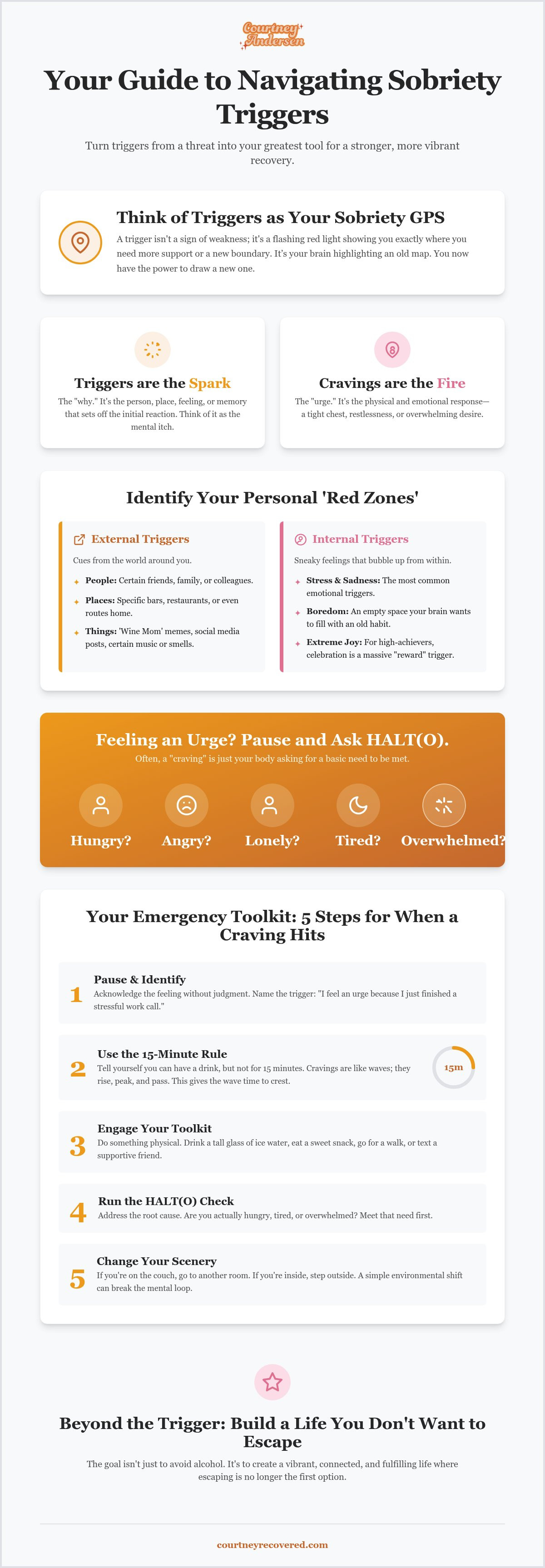
Your Emergency Sober Toolkit: 5 Steps to Take When a Craving Hits
You’ve identified your red zones and practiced your social scripts. But sometimes, despite your best efforts, a craving hits like a freight train. When your brain starts doing gymnastics to justify "just one," you need a tactical response. Navigating sobriety triggers is much easier when you have a physical Sober Toolkit ready to go. This isn't just a metaphor; it's your secret weapon for those high-stress moments when your resolve feels thin.
When the urge feels loud, follow these five steps to stay on track:
- Step 1: The 15-Minute Rule. Cravings are like waves; they always break. Set a timer on your phone. Tell yourself you don't have to say "never"; you just have to say "not for the next 15 minutes." Usually, the peak intensity passes before the alarm even sounds.
- Step 2: Change Your State. Shock your system out of the mental loop. Splash ice-cold water on your face, take a brisk walk around the block, or blast a high-energy playlist. Physical movement disrupts the neural pathways trying to lead you to a bottle.
- Step 3: Reach Out. Silence is where triggers thrive. Texting a sober sister or calling someone who gets it beats "toughing it out" every single time. Connection is the literal antidote to the isolation of a craving.
- Step 4: Play the Tape to the End. Don't just visualize the first sip. Visualize the 3 AM anxiety, the parched mouth, the pounding headache, and the crushing shame of starting over. The "reward" lasts minutes; the fallout lasts days.
- Step 5: The Dopamine Swap. Your brain is asking for a hit of joy. Give it one that won't ruin your life. Grab a piece of dark chocolate, watch a comedy clip, or indulge in a high-end mocktail.
Why You Need a Physical Toolkit
Keeping a "Sober First Aid Kit" is a game changer for navigating sobriety triggers in real time. Fill a small bag with strong mints, calming essential oils, and your copy of the Sober Vibes Book. When you're triggered, your logical brain often goes offline. A physical toolkit bridges the gap between "knowing" what to do and actually "doing" it by giving your senses a tangible distraction.
The Power of the Sobriety Circle
Community is the ultimate trigger-buffer. If you're at a 10 PM event and the urge is screaming, having an online space to vent is your lifeline. Being part of a Sobriety Circle means you have a group of people who have been exactly where you are. They offer the "tough love" benefit of calling you on your BS before you make a move you'll regret. You don't have to do this alone. If you're ready to stop white-knuckling your recovery, grab your Sober Toolkit and start building your custom defense today.
Beyond the Trigger: Building a Life You Don't Want to Escape
Sobriety isn't a life sentence of boredom. It is a massive upgrade. Navigating sobriety triggers in 2026 is about more than just dodging bars or avoiding specific people; it is about building a reality so vibrant that alcohol feels like a downgrade. When you shift your focus from what you are "giving up" to what you are actually gaining, the entire game changes. You aren't just staying sober; you are evolving into a version of yourself that doesn't need a liquid crutch to feel confident, relaxed, or happy.
This is the core of the "Stop Starting Over" philosophy. We've all been in that cycle of quitting and relapsing because we only focused on the "not drinking" part. This time is different because you are addressing the root causes. A personalized approach to 1-on-1 sobriety coaching helps you rewire your response to stress so that a bad day at the office doesn't automatically mean a trip to the wine aisle. You learn to map your specific triggers and replace old habits with high-value actions that actually serve your goals.
Rewiring Your Reward System
Your brain is used to the quick, cheap dopamine hit that alcohol provides. To sustain long-term joy, you have to find "New Highs" that don't come with a hangover. This might look like the rush of a heavy lifting session, the flow state of a creative project, or the genuine buzz of a deep, late-night conversation where you actually remember every word. Our "The After" program is designed specifically for this phase, helping you navigate the space where you've moved past the initial struggle and are ready to design a lifestyle of sustained energy and purpose. Every time you push through a triggered moment, you physically change your brain. Your future self is already thanking you for the work you're doing today.
Next Steps: Join the Sobriety Circle
You don't have to navigate this transition in isolation. While the "Sober First Aid Kit" we discussed earlier is great for emergencies, long-term success thrives on community. Joining the Sobriety Circle gives you access to a room full of high-functioning women who are doing the same work and celebrating the same wins. It is a space for accountability, shared wisdom, and the kind of support that only people who have been there can provide.
If you're looking for a daily roadmap, start with the Sober Vibes Book. It's your daily guide to staying grounded and inspired as you reclaim your time and your health. Remember, this journey isn't about restriction; it's about freedom. You’ve got this, and I’ve got you. Let's make 2026 the year you finally stop surviving and start truly living.
Your Vibrant, Alcohol-Free Future Starts Now
You’ve got the map, the scripts, and the toolkit. Navigating sobriety triggers is no longer a mystery; it’s a skill you’re mastering every single day. Remember that every craving you outlast is a brick in the foundation of a life you actually love. You’ve learned to spot your red zones and use your sobriety GPS to stay on track. This isn't about being a social outcast. It's about being the most present, high-energy version of yourself in every room you enter.
As the author of the Sober Vibes Book and the leader of a global community of thousands in the Sobriety Circle, I’ve seen the magic that happens when women stop white-knuckling and start thriving. We were voted the #1 Non-Clinical Sobriety Support for Women because we focus on the "after," which is the vibrant reality that waits for you when the bottle is gone.
Ready to stop starting over? Book your 1:1 Sobriety Coaching discovery call today.
You are capable of so much more than you know. I’m right here with you, and your best life is just getting started.
Frequently Asked Questions
How long do sobriety triggers usually last during early recovery?
Sobriety triggers are most intense during the first 90 days as your brain recalibrates its reward system. While the frequency of these hits drops over time, a single craving usually lasts only about 15 to 20 minutes. If you can ride out that short window using the tools we discussed, the urge will break. Think of it as a temporary weather pattern rather than a permanent state of being.
Can I ever go back to bars or parties once I'm sober?
You can absolutely return to bars and parties once you feel grounded in your new identity. Navigating sobriety triggers in social settings gets easier as you build your "Social Sobriety" muscles. The key is having an exit plan and a mocktail in hand before the pressure starts. You'll eventually realize that you can have more genuine fun when you're fully present and hangover-free.
What is the single most common sobriety trigger for professional women?
The single most common trigger for professional women is the "Reward" trigger after a high-pressure workday. You’ve crushed your goals and managed a team, so your brain tells you that you’ve earned a glass of wine to "downshift." This is why mapping your red zones is vital. Replacing that liquid reward with a high-value self-care ritual helps break the loop without sacrificing your success.
What should I do if I feel like I'm about to relapse right now?
If you feel like a relapse is imminent, stop everything and reach out for help immediately. This is the moment to use your Sober Toolkit or message your Sobriety Circle. Don't try to white-knuckle it alone. Play the tape all the way to the end. Visualize the 3 AM anxiety and the morning-after regret. Usually, speaking the urge out loud to someone who gets it is enough to kill its power.
Is it possible to have a social life without alcohol in 2026?
A vibrant social life without alcohol isn't just possible; it's becoming the new standard in 2026. With the rise of high-end mocktails and the sober-curious movement, you’ll find you aren't the only one skipping the booze. You’ll trade shallow, blurry happy hours for deep connections and activities you actually enjoy. Sobriety gives you the energy to actually show up for your life rather than just observing it through a haze.
How do I deal with 'Wine Mom' triggers in my friend group?
Dealing with 'Wine Mom' culture requires firm boundaries and a bit of a perspective shift. When friends joke about "mommy juice," remember that their comments are about their own relationship with alcohol, not yours. You don't have to be the booze police, but you can lead by example. If the group pressure feels too heavy, it might be time to find a new circle that celebrates your growth.
Does the 'mental itch' to drink ever truly go away?
The "mental itch" to drink doesn't necessarily vanish forever, but it loses its volume and its teeth. Over time, it transforms from a screaming command into a quiet, manageable data point. You’ll recognize the feeling, acknowledge the trigger, and move on with your day without it ruining your mood. It becomes a tiny reminder of how far you’ve come rather than a threat to your future.
How can a sobriety coach help me identify triggers I don't even know I have?
A sobriety coach acts as a neutral mirror to help you spot triggers you might be too close to see. We look for hidden patterns, like how you react to boredom or even extreme joy. Through 1:1 sessions, we help you navigate sobriety triggers and create a custom roadmap that fits your professional life. You’ll move from guessing why you feel triggered to having a proactive plan for every scenario.
I want you to feel sober NOT boring!
Kickstart your sobriety with my free 2-day video workshop series to master your sober mindset and have FUN in your sobriety journey!


