
How to Stop Drinking Every Night: A Non-Clinical Guide
Sep 05, 2026
What if the reason you can't stop after one glass has nothing to do with your willpower and everything to do with a ritual that's just plain stale? You know the loop. It's 5 PM, the mental obsession kicks in, and despite promising yourself on Monday morning that "this week is different," you're staring at the bottom of a bottle again. That low-grade morning hangxiety is exhausting. If you're wondering how to break the cycle of drinking every night, you're likely tired of feeling like a failure before your coffee even cools down. You're terrified that life without a drink will be boring, but I've been there, and I promise it's not.
This process isn't about sitting in a somber, clinical room or wearing a heavy label; it's about a total lifestyle upgrade. You aren't alone in this shift either. As of July 2026, 36% of Americans report they're drinking less than they were a year ago. In this guide, you'll discover the high-energy strategy to trade your nightly habit for a life that's actually vibrant. We're talking about waking up with clear-headed energy and finally feeling in control of your evenings. I'm going to show you how to ditch those 5 PM cravings and build a toolkit that makes sobriety feel like the ultimate gain.
Key Takeaways
- Identify the "gray area" where your nightly habit lives, and learn why high-functioning success often masks a growing obsession.
- Hack your brain's reward loop to discover how to break the cycle of drinking every night without relying on shaky willpower.
- Build a personalized Sober Toolkit that acts as your defensive line against stress, boredom, and those nagging 5 PM cravings.
- Implement a 5-step evening reset that replaces your "opening the bottle" ritual with a vibrant, clear-headed transition.
- Shift your mindset from "giving up" to "leveling up" as you rediscover the passions that make a sober life feel like a total upgrade.
Understanding the Gray Area: Why Your Nightly Habit Feels Impossible to Quit
Most people think alcohol struggles only look like the extreme "rock bottom" scenes we see in movies. They imagine losing a job or a home, but for most of us, the reality is much more subtle. It's called Gray Area Drinking. This is the space between being a "normal" social drinker and reaching a clinical crisis. You're likely meeting your deadlines and showing up for your family, but you're also living in a constant state of mental negotiation with a bottle of wine. You don't need to wait for a disaster to decide you deserve a better life. Wanting to feel good every single morning is reason enough to change.
The reason this habit feels so sticky isn't usually about physical dependency; it's about a deeply ingrained psychological loop. Your brain has paired the end of the day with the "pop" of a cork. While only 7.6% of those with Alcohol Use Disorder receive formal treatment according to 2024 data, millions more are simply stuck in this nightly autopilot. Breaking free starts with realizing that your habit is a response to your environment and your stress, not a defect in your character.
The High-Functioning Trap
If you're a high achiever, your success actually makes it harder to quit. You use your professional wins as a shield. You think, "I can't have a problem because I just landed that promotion" or "I'm a great parent, so this nightly glass is fine." This creates a false sense of security that masks the growing obsession. The most dangerous thought pattern is believing you "deserve" a drink because you worked hard. In reality, you deserve a nervous system that isn't fried by 6 PM. You can explore this dynamic further in Gray Area Drinking: When Your Habit Becomes a Burden.
Willpower is a Finite Resource
Have you noticed how you're a "sober superstar" at 8 AM but a "wine enthusiast" by 5 PM? That isn't a coincidence. It's decision fatigue. Every choice you make during the day, from what to wear to how to handle a difficult client, drains your willpower. By sundown, your tank is empty. When you're trying to figure out how to break the cycle of drinking every night, relying on willpower alone is a losing game. You don't need more "grit" or self-control. You need to stop "trying harder" and start designing better systems that remove the need for a 5 PM decision altogether.
The Anatomy of the Nightly Cycle: Triggers and Cravings
Your brain is a master of automation. When you're stuck wondering how to break the cycle of drinking every night, you're actually fighting a deeply programmed "Cue-Routine-Reward" loop. The cue is the trigger; the routine is the pour; and the reward is that immediate, artificial flood of dopamine. This chemical hit makes the first sip feel like a total "reset" from the day's chaos. It tricks you into thinking you've found the exit ramp from stress, but in reality, you've just signed up for another lap on the same exhausting track.
This cycle feels like a loop because it is one. Your brain begins to anticipate the dopamine hit long before you even reach for the glass. This anticipation creates a mental obsession that can start as early as noon, slowly draining your energy until you finally "give in" at 5 PM. It isn't a lack of character; it's a hijacked reward system that has learned to rely on a substance for a sense of completion. If you're ready to swap that automated pour for something that actually fuels you, grabbing a Sober Toolkit can help you build your defensive line against these cues.
Identifying Your Personal '5 PM Shadow'
The "5 PM Shadow" is that exact moment the thought of a drink first enters your mind. For many professional women, this isn't about a physical craving; it's an emotional ritual used to "transition" from work-mode to home-mode. Your trigger might be the sound of the garage door opening, the act of starting dinner, or the silence that hits after the kids are finally in bed. Tracking these moments is vital. Are you actually thirsty, or are you just trying to signal to your brain that the "productive" part of your day is over? Distinguishing between a situational trigger like cooking and an emotional one like boredom is the first step in disrupting the automation.
The Myth of the 'Relaxing' Glass
We've been sold a lie that alcohol is the ultimate relaxation tool. While that first glass might feel like it's taking the edge off, it's actually chemical sabotage. Alcohol increases your cortisol levels, the body's primary stress hormone. This leads to the "rebound effect," which is why you likely find yourself wide awake at 3 AM with a racing heart and a mind full of regret. That nightly drink is a "debt" you're taking out on your future self, and you'll be forced to pay it back with interest the next morning through increased anxiety and brain fog. Real relaxation doesn't come in a bottle; it comes from a nervous system that isn't constantly being spiked and crashed.
Strategy Over Willpower: Practical Tools to Disrupt the Urge
If you've been white-knuckling your way through the week, you already know that willpower is a fickle friend. To truly learn how to break the cycle of drinking every night, you have to stop fighting the urge and start outsmarting it. Think of your strategy as a defensive line. When a craving hits, it isn't a command; it's just a 20-minute wave of discomfort. This is called Urge Surfing. Instead of trying to crush the feeling, you just ride it out, knowing it will peak and then fade. While you're on that wave, use the power of Playing the Tape Forward. Don't just think about that first cold sip. Visualize the 3 AM heart palpitations and the morning guilt we discussed earlier. Seeing the full movie, not just the trailer, changes everything.
You also need a Plan B for when the day goes sideways. If your boss is difficult or the household chaos peaks, that's when the old "I need a drink" script starts playing. Having a pre-decided alternative, like a specific mocktail or a 10-minute podcast, prevents you from making a high-stakes decision when you're emotionally drained. Strategy is about making the right choice easy and the wrong choice difficult.
Building Your Sober Toolkit
Your toolkit is your personalized arsenal for success. It's more than just a list; it's a collection of things that make you feel supported and pampered without the poison. Start with alcohol-free alternatives that still feel special, like a spicy ginger beer in a fancy glass. Add journaling to clear the mental clutter and keep a "sober" contact in your favorites list. Using the Sober Vibes Book as a daily anchor can help shift your mindset from deprivation to celebration. For a full breakdown of what to include, check out The Best Sobriety Tools and Resources to Kickstart Your Alcohol-Free Life.
Accountability: The Secret Sauce
Isolation fuels the nightly cycle. When you keep your struggle a secret, you give the habit more power. You don't need a somber basement meeting or a clinical environment if that doesn't resonate with you. Many women find that a vibrant, non-clinical sobriety coach offers the proactive, high-energy roadmap they've been looking for. This is about forward momentum, not dwelling on the past. Joining a community like the Sobriety Circle gives you the peer support you didn't know you needed. It's the difference between feeling like a lonely outlier and being part of a group that's actually excited about living life fully awake.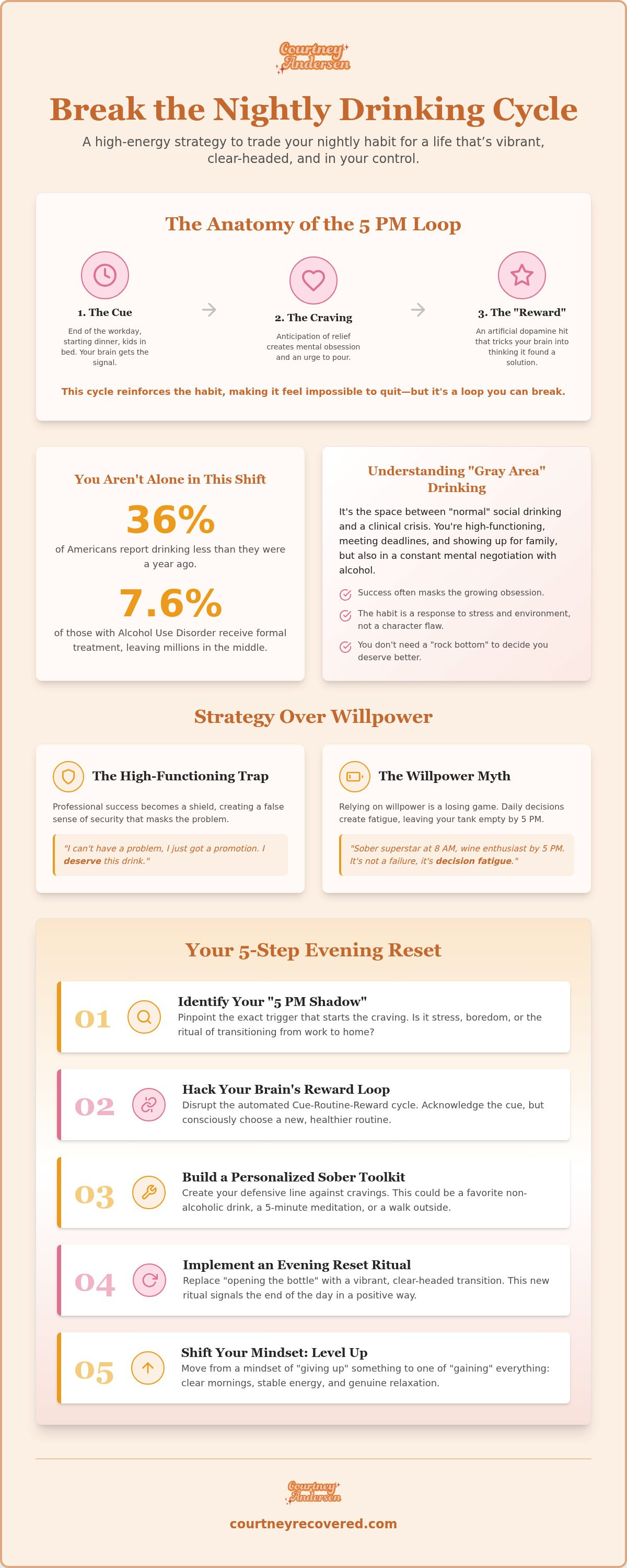
Your 5-Step Evening Reset for a Sober Night One
You've identified the triggers and built your toolkit. Now, it's time for the execution. Transitioning from a high-pressure workday to a relaxing home life is usually where the wheels fall off. If you're ready to learn how to break the cycle of drinking every night, you need a tactical plan for the most dangerous hours of the day: the Witching Hour. This isn't about hoping you'll feel strong; it's about creating an environment where the right choice is the only logical one. By following a structured evening reset, you remove the mental fatigue of deciding "should I or shouldn't I?" and replace it with a vibrant, predictable new rhythm.
Step 1: The Kitchen Clear-Out
You can't expect to win a fight if the enemy is living in your pantry. A successful night one starts with a physical purge. Get rid of the half-empty bottles and the "emergency" stash. We often tell ourselves we're keeping it "just for guests," but in the early days, that's a trap waiting to be sprung on a stressful Tuesday. Clear out the wine rack and replace it with a curated beverage station. Fill it with sparkling waters, high-end tonics, and the ingredients for your favorite AF mocktails. Lowering the "barrier to entry" for sobriety means making sure there isn't a drop of alcohol within easy reach when a craving peaks.
Step 2: The 5 PM Pivot
The 5 PM Pivot is your secret weapon against the automated pour. Instead of walking through the door and heading straight for the fridge, change your physical state. Movement is the fastest way to burn off the cortisol that has built up during your meetings. Whether it's a 15-minute brisk walk, a quick yoga flow, or a kitchen dance party, move your body. Use the "15-minute rule": commit to doing literally anything else for 15 minutes when the urge hits. Most cravings are just waves that peak and pass within that window. This is a core part of the Stop Starting Over methodology, focusing on handling that initial friction with action rather than overthinking.
Once you've moved your body, finish your reset with these three non-negotiables:
- The "Fancy" Beverage: Pour your AF drink into your absolute favorite wine glass or a heavy crystal tumbler. You aren't giving up the ritual; you're just upgrading the ingredients.
- The Witching Hour Activity: From 5 PM to 7 PM, stay busy. Start a puzzle, call a friend who supports your goals, or dive into a hobby that keeps your hands busy.
- The Early Wind-Down: Set an early bedtime. Sleep is the ultimate reset button for your brain's chemistry. Create a luxurious routine with a hot bath or a new book to signal to your nervous system that it's safe to rest without a chemical sedative.
When you master how to break the cycle of drinking every night through these small, tactical shifts, you'll find that the "impossible" task of staying sober becomes a series of manageable, high-energy wins.
Beyond the First Night: Building a Life You Don’t Need to Escape
Breaking the nightly habit is a massive win, but it's just the beginning of your evolution. Once you've figured out how to break the cycle of drinking every night, the real magic happens in the space where the wine used to be. This isn't about sitting in a somber room and talking about what you miss. It's about rediscovering the hobbies and passions the nightly haze buried. Maybe you used to love painting, early morning hikes, or just having a conversation where you actually remember the details the next day. Sobriety is a total lifestyle upgrade, not a restrictive sentence.
You can expect a serious "Glow Up" as the days stack. By day 30, your body is already healing and your sleep quality has skyrocketed. By day 60, your mood stabilizes as your brain chemistry balances out. By day 90, you'll see it in the mirror. Your skin is brighter. The puffiness is gone. You have a clear-headed energy that no amount of caffeine could ever match. Handling social pressure becomes easier when you realize that most people are actually "sober curious" themselves. As of 2026, 65% of Gen Zers plan to reduce their alcohol intake. You aren't the outcast. You're the trendsetter. Learning how to break the cycle of drinking every night is simply the first step toward a version of yourself that doesn't need a chemical buffer to enjoy a Friday night.
The Power of Personalized Coaching
Navigating a professional and family life while staying sober requires more than just a generic plan. It requires a strategy that fits your specific schedule and stressors. This is why many women move from "day-to-day" survival to long-term emotional sobriety through 1-on-1 Sobriety Coaching: Your Personalized Roadmap. It is the antidote to the DIY struggle, offering a mentor who's been exactly where you are and knows the fastest way through the noise of early recovery.
Life in 'The After'
"The After" is the vibrant reality waiting for you on the other side of the obsession. When you stop focusing on what you're losing and start seeing what you're gaining, the entire narrative shifts. You aren't "giving up" drinks; you're gaining control, clarity, and connection. Building a community of like-minded women who "get it" makes the journey feel celebratory rather than lonely. You can learn more about this transition in Life After Sobriety: Build a Life You Don't Need to Escape.
Your Roadmap to a Life You Don’t Need to Escape
You’ve spent long enough stuck in the Monday morning regret loop. You now know that breaking the cycle of drinking every night isn’t about having more "grit"; it’s about swapping that stale 5 PM ritual for a high-energy evening reset and building a toolkit that actually works. You’ve learned how to spot the "Gray Area" and why your professional success shouldn't be a shield for a habit that’s draining your vibrance. This is about choosing a lifestyle upgrade, not a restrictive sentence.
I’ve helped over 500 women find their own "After" through the Sobriety Circle and my book, Sober Vibes. You don’t have to navigate this alone or settle for a somber, clinical approach that feels like it’s stripping away your personality. If you’re tired of the DIY struggle and want a personalized roadmap that celebrates your growth without the shame, let’s get started. You deserve to wake up with clear-headed energy every single day. The vibrant life you’ve been chasing is already waiting for you.
Ready to end the Day 1 cycle? Book your 1:1 Sobriety Coaching discovery call today.
Frequently Asked Questions
Is drinking every night a sign of alcoholism?
Clinical labels like "alcoholism" are often less helpful than looking at the actual impact on your daily life. If you're constantly negotiating with yourself about 5 PM, you're likely in the "gray area" of drinking. It isn't about being a "drunk" in a movie; it's about a habit that has stopped serving your goals. You don't need a medical diagnosis to decide that nightly drinking is making you feel sluggish and anxious.
How do I relax in the evening without a glass of wine?
Relaxation is a physical state you can achieve without a liquid sedative. You can reset your nervous system using sensory shifts like a weighted blanket, a hot shower, or magnesium supplements. The key is to replace the "wine ritual" with a new "unwind ritual" that signals to your brain that the workday is done. Try a 10-minute meditation or a high-energy dance session to burn off lingering cortisol. Real rest is much deeper.
Can I break the drinking cycle on my own without AA?
You absolutely can break the cycle without traditional 12-step programs. While AA works for some, many women prefer a non-clinical, celebratory approach that focuses on lifestyle design and personal empowerment. Programs like the Sobriety Circle provide community and tools without a somber atmosphere. Breaking the cycle of drinking every night means finding the strategy that fits your professional life, not following a one-size-fits-all rulebook.
What should I do if my partner still drinks every night?
Your sobriety is your own, and you don't need your partner to join you to be successful. Focus on your new evening reset and keep your AF drinks stocked and ready. It's helpful to have a direct conversation about your goals, but ultimately, your vibrancy will be the best testimony. Many women find that once they start waking up with clear-headed energy, their partners naturally become curious about the shift. Stay in your own lane.
How long does it take to break the habit of nightly drinking?
Most habit researchers suggest it takes about 66 days to fully automate a new behavior, but you'll feel the mental shift much sooner. The first 30 days are about disrupting the "5 PM Shadow" and clearing the fog. By day 60, the mental obsession usually starts to quiet down significantly. Consistency is the secret sauce here. If you focus on the evening reset, you'll find that the "pull" of the bottle weakens every week.
Will I be boring at social events if I stop drinking?
You won't be boring; you'll actually be more present and engaging. Alcohol often makes us repetitive and sleepy, which isn't exactly "the life of the party." When you're sober, you have the energy to truly connect and the clarity to remember the night. Plus, you'll never have to worry about "hangxiety" the next morning. Sobriety is a social superpower that allows you to be the most authentic, vibrant version of yourself without a chemical mask.
What are the best non-alcoholic drinks to replace my nightly habit?
The AF market is exploding with options that actually taste grown-up and sophisticated. Swap your nightly pour for hop water, botanical spirits, or spicy ginger beer in a fancy glass. Look for functional beverages that contain adaptogens like ashwagandha or reishi to help you chill out naturally. The goal isn't just to find a "juice" replacement; it's to find a drink that honors the ritual of ending your day without the toxic side effects.
When should I consider hiring a sobriety coach?
Consider hiring a sobriety coach when you're tired of the "starting over every Monday" cycle. If you've tried the DIY books and podcasts but still find yourself staring at a glass by Tuesday night, you likely need a personalized roadmap. A coach acts as a relatable mentor who provides high-momentum strategies tailored to your busy life. It's for the woman who is ready to stop surviving and start thriving in a life she loves.
I want you to feel sober NOT boring!
Kickstart your sobriety with my free 2-day video workshop series to master your sober mindset and have FUN in your sobriety journey!


