
Dealing with Sobriety Fatigue: Why You’re So Tired and How to Get Your Spark Back
Aug 31, 2026
What if I told you that feeling like a total zombie is actually a sign that your recovery is working exactly as it should? You put down the bottle expecting a burst of "pink cloud" energy, but instead, you're hitting snooze six times and wondering why your brain feels like it's wrapped in cotton wool. Dealing with sobriety fatigue can feel like a cruel joke, especially when you're trying to show up for your family or crush it at work. It's frustrating, exhausting, and enough to make anyone worry they've lost their edge for good. You aren't failing; you're in the middle of a renovation.
I've been exactly where you are, staring at a computer screen with zero focus and fearing that this slump might lead to a relapse. But here's the truth: your body is busy redecorating your internal world, and that takes a lot of energy. In this guide, we're going to break down why this "zombie phase" happens and, more importantly, how long it actually lasts. You'll get the validation you need and the practical, non-clinical tools to manage the slump so you can finally get your spark back. Let's talk about how to navigate the "After" without losing your mind.
Key Takeaways
- Understand that your exhaustion isn't a flaw; it's your brain rebalancing its chemistry and redecorating for a more vibrant life.
- Get a clear timeline for dealing with sobriety fatigue, including why the 90-day mark is often the hardest hurdle for your energy levels.
- Learn why protective rest and smart nutrition hacks are more effective for reclaiming your spark than just drinking more caffeine.
- Discover how to manage the hidden decision fatigue that comes with navigating a sober lifestyle and why saying no takes so much out of you.
- Identify your specific energy leaks and find out how the right community can help you navigate the fog without feeling isolated.
What is Sobriety Fatigue? (And Why You Feel Like a Zombie)
You thought the hard part was over once the shakes stopped, right? You expected to wake up at 5:00 AM, crush a workout, and sip green juice like a wellness influencer. Instead, you're dragging yourself through the day like a character from a horror movie. This is sobriety fatigue, and it's the specific brand of exhaustion that hits once the initial "I'm doing it!" adrenaline wears off. Dealing with sobriety fatigue can feel incredibly lonely because, on the outside, you look like you're winning, but on the inside, your battery is at 1 percent.
It's important to distinguish this from the acute withdrawal phase. The first few days are a physical battle, but this mid-sobriety slump is more about your brain redecorating. Imagine your mind is a fixer-upper. For years, alcohol was the crappy tenant who let the pipes rust and the wallpaper peel. Now that they've moved out, your brain is doing a full-scale renovation. It's tearing up the floorboards and rewiring the electrical system. That takes a massive amount of energy, and unfortunately, you can't live in a house during a remodel without feeling a little displaced and drained.
It is totally okay to be annoyed that you aren't a "superhero" yet. You've done a massive thing by quitting, and it feels like a rip-off when you don't get that immediate energy boost. But your body isn't broken; it's just busy. You're trading the fake, frantic energy of a hangover for a deeper, more sustainable kind of power that just hasn't arrived yet.
The Science of the Sober Slump
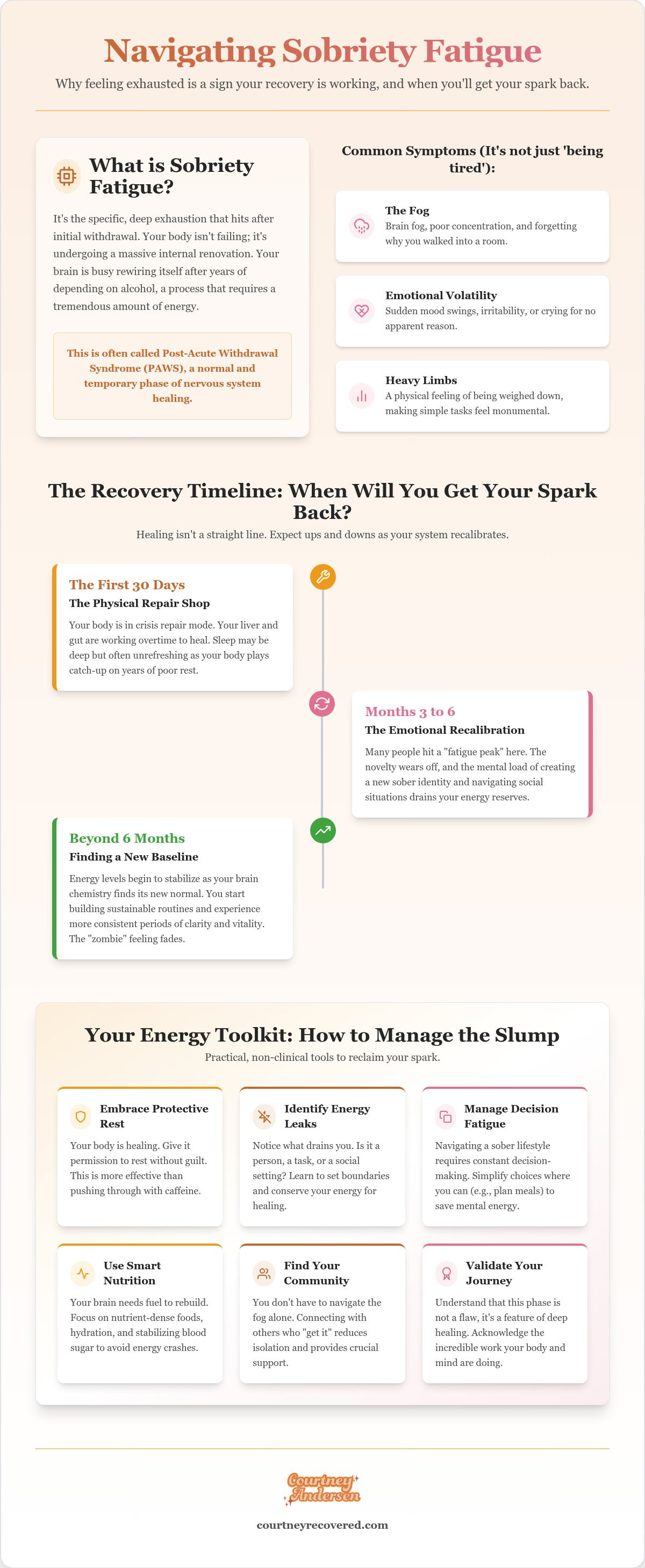
Your brain is recalibrating its "yay" and "chill" chemicals, dopamine and GABA. Alcohol used to do the heavy lifting for these, so your brain stopped making them on its own. Now, it's trying to remember how to function without that chemical crutch. You're also finally feeling the years of sleep deprivation that alcohol masked; you weren't actually sleeping well for all those years, you were just unconscious. This phase is often called Post-Acute Withdrawal Syndrome (PAWS), which is a normal and temporary period where your nervous system heals after you learn What is Sobriety? and begin the long-term recovery process.
Symptoms That Aren’t Just 'Being Tired'
Dealing with sobriety fatigue doesn't just mean you want a nap. It's a full-body experience that affects how you think and feel. Here are a few ways it usually shows up:
- The Fog: You walk into a room and forget why you're there, or you find your car keys in the fridge.
- Emotional Volatility: You might find yourself sobbing at a laundry detergent commercial or getting irrationally angry because the grocery store is out of your favorite sparkling water.
- Heavy Limbs: Your arms and legs feel like they weigh 500 pounds, and the idea of "getting things done" feels like climbing Everest.
The Sobriety Fatigue Timeline: When Will I Get My Spark Back?
You want a date. You want to circle a day on your calendar and say, "That's when I'll feel like a human again." I totally get it. But dealing with sobriety fatigue is less like a sprint and more like a slow, weird dance. Some weeks you're the star of the show; other weeks you're back on the couch wondering if you'll ever have a personality again. Healing isn't linear. You might have three high-energy weeks followed by a sudden crash that makes you want to crawl into a hole. This doesn't mean you're failing or that you're about to relapse. It simply means your nervous system is finally safe enough to stop running on fumes and start the real work of resting.
The First 30 Days: The Physical Repair Shop
Your body is currently in crisis mode, but in a good way. Your liver and gut are working overtime to repair the damage from prolonged and heavy alcohol use, and that takes every spare calorie you have. Even though you're finally getting sober sleep, it often feels like you're waking up from a coma rather than a rest. This is the "Repair Shop" phase. It's why hitting 90 days no alcohol is the gold standard for a true cellular reset. You have to give your cells time to actually remember how to function without being pickled in toxins.
Months 3 to 6: The Emotional Recalibration
Around the three-month mark, many women hit a "fatigue peak." The novelty of being sober has worn off, and the reality of living life without a liquid crutch is setting in. Social events take 3x more energy because you're actually present and processing every conversation instead of just numbing out. This is the mental load of building an identity. You're learning who you are without a drink, and that is exhausting work. Your brain is essentially running heavy new software on an old, tired battery.
While you're waiting for your spark to return, start tracking the wins that aren't energy-related. Is your skin glowing? Is your 3:00 AM anxiety gone? Are you more patient with your kids? These are the breadcrumbs leading you out of the woods. Often, we get so caught up in being "productive" that we miss the massive internal shifts happening right under the surface. If you're struggling to troubleshoot why your battery is still at zero, 1:1 sobriety coaching can help you find your specific energy leaks. By six months, that natural, steady energy usually begins to surface, and you'll realize the wait was worth it.
How to Deal with Sobriety Fatigue: Your Energy Toolkit
Dealing with sobriety fatigue requires a total shift in how you view "doing nothing." In our hustle-obsessed culture, rest is often seen as a weakness. But when you're in the thick of the sober slump, rest is actually your most productive tool. I call this Protective Rest. It's giving yourself radical permission to skip the laundry, order takeout, and go to bed at 8:00 PM without an ounce of guilt. Your body is doing the equivalent of running a marathon every single day just to repair your nervous system. Don't make it fight you for resources; give it the space it needs to heal.
Let's talk about the "Sober Nutrition" hack. If you find yourself inhaling a bag of gummy bears at 9:00 PM, don't panic. Those intense sugar cravings are actually SOS signals for energy. Alcohol is essentially liquid sugar, and your brain is used to that instant, cheap dopamine hit. While you don't want to live on candy forever, give yourself some grace in the early months. Combine your treats with high-protein snacks to stabilize your blood sugar and prevent those brutal energy crashes. Also, keep a water bottle within arm's reach. Dehydration is the fastest way to turn mild brain fog into a full-blown mental blackout.
You also need to set "Energy Boundaries" with the people in your life. You might not have the bandwidth for three-hour family dinners or extra late-night work projects right now. It's okay to say, "I'm focusing on my health right now and need to keep things low-key." Protecting your peace is the same thing as protecting your sobriety. If you don't have the energy to explain yourself, just remember that "No" is a complete sentence.
Mastering Your Sober Sleep Hygiene
Sleep in sobriety is a whole different beast. You're no longer passing out; you're actually resting, which can feel weird at first. To make the most of it, you need a ritual that tells your brain it's safe to power down. Ditch the screens an hour before bed and try a non-caffeinated nightcap, like tart cherry juice mixed with sparkling water. It's a natural way to boost melatonin without the morning-after fog. Adding magnesium to your routine can also help calm that "wired but tired" feeling. For more ideas on building a solid flow, check out these daily sobriety tools to help you stay grounded.
Movement Without the Burnout
I know you're eager to get your life back, but month two is usually not the time to start training for a triathlon. If you push too hard, you'll trigger a cortisol spike that leaves you even more exhausted. Use your Body Compass. If a workout feels like a punishment, pivot to something gentle. A twenty-minute walk or some light stretching is enough to wake up your nervous system without draining your tank. Movement should feel like a celebration of what your body can do now that it's not poisoned, not another chore to check off your list.
The Mental Load: Why 'Saying No' is Making You Tired
Ever wonder why a simple dinner party leaves you feeling like you just ran a marathon? It's because you're dealing with sobriety fatigue on a mental level. Every time you say "No, thank you" to a glass of wine or explain for the tenth time that you'll just have a soda, you're paying a mental tax. This is decision fatigue. In your drinking days, the decision was usually made for you before you even walked through the door. Now, you're constantly negotiating with yourself and the world. It’s exhausting to be the person who is always "on," scanning the room for triggers or rehearsing your "I don't drink" speech in your head.
You're also navigating a massive identity crisis. Rebuilding who you are without alcohol isn't just a weekend project; it's a deep-sea dive into your own personality. You're learning what you actually like, who you actually enjoy spending time with, and how to handle stress without a chemical buffer. That is heavy mental labor. Here is the tough love truth: You are doing some of the hardest work a human can do, and it is perfectly okay to be absolutely wiped out by it. You aren't just "tired"; you are transforming.
Social Battery Management
Your social battery is significantly smaller than it used to be, and that is perfectly okay. To keep from hitting a total wall, you need an Exit Strategy for every event. Know exactly how you're getting home and what you'll say when you're ready to leave so you don't get stuck in an energy-draining conversation. I've put together some specific scripts on how to be sober and social that will save you from that mid-party panic. Also, never underestimate the power of a Sober Nap. If you’ve survived a high-stakes wedding or a corporate happy hour, you’ve earned an afternoon on the couch to let your brain catch up.
Ending the 'Relapse Anxiety' Cycle
One of the biggest energy leaks is the constant "What if I mess up?" loop. This hyper-vigilance keeps your nervous system in a state of high alert, making dealing with sobriety fatigue even harder. When you adopt the Stop Starting Over mindset, you move away from fear and into the peace of the present moment. You stop worrying about a hypothetical future and start celebrating the very real present. Finding your people in a community like the Sobriety Circle reduces the "loneliness tax" on your energy by providing a space where you don't have to explain yourself. If you’re ready to trade the anxiety for actual energy, join the Sobriety Circle and find the support you've been looking for.
Leveling Up Your Energy with Courtney Recovered
You’ve spent enough time staring at your to-do list with heavy eyes and a foggy brain. Dealing with sobriety fatigue isn't just a physical hurdle; it's a phase of life where you need more than just a nap. You need a roadmap. While you're in the messy middle of this transformation, it’s easy to feel like you’re the only one who didn’t get the memo about the "glow up." You don't have to navigate this fog alone. I’ve been through the zombie phase myself, and I know that dealing with sobriety fatigue is much easier when you have a mentor to point out the energy leaks you're too tired to see.
A sobriety coach acts as your personal energy troubleshooter. We don't just talk about the abstract idea of staying sober; we look at your specific lifestyle to find out where your power is draining. Whether it’s boundary issues at work or a sleep routine that needs a total overhaul, 1:1 support gives you the direct feedback you need to stop surviving and start actually living. Think of it as a shortcut through the slump to the vibrant "After" you deserve.
Personalized Support for Professional Women
Your life is busy, and your recovery should honor that, not add to the stress. My coaching is designed for women who are high-functioning but feel like they’re running on an empty tank. We move you from functional to truly flourishing with the right daily routines. If you need immediate, actionable steps to save your energy today, check out the Sober Toolkit for energy-saving strategies. It’s packed with the exact tools I used to reclaim my spark when I felt like a zombie.
Join the Sobriety Circle
There is something incredibly healing about hearing another woman say, "I'm tired too." The Sobriety Circle is more than just a group; it’s a battery pack of community. When your own energy is low, you can lean on the collective strength of women who get it. Inside, you’ll find access to the Stop Starting Over and The After programs, which are built to ensure your vitality lasts for the long haul. You’re so close to the vibrant life you were promised, and we’re here to help you cross the finish line.
Ready to move past the fatigue? Let's talk 1:1.
Your Vibrant 'After' is Waiting
You've learned that the zombie phase isn't a permanent state; it's just your brain doing the heavy lifting of a full-scale renovation. With protective rest and clear energy boundaries, you can navigate this slump without letting it derail your progress. Dealing with sobriety fatigue is a rite of passage that proves you're finally healing from the inside out. As a coach at Courtney Recovered who has lived through every stage of this journey, I promise you that the fog does lift. You don't have to wait for your spark to return on its own while feeling isolated and drained. Whether you're seeking structured daily routines or the high-energy support of a dedicated community, Courtney Recovered offers resources and a community of women ready to help you recharge. It's time to stop surviving and start actually enjoying your new life. Stop struggling with the 'sober slump' and get your spark back with 1:1 coaching. You've done the hard work of quitting; now let's make sure you have the energy to celebrate it.
Frequently Asked Questions
How long does sobriety fatigue typically last?
Sobriety fatigue generally lasts anywhere from a few weeks to several months, with many women feeling a significant energy shift around the six-month mark. While the most intense "zombie phase" usually peaks during the first 90 days, you might experience smaller waves of tiredness for up to two years as your nervous system fully recalibrates. This timeline isn't a life sentence; it's just the pace of your body's natural renovation. Be patient while your battery rebuilds.
Is it normal to feel more tired after quitting alcohol than when I was drinking?
It is completely normal to feel more exhausted now than you did when you were drinking. Alcohol acted as a chemical stimulant that masked your true exhaustion and ruined your sleep quality for years. Now that the fake fuel is gone, you're finally feeling the massive sleep debt you've accumulated. Your body is finally safe enough to tell you how tired it really is, so listen and give yourself permission to rest.
Can sobriety fatigue cause brain fog and memory issues?
Yes, brain fog and memory issues are hallmark symptoms as your brain rewires its reward system. Dealing with sobriety fatigue often feels like your mental processor is lagging because your internal resources are being redirected toward physical repair. You might forget your keys or struggle to find words, but this isn't permanent. Your cognitive sparkle will return once the "software update" in your brain is complete, and your neurotransmitters balance out.
What are the best vitamins or supplements for dealing with sobriety fatigue?
Focusing on B-complex vitamins, Magnesium, and Vitamin D can be a game-changer for reclaiming your energy. Alcohol often depletes these essential nutrients, leaving your tank empty even after you stop drinking. While I'm your coach and not your doctor, many women in our community find that replenishing these basics helps clear the fog. Always check in with a healthcare professional to see what your specific body needs to get back to 100 percent.
Does sobriety fatigue mean I am going to relapse?
Feeling exhausted does not mean you are destined to relapse; in fact, it’s a sign that your recovery is working. Many people mistake this fatigue for a sign that "sobriety is boring" or "it's not working," which can trigger a craving for that old, fake energy. Instead of seeing the slump as a threat, view it as an invitation to slow down. When you honor your need for rest, you actually strengthen your sobriety.
How can I tell the difference between sobriety fatigue and clinical depression?
Sobriety fatigue is primarily a physical and mental heaviness that tends to lift as your body heals, whereas clinical depression often feels like a persistent cloud of hopelessness. If you find that your low energy is paired with a total loss of interest in things you used to love, it might be more than just the sober slump. It’s always a smart move to chat with a professional if the "gray" feeling doesn't budge after a few months of clean living.
Can I exercise if I’m experiencing extreme sobriety fatigue?
You can absolutely exercise, but you should pivot to gentle movement rather than high-intensity workouts. When you're dealing with sobriety fatigue, pushing yourself through a brutal gym session can actually spike your cortisol and leave you feeling even more drained. Try a twenty-minute walk, some light stretching, or a slow yoga flow. Movement should feel like a celebration of your health, not a chore that empties your already low tank.
What is the '90-day slump' in alcohol recovery?
The "90-day slump" is the period where the initial "pink cloud" excitement of quitting wears off and the real emotional work begins. By three months, your body has done the major physical repairs, but your brain is still catching up. This is often when women feel most frustrated by their lack of energy. It’s a temporary peak in the healing process, and pushing through this phase is what leads to long-term vitality.
I want you to feel sober NOT boring!
Kickstart your sobriety with my free 2-day video workshop series to master your sober mindset and have FUN in your sobriety journey!


