
Daily Sobriety Tools: Your Essential Checklist for an Alcohol-Free Life (2026)
Jul 29, 2026
The Science of Why You Need a Daily Sobriety Toolkit (Not Just Willpower)
Let’s be honest. Have you ever woken up, full of determination, swearing this is the day you won’t drink, only to find yourself with a glass in hand by 6 PM? If you’re nodding, you’re not alone. And it’s not because you’re weak; it’s because you’re relying on willpower, the most unreliable employee in your entire company.
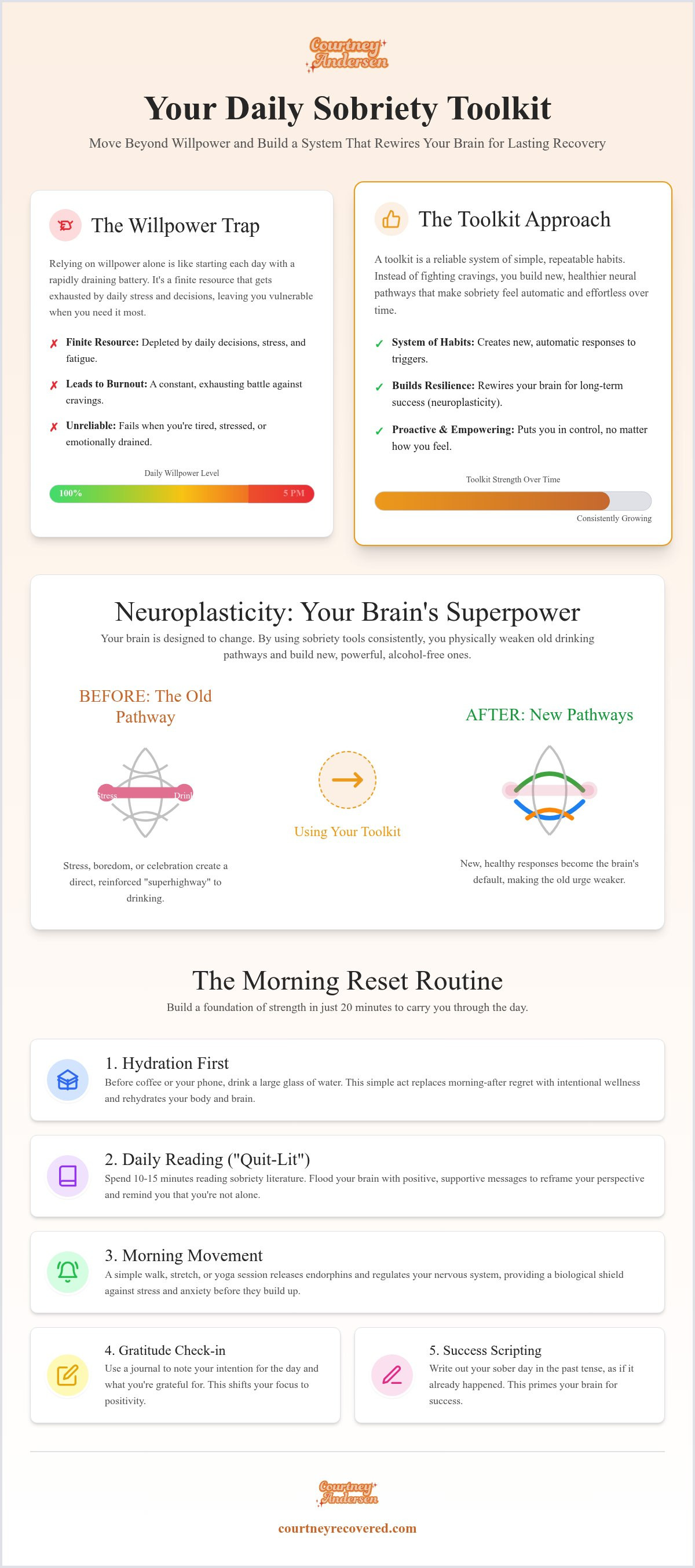
Willpower is like a phone battery. You start the day at 100%, but every decision you make—what to wear, how to answer that annoying email, what to have for lunch—drains it a little. By 5 PM, after a long day of putting out fires, your battery is in the red. That’s when cravings feel less like a whisper and more like a scream. This is where a Daily Sobriety Toolkit comes in. It’s not about gritting your teeth; it’s about having a system of simple, repeatable habits that rewire your brain for a life where alcohol becomes irrelevant.
- Willpower is a finite resource. It gets exhausted by daily decisions, leaving you vulnerable to cravings when you’re most tired.
- A 'Daily Sobriety Toolkit' is a system. It's a collection of neuroplasticity-building habits that create new, healthier neural pathways.
- The 'Gray Area Drinking' trap. High-functioning people often struggle with traditional tools because their drinking doesn't look like the rock-bottom stereotype. We'll get into that.
- Habit Stacking for Sobriety. This is the secret sauce: attaching a new sober habit to an existing daily routine to make it automatic.
Why Willpower is Your Worst Enemy in Early Recovery
Trying to "white-knuckle" your way through sobriety is a recipe for burnout. It’s a constant battle, and frankly, it’s exhausting. The physiological reality is that your brain is working against you in the beginning. Decision fatigue is a real phenomenon where the quality of your choices deteriorates after a long session of decision-making. That’s why the candy bars are at the checkout aisle and why the urge for a glass of wine hits hardest after a stressful day at work.
This is especially true for professional women caught in the cycle of Gray Area Drinking. You’re crushing it at work, managing a household, and juggling a million responsibilities. Your willpower is already stretched thin. The belief that you "should" be able to control your drinking through sheer force of will creates a unique psychological hurdle. It’s a trap that keeps you stuck. The goal isn’t to become better at fighting; it’s to build a life where you don’t have to fight at all. That means transitioning from a willpower-based approach to a tool-based one.
Neuroplasticity: Rewiring Your Brain for a Life You Love
Here’s the good news: your brain is designed to change. That’s the core principle of neuroplasticity. For years, your brain’s reward system has been hijacked by alcohol, creating a superhighway that links stress, boredom, or celebration directly to a drink. Every time you drank, you reinforced that connection. Sobriety is about closing that highway for construction and building new, beautiful scenic routes.
Your daily sobriety tools are the construction crew. Each time you use a tool instead of pouring a drink—like making a fancy mocktail, going for a walk, or texting a sober friend—you are physically creating and strengthening new neural pathways. Over time, these new pathways become your brain’s default. The craving doesn’t vanish overnight, but the new response becomes faster, easier, and more automatic. Your brain’s reward system, particularly your dopamine levels, begins to recalibrate, finding pleasure in new, healthier activities.
In the context of sobriety, neuroplasticity is your brain's superpower to forge new, alcohol-free thought patterns and reward responses through consistent daily actions.
The Morning Reset: 5 Daily Sobriety Tools to Kickstart Your Day
How you start your day is often how you end it. A chaotic, reactive morning can leave you feeling depleted and vulnerable by evening. But a calm, intentional morning routine builds a foundation of strength that can carry you through the toughest moments. This isn't about adding two hours of stressful "self-care" to your already packed schedule; it's about a simple, 20-minute reset.
- The 'Hydration First' rule: Before coffee, before you check your phone, drink a big glass of water. It replaces the morning-after headache with intentional wellness and rehydrates your body and brain.
- Daily reading and 'Quit-Lit': The first 15 minutes of your day are critical for setting your mindset. Flood your brain with positive, supportive messages.
- Morning movement: You don’t need a grueling workout. A simple walk or stretch uses endorphins to pre-emptively lower the stress hormone, cortisol.
- The 'Sober Vibes' check-in: Use a journal, like the Sober Vibes Book, for a few minutes of guided reflection. What’s your intention for the day? What are you grateful for?
The Power of Morning Intention and 'Quit-Lit'
Reading stories from people who have walked this path before you is incredibly powerful. It reminds you that you aren't alone and that a better life is possible. "Quit-Lit"—books about getting sober—can be a daily dose of inspiration. Choose a book that resonates with you and keep it on your nightstand. Reading just one or two pages each morning can completely reframe your perspective.
Another powerful tool is "Scripting." This is where you take 5 minutes to write out your sober day in the past tense, as if it has already happened successfully. For example: "I felt so proud when I chose a sparkling tea at 5 PM. I had a clear head all evening and woke up feeling amazing." This technique primes your brain to look for and create the exact wins you just wrote about. It’s about being proactive. The person you are in the morning needs to set up the person you'll be in the evening for success.
Movement and Mindfulness as Biological Shields
You can’t think your way out of a craving, but you can often move your way through it. Anxiety and stress live in the body, and movement is one of the fastest ways to regulate your nervous system. A short, low-impact walk, some gentle yoga, or even just 10 minutes of stretching can release tension and produce endorphins—your body’s natural mood elevators.
Mindfulness is another crucial shield. Instead of dreading future cravings, you can prepare for them with a 5-minute "urge surfing" meditation. This practice teaches you to observe a craving as a physical sensation—like a wave—that rises, peaks, and then passes. You learn that you don’t have to be swept away by it. You can simply watch it go by.
Your 20-Minute Sober Morning Reset Checklist:
- (3 minutes) Hydrate & Stretch: Drink a full glass of water while doing a few simple stretches.
- (7 minutes) Read or Script: Read a few pages of Quit-Lit or write out your successful sober day.
- (5 minutes) Mindful Moment: Do a quick guided meditation or simply sit in silence, focusing on your breath.
- (5 minutes) Intentional Movement: Walk around the block, do a few yoga poses, or have a 5-minute dance party in your kitchen
Navigating the Witching Hour: Practical Tools for Evening Cravings
Ah, the "Witching Hour." That treacherous window of time between 5 and 7 PM when the day is done, the stress is high, and the habit of reaching for a drink is deeply ingrained. This is where your toolkit becomes your absolute best friend. This isn't about deprivation; it's about upgrading your evening routine.
- The 'Sober Treat' strategy: Your 5 PM beverage needs to be an event. Make it something you genuinely look forward to, not just a sad glass of water.
- HALT (Hungry, Angry, Lonely, Tired): This is your go-to diagnostic tool. Before you do anything else, ask yourself: Am I hungry, angry, lonely, or tired? 90% of cravings are a mask for one of these four needs.
- Physical environment shifts: If you always drank in a specific chair, it’s time to move the chair. Small changes to your routine disrupt the autopilot mode that leads to drinking.
- The '15-Minute Rule': When a craving hits, tell yourself you can have a drink, but you have to wait 15 minutes first. Then, use a tool from your Sober Toolkit to distract and delay. Most cravings will pass within that time.
The Art of the Alcohol-Free Ritual
Often, what we crave isn’t the ethanol itself, but the ritual surrounding it: the pop of the cork, the pour into a beautiful glass, the sigh of relief that signals the end of the workday. You don't have to give up the ritual—you just have to change the ingredients. This is your chance to build a "Sober Bar" at home.
Invest in some high-end glassware, fancy ice cube trays, and sophisticated alcohol-free options. Explore the world of AF spirits, craft sparkling waters, or complex herbal teas. The key is to make your evening drink feel like a luxurious, deliberate choice. When you pour a beautiful AF cocktail into a chilled coupe glass with a fancy garnish, you’re still getting the psychological reward of the ritual, but without the negative consequences of alcohol.
HALT and the Emergency Toolkit
When a craving hits hard and fast, you need an emergency plan. This is where HALT comes in. Run through the checklist: Are you hungry? Many cravings are triggered by a drop in blood sugar; in fact, a sharp dip in glucose around 5 PM can mimic the psychological urge for alcohol because your body is desperately seeking a quick energy source. Grab a protein-rich snack. Are you lonely? Text a friend or hop into your online community. Tired? Give yourself permission to rest. Angry? Journal it out or do something physical to release the energy.
This is also when you deploy the physical items in your Sober Toolkit. These are sensory tools designed to ground you in the present moment and interrupt the anxiety spiral. This could be a bottle of essential oil, a fidget tool, a weighted blanket, or your journal. Another powerful mental tool is to "Play the Tape to the End." Don’t just think about the temporary relief of the first drink. Visualize the entire night: the second and third drinks, the sloppy texts, the junk food, and the gut-wrenching shame and physical misery of the next morning. Playing the tape forward reminds you of the true cost and breaks the romanticism of that first sip.
The Digital Toolkit: Apps, Podcasts, and Community Support
Your phone can be your greatest trigger or your most powerful sobriety tool. It’s all about how you curate it. In early sobriety, protecting your mindset is a non-negotiable, and that means transforming your digital environment from a minefield of "mommy wine culture" memes into a sanctuary of support and inspiration.
- Curate your social media feed: Unfollow accounts that glorify drinking. Follow sober creators, wellness experts, and people who are living the kind of alcohol-free life you want.
- The 'Sobriety Circle': An online sober community is your secret weapon against the isolation that so often leads to relapse. This is your 24/7 support system.
- Podcast power: Use podcasts like 'Sober Vibes' as a portable mentor. Listening to a podcast on your commute or while doing chores can fill your head with positive reinforcement.
- Track your wins: A sobriety counter app might seem simple, but watching those days, hours, and minutes add up provides a powerful psychological boost. It turns your journey into a game you’re winning.
Digital Boundaries and Social Media Curating
The "Delete and Block" strategy is your best friend. You have full permission to be ruthless in protecting your peace. Any person, page, or group that makes you feel "less than" or triggers a craving has to go. It’s not rude; it’s a radical act of self-preservation.
As you curate your feed, you'll start to find your "Vibe Tribe"—people who get it. This is a world away from the clinical, sterile feel of some traditional support groups. Looking for the right fit? The best online sobriety programs for women offer a space that feels more like a cool club than a recovery meeting. You'll also need scripts for those awkward texts when friends ask you to go out. A simple, "I'm not drinking right now but would love to catch up over coffee soon!" is a great place to start.
The Sobriety Circle: More Than Just a Chat Room
There's a huge difference between a free, unmoderated Facebook group and a structured membership community like the Sobriety Circle. A free group can be a great starting point, but a dedicated community provides structure, expert guidance, and a curated group of peers who are all serious about their growth. It’s a safe container where you can be vulnerable without fear of judgment.
This kind of group accountability is the antidote to the "starting over" cycle. When you know you have a group of people to check in with, you’re far less likely to give in to a fleeting craving. A community also teaches you the art of "social sobriety." It's where you learn how to be sober and social, have real fun, and build deep connections without the hangover.
Beyond the Basics: How Personalized Coaching Solidifies Your Sobriety
You can assemble all the best tools in the world, but if you don't have a strategy for how and when to use them, they can end up collecting dust. This is where coaching comes in. Think of a sober coach as a personal trainer for your new life—someone who provides a customized roadmap, holds you accountable, and helps you navigate the inevitable roadblocks.
- The ultimate 'shortcut': 1-on-1 sobriety coaching helps you get to the root of your drinking patterns faster than you could on your own.
- Identify your unique triggers: A coach helps you see the blind spots and patterns that keep you stuck, especially in Gray Area Drinking.
- A structured roadmap: Programs like 'Stop Starting Over' provide a step-by-step plan for that final reset.
- Transitioning to 'The After': The ultimate goal is to build a life so good that you don’t need to escape from it. A coach helps you design that life.
Customizing Your Toolkit with a Sober Coach
A "DIY" approach to sobriety can work for some, but high-performers, in particular, benefit immensely from 1:1 accountability. You’re used to investing in experts to get results in your career, and your well-being deserves the same level of commitment. A coach helps you move beyond just "not drinking" and into the deeper work of emotional sobriety—healing the root causes that led you to numb out with alcohol in the first place.
So, what happens in a coaching session? It’s a mix of strategy, "tough love," and celebration. You'll get practical tools to handle specific situations (like an upcoming wedding or a stressful work project), and you'll have a dedicated space to work through the underlying beliefs and emotions. It's about getting personalized support from someone who has been exactly where you are and can guide you to the other side.
Your 2026 Daily Sobriety Checklist Summary
Here it is—a simple, actionable checklist you can start using today. Don't try to implement everything at once. Pick one or two tools from each category and build from there.
- Morning (The Reset):
- Hydrate before caffeine.
- Read 2 pages of "Quit-Lit" or an inspiring text.
- Move your body for 5-10 minutes.
- Set a single, clear intention for your sober day.
- Afternoon/Evening (The Witching Hour):
- Run the HALT check-in (Hungry, Angry, Lonely, Tired).
- Have a 'Sober Treat' planned and ready to go.
- Change your physical environment or routine.
- Use the 15-minute rule and a distraction tool if a craving hits.
- If you're bored, check out a list of things to do instead of drinking.
- Digital/Community (The Support System):
- Unfollow 1-3 accounts that trigger you.
- Listen to a sobriety podcast episode.
- Check in with your sober community or an accountability partner.
- Review your sobriety counter app and celebrate your progress.
Remember this: You are not losing a drink; you are gaining your entire life back. You're gaining clear mornings, deep sleep, genuine confidence, and the freedom to be fully present for your own amazing life.
Ready to stop starting over? You don’t have to do this alone. Book a discovery call or come join us in the Sobriety Circle. It’s time to get the support you deserve.
I want you to feel sober NOT boring!
Kickstart your sobriety with my free 2-day video workshop series to master your sober mindset and have FUN in your sobriety journey!


