
The Best Sobriety Apps for 2026: Curating Your Digital Recovery Toolkit
Sep 12, 2026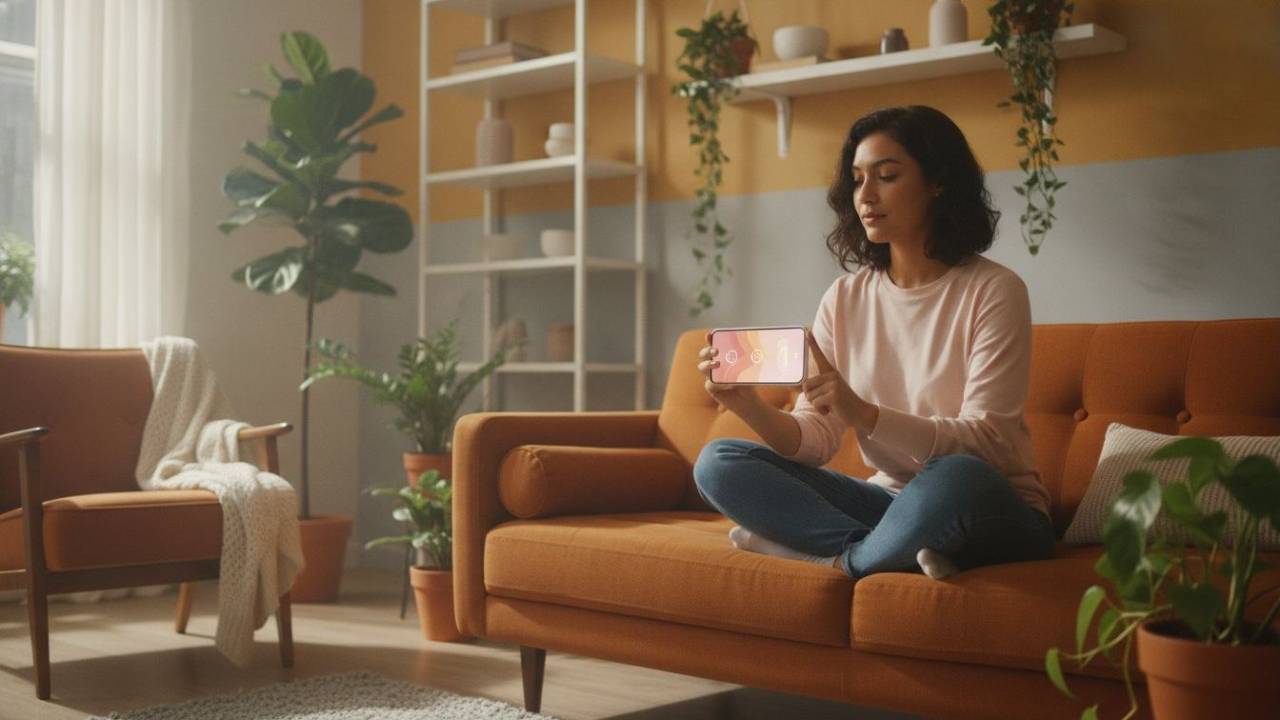
The app store is overflowing with trackers that treat your recovery like a medical experiment, but staying sober shouldn't feel like a chore or a cold hospital visit. You've likely lived the "Stop-Start" cycle more times than you'd like to admit. You're probably tired of clinical labels that make you feel like a patient instead of a person. Finding the best sobriety apps for 2026 isn't just about counting days. It's about finding a digital sidekick that actually understands your life and your goals.
I know that "Day 1" feeling all too well. It's isolating, overwhelming, and honestly, a bit scary when you're staring down a weekend without your usual safety net. You want a tool that offers a private community and real-time support without the corporate fluff. In this guide, you will discover which apps actually support long-term recovery and how to weave them into a vibrant, alcohol-free lifestyle. We'll dive into the top-rated tech, from neuroscience-based tools to community-driven platforms, so you can build a toolkit that moves you from just surviving to truly thriving.
Key Takeaways
- Understand why your phone is a powerful first line of defense against cravings but why it needs to be part of a larger, holistic toolkit.
- Discover the top-rated features in the best sobriety apps for 2026, focusing on trigger tracking and real-time community connection.
- Learn how to use "Trigger Alerts" and "Morning Pledges" to navigate high-risk moments like the 5 PM witching hour with total confidence.
- Identify the exact moment an app isn't enough anymore and how to transition into deeper support like the Sobriety Circle to end the relapse cycle for good.
Why Your Phone is Your Best Sobriety Tool (and Why it Isn’t Enough)
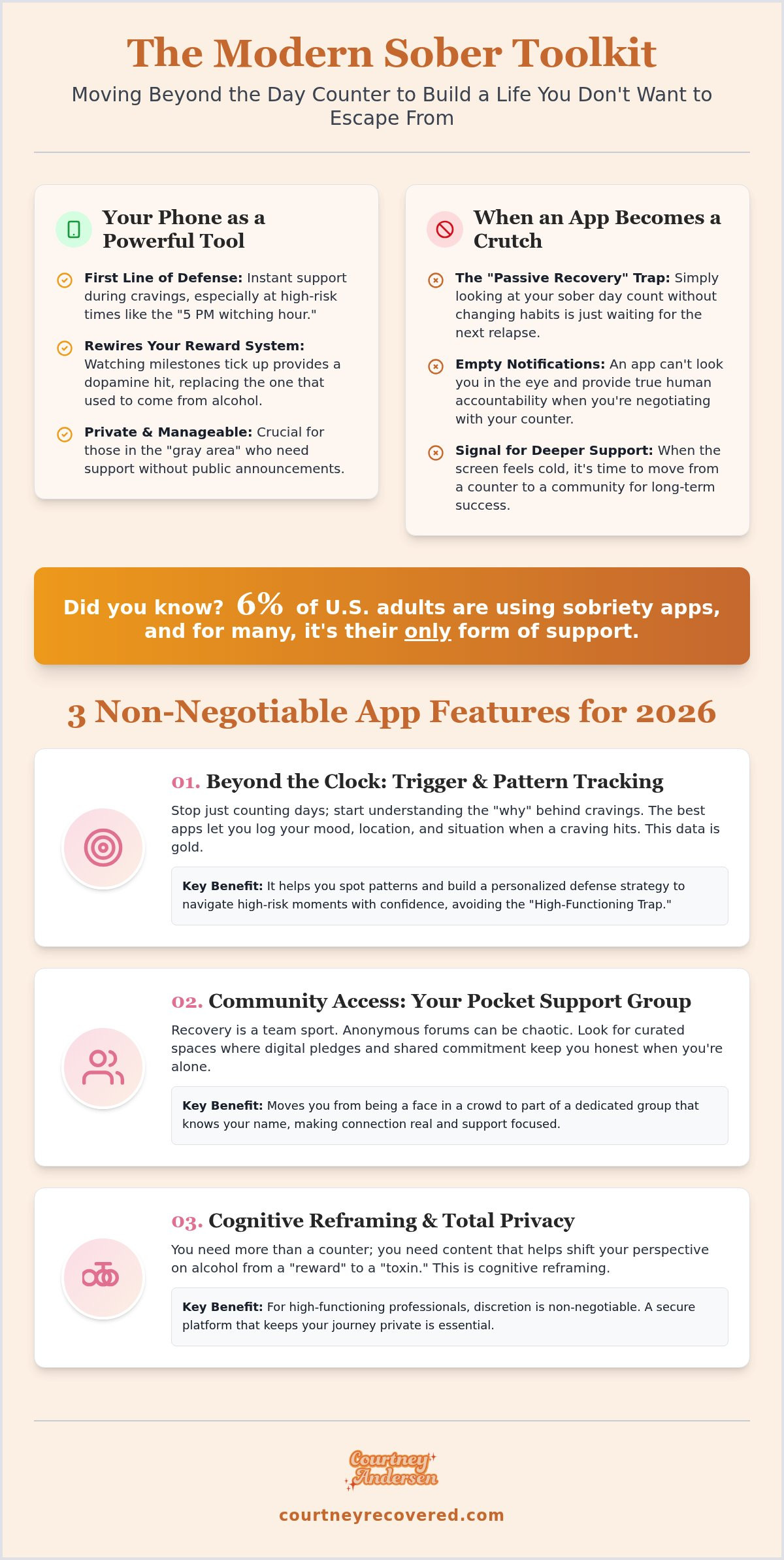
Your phone is usually the first thing you grab when you wake up and the last thing you see at night. In early recovery, that little rectangle becomes your digital sobriety companion. It’s your first line of defense against the 5 PM witching hour or a stressful Tuesday afternoon. For many, especially those navigating gray area drinking, an app is the only thing that makes the journey feel private and manageable. Gray area drinking is the space between social drinking and clinical dependence. Using the best sobriety apps allows you to break the isolation without having to announce your business to the world before you’re ready.
The Psychology of Tracking Your Progress
There is real magic in watching that counter tick up. When you hit a milestone, your brain gets a dopamine hit that used to come from a glass of wine. It literally rewires your reward system. Visual milestones are more than just pretty graphics; they are proof of your evolution. Digital prompts and daily check-ins constantly remind you of your "why." Whether it’s a photo of your kids or a note about how much better your skin looks, these visual cues keep you grounded. Projects like Wikipedia's own medical app project show how vital mobile access to health information has become, and sobriety is no different. Having a community in your pocket makes Day 1 feel less like a death sentence and more like a fresh start.
When an App Becomes a Crutch Instead of a Tool
Here is the tough love part. It’s easy to fall into the trap of "passive recovery." This is when you open the app, check your number, and think you’re done for the day. If you’re just tracking time without transforming your habits, you’re just waiting for the next slip-up. An app can track your data, but it can’t look you in the eye and ask how you’re really doing. A screen simply cannot replace human accountability.
You’ll know the app isn’t enough when you start negotiating with the counter. When the screen feels cold, and the notifications feel empty, it’s time to move from a counter to a community. Digital tools are incredible for building momentum, but real-world accountability is what keeps you from starting over. This is why the "Stop Starting Over" philosophy is so critical. You have to move beyond the screen to find the grit required for the long haul. You need more than a notification; you need a connection.
The 3 Non-Negotiable Features of the Best Sobriety Apps
Most lists of the best sobriety apps will tell you that a ticking clock is enough. They focus on the dollars you saved or the days since your last drink. That's fine to start, but if you want to change your life, you need more than a stopwatch. You need features that dig into your psychology and your social life. Recent research on sobriety app usage shows that 6% of U.S. adults are using these digital tools, and for many, the app is their only form of support. If that's the case for you, that app better be a powerhouse that does more than just count.
Beyond the Clock: Trigger and Pattern Tracking
Recovery is a team sport. Anonymous forums are a decent starting point, but they can sometimes feel like a digital shouting match. You need curated spaces. Digital pledges create a shared sense of commitment that keeps you honest when you're alone. If you're looking for something deeper than a free forum, the Sobriety Circle offers a premium alternative with real connection and focused support. You move from being a face in a crowd to being part of a dedicated group that actually knows your name and your struggles.
Finally, ensure your chosen app offers cognitive reframing and total privacy. You need educational content that shifts your perspective, helping you see alcohol as a toxin rather than a reward. For my high-functioning professionals, discretion is non-negotiable. You need a secure platform that keeps your journey private while you build your empire. If you feel like you're stuck in a loop, it might be time to check out a professional sobriety coach who can help you bridge the gap between an app and a lifestyle. Tech is the foundation, but human support is the skyscraper.
The Best Sobriety Apps of 2026: A Curated Review for Women
Choosing the right tech for your recovery is like picking the right pair of jeans. It has to fit your lifestyle, your personality, and your goals. We've moved past the era of clunky, depressing trackers. The best sobriety apps in 2026 are sleek, smart, and designed to empower you. Whether you’re a data nerd who wants to understand your brain or a social butterfly who needs a tribe, there is a digital tool waiting for you. This isn’t about clinical labels; it’s about curating a life you don't want to escape from.
Best for the Data-Driven Recoveree: Reframe
If you're a high-functioning professional who loves a good spreadsheet, Reframe is your new best friend. It uses a neuroscience-based approach to help you change your drinking habits. A 2026 study showed that 91% of Reframe users reported a significant decrease in alcohol use within three months. It breaks down the "why" behind your cravings without making you feel like a patient. The daily task structure is brilliant because it prevents that "where do I even start?" overwhelm. An evaluation of sobriety app features found that apps emphasizing self-control and progress tracking, like Reframe, actually lead to more positive user outcomes than those that just try to motivate you with quotes. It’s about building a skill set, not just relying on willpower.
Best for Community Connection: I Am Sober
I Am Sober is the powerhouse of the recovery world, and for good reason. With a 4.8-star rating from over 127,000 reviewers on Google Play, it’s clear people love this platform. The "Milestone" stories are a game changer. You can read about other women hitting their 30-, 60-, or 90-day marks and realize you aren't alone. The "Daily Pledge" should be a staple in your morning routine. It’s a simple, punchy way to start your day with intention. The app also includes workbook questions that serve as a fantastic supplement to building a sobriety toolkit that works for your unique life. If you need multi-addiction tracking or deep customization, Sober Time is another solid contender to keep on your radar.
Downloading one of the best sobriety apps is the easy part. The real magic happens when you stop treating the app like a passive game and start treating it like a strategic partner in your daily life. You need a system that fits into your existing routine without feeling like a second job. If you just let the app sit on your home screen, it becomes digital wallpaper. You have to engage with it to see the results you're after. Tech works best when it's integrated into your habits, not added on top of them.
Morning and Night Routines for Digital Success
The first 10 minutes of your day dictate your sobriety. Before you dive into work emails or scroll through social media, open your app. Set a "Morning Pledge." This simple act creates a mental barrier between you and the bottle before the day's stress even begins. By "bookending" your day with a morning commitment and an evening recap, you drastically reduce the background anxiety that often leads to a slip. Try stacking your app usage with other healthy habits. Open your tracker while you read a few pages of "quit-lit" or recovery literature. This reinforces the mindset shift you're working so hard to achieve.
Using Data to Fuel Your Coaching Sessions
Data is just a collection of numbers until you give it context. While tracking your moods and cravings is vital, sharing those trends with a mentor is what truly accelerates your progress. Are you consistently logging cravings on Thursday afternoons? Is there a specific person who triggers your desire to drink? Identifying these patterns allows you to move from simply "counting days" to actually "making days count." It’s about being proactive, not reactive.
A screen can tell you that you're craving a drink, but it can't help you navigate the emotional "why" behind it. This is where 1-on-1 sobriety coaching turns app data into a personalized roadmap. By bringing your digital insights to a session, we can build a strategy that targets your specific high-risk moments. You aren't just guessing anymore; you're using the best sobriety apps to provide the evidence we need to build your strongest self.
Don't forget to use the in-app journaling features to process life after getting sober. Writing down your wins, no matter how small, helps solidify your new identity. If you're ready to stop the cycle of Day 1s and start building a life you love, it's time to take the next step. Book a discovery call today and let’s turn your tracking into true transformation.
Moving Beyond the Screen: When You Need More Than an App
Even the best sobriety apps have a ceiling. They are incredible for tracking that 5 PM craving or seeing your bank account grow, but an algorithm can't give you a high-five or a reality check when you're about to negotiate with yourself. You'll know it's time to move beyond the screen when the notifications start to feel like white noise. If you're still stuck in that "Stop-Start" cycle of Day 1s despite having the best tech in your pocket, you aren't failing; you're just missing the human element. A screen tells you what happened, but a mentor helps you understand why it matters.
Solo tracking is a great start, but group energy is where the transformation actually sticks. When you join the Sobriety Circle, you're stepping into a room full of women who speak your language. We specialize in navigating gray-area drinking, that confusing space where life looks fine on the outside but feels heavy on the inside. In this space, we move from digital milestones to real-life celebrations. It’s the difference between seeing a "30 days" badge on your screen and having a group of soul-sisters actually cheering for your progress. You move from a data point to a person with purpose.
Final Verdict: Building Your 2026 Recovery Ecosystem
The most successful women I work with use a "Hybrid" approach. They use the best sobriety apps for daily maintenance, the Sobriety Circle for consistent connection, and 1:1 coaching for deep, personalized growth. This ecosystem creates a safety net that is nearly impossible to fall through. You don't have to choose between tech and people. You just have to use them together to build a lifestyle that feels like a gain, not a loss.
This can be your last "Day 1." You have the tools, and now you have the roadmap to use them effectively. If you're ready to stop hiding behind a screen and start living a life that is vibrantly, unapologetically sober, let’s talk. Book a 1:1 discovery call with Courtney today, and let’s build your bridge from the isolation of the struggle to the vibrancy of your new reality. You've tracked enough days; it's time to start living them.
Your Digital Toolkit is Just the Beginning
You now have the roadmap to use the best sobriety apps of 2026 as a powerful launchpad for your recovery. By tracking your triggers and stacking your habits, you're already ahead of the game. But don't let your progress stop at a notification. Real transformation happens when you pair that data with the "Stop Starting Over" framework and the community-led support that professional women truly need. You deserve more than just a ticking clock; you deserve a life that feels like a gain, not a sacrifice.
As featured in the Sober Vibes Book, the bridge from isolation to vibrancy is built on human connection. If you're tired of the solo struggle and ready for real-world celebrations, it's time to level up. Join the Sobriety Circle and move beyond the app today. You've got the tech, now get the tribe. Your best life is waiting, and I can't wait to see you thrive.
Frequently Asked Questions
Are sobriety apps actually effective for long-term recovery?
For beginners, I Am Sober is a top-tier choice because the basic version is free and incredibly user-friendly. Another fantastic free option is Nomo, created by someone in recovery and focused on simple, donation-supported sobriety clocks. These tools allow you to dip your toes into tracking without a financial commitment, helping you build momentum before you decide to invest in premium features or personalized coaching.
Can I stay sober using only an app without going to AA?
You absolutely can stay sober without traditional meetings by using modern digital tools. Many women find that the "clinical" feel of some groups doesn't fit their lifestyle, so they turn to the best sobriety apps for a more private experience. However, an app alone often isn't enough to break the "Stop-Start" cycle. That is why I recommend moving from a solo app journey to a curated community like the Sobriety Circle.
Do sobriety apps track my data or keep it private?
Privacy is a top priority for most developers, especially since these apps cater to high-functioning professionals. Most reputable apps like Reframe or I Am Sober offer secure, private platforms that use your data to help you identify patterns rather than share it. Always check the settings for "Passcode Lock" features. This ensures your digital sobriety toolkit stays between you and your phone, giving you total peace of mind.
What is the difference between a sobriety counter and a recovery app?
A sobriety counter is basically just a digital stopwatch that tells you how long it’s been since your last drink. A full recovery app, however, offers a holistic experience. It includes trigger logging, cognitive reframing lessons, and community forums. While a counter is great for a quick dopamine hit, a recovery app provides the educational tools you need to actually transform your mindset and stop the relapse cycle for good.
How do I choose between Reframe and I Am Sober?
Choose Reframe if you love science and want a structured, daily task list that explains the neuroscience of your cravings. It’s perfect for data-driven women. Pick I Am Sober if you crave community connection and want to read "Milestone Stories" from other people on the same day as you. Both are excellent, but your choice depends on whether you're motivated by hard data or shared human experiences.
Should I tell people I am using a sobriety app?
You don't have to tell a soul if you don't want to. One of the biggest perks of using an app is that it’s a private, pocket-sized mentor. You can check in at a work event or log a craving under the table without anyone knowing. If you eventually feel empowered to share your journey, that’s great, but for now, let the app be your secret weapon for navigating social situations.
What happens if I "reset" my clock in the app after a slip?
Resetting your clock can feel like a punch in the gut, but it's actually just a new piece of data. In the "Stop Starting Over" framework, a slip is a chance to analyze what happened and why. Use the app to log the triggers that led to the moment. Instead of viewing it as a failure, see it as a pivot point that helps you build a stronger strategy for the future.
I want you to feel sober NOT boring!
Kickstart your sobriety with my free 2-day video workshop series to master your sober mindset and have FUN in your sobriety journey!


