
Addiction Recovery Coaching: What It Is and How It Helps
Oct 29, 2026
Changing your relationship with substances doesn’t have to mean figuring everything out alone. If you’re feeling isolated or unsure what kind of support fits, addiction recovery coaching can offer a steady, personal place to start. Support should feel practical and respectful, not judgmental or like a vague pep talk.
It’s fair to wonder what a coach actually does and whether coaching is enough. Coaching helps turn personal goals into practical next steps, with accountability shaped around your life. It isn’t medical detox, therapy, or a replacement for clinical care. If you need medical or mental health support, coaching can sit alongside that care, not replace it.
This article explains what addiction recovery coaching can offer, how it differs from clinical treatment, and what supportive coaching might look like in everyday life. You’ll also learn how 1:1 sobriety coaching and community support can fit into a broader recovery plan, so you can choose a next step that feels right for you.
Key Takeaways
- Learn how addiction recovery coaching turns personal goals into manageable actions, with collaborative accountability along the way.
- See how coaching differs from therapy, peer support, and medical treatment, and why it complements rather than replaces clinical care.
- Use a few practical questions to identify what feels difficult, what you’d like to change, and what kind of support feels safe.
- Explore how personalized 1:1 sobriety coaching and community support through the Sobriety Circle offer different kinds of encouragement.
- Find out how Stop Starting Over and The After provide structured support for different points in a sobriety journey.
What Is Addiction Recovery Coaching, and What Does a Recovery Coach Do?
If you’re wondering whether a recovery coach will understand your situation or what you’d actually talk about, you’re not alone. Support should feel respectful and practical, not like a test you have to pass. Here’s the plain-language version:
Addiction recovery coaching is personalized, nonclinical support that helps someone set recovery goals, work through everyday challenges, and stay accountable to the next steps they choose. It does not diagnose or treat a substance use disorder, provide detox, or replace medical or mental health care.
Coaching can take different forms, but it focuses on your goals and day-to-day life. The overview of recovery coaching describes a range of approaches and distinguishes coaching from roles such as therapy and sponsorship. The right support depends on what you need; no single approach fits everyone.
What support can a recovery coach offer?
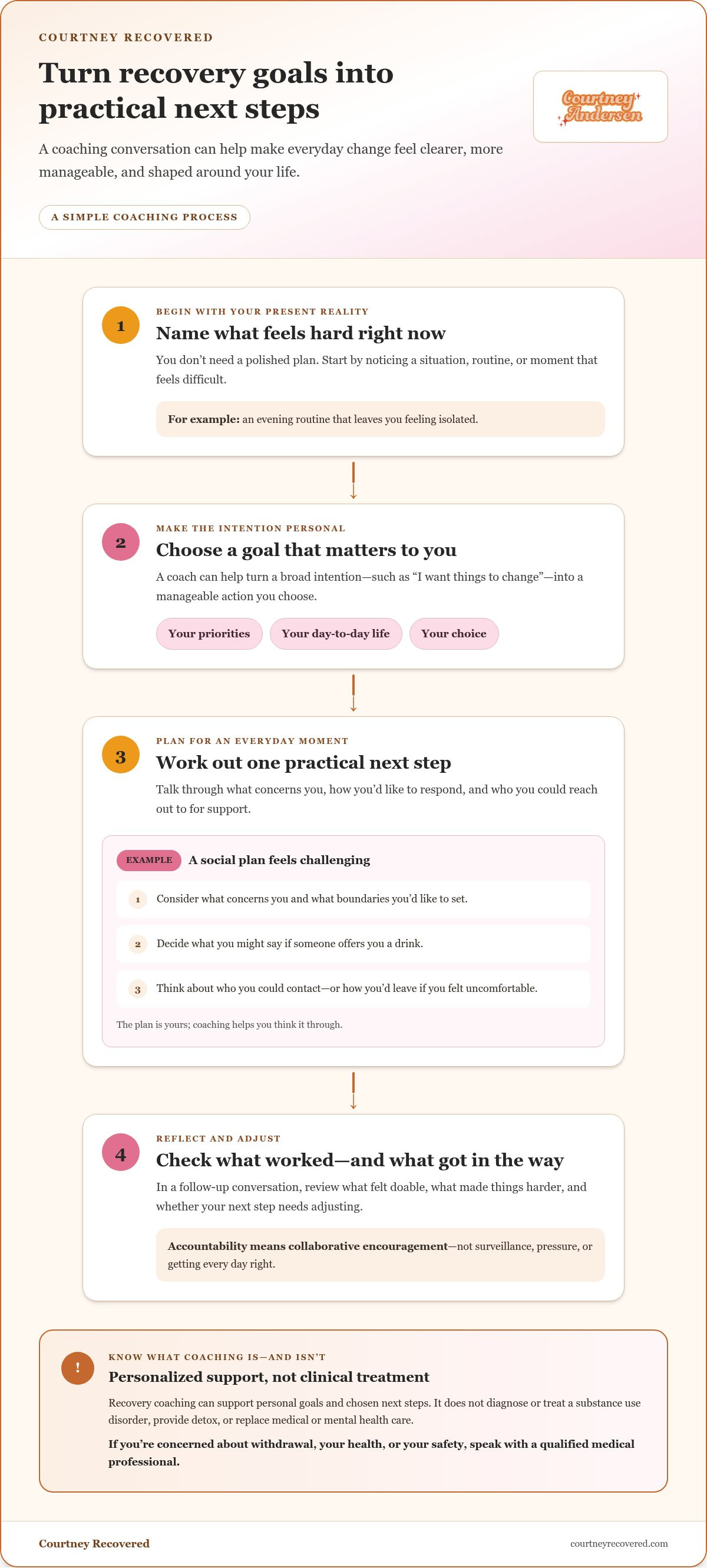
A coach can help you turn a broad intention, such as “I want things to change,” into a manageable action you choose. You might identify situations that feel difficult, decide how you’d like to respond, or work out who you could reach out to when you need support. For instance, if an evening routine tends to leave you feeling isolated, you could talk through what a more supportive routine might include.
Then comes follow-through. In a conversation, you might review what felt doable, what got in the way, and whether your next step needs adjusting. Accountability means collaborative encouragement, not surveillance or pressure. You remain the decision-maker, and coaching doesn’t promise a particular outcome. A supportive coach listens without shame and helps you reconnect with your own reasons for making a change.
Who might explore addiction recovery coaching?
You don’t have to wait for a crisis or claim a particular label to consider support. Coaching may interest someone who’s thinking about changing their substance-use habits, someone building a sober life, or someone who wants continued accountability as everyday routines shift.
Different people need different kinds of help, and those needs can change over time. Coaching can complement peer support or clinical care, but it isn’t a substitute for treatment. If you’re concerned about withdrawal, your health, or your safety, speak with a qualified medical professional. Recovery coaching can support your chosen goals; medical needs call for medical care.
You don’t need a polished plan to begin. Start by naming what feels hard right now, then consider what kind of support would help you take one practical next step.
How Addiction Recovery Coaching Supports Change Between Big Milestones
Big milestones can feel energizing, but most change happens in the ordinary days around them. Addiction recovery coaching creates space to pause, notice what’s happening, and choose a realistic next step based on your priorities. The goal isn’t to follow someone else’s script. It’s to make your intentions easier to carry into everyday life.
For example, if a social plan feels challenging, you might talk through your concerns, the boundaries you’d like to set, and who you could contact for support. Your plan could include deciding what you’ll say if someone offers you a drink or how you’ll leave if you start to feel uncomfortable. A coach can help you think it through, but the choices remain yours.
What might coaching conversations focus on?
Conversations may cover personal goals, routines, difficult moments, and the kind of support you want. You might reflect on a situation that didn’t go as planned, identify what made it harder, and choose one manageable adjustment to try. That’s different from being monitored or told what to do. Accountability works best as an honest check-in shaped around your goals, not pressure or a promise of a particular outcome.
Coaching can support follow-through on personal goals, while diagnosis and clinical care remain with qualified providers. Coaching doesn’t treat addiction or guarantee sobriety; it can complement appropriate medical or mental health care. SAMHSA describes recovery as a process that helps people improve their health and wellness and live self-directed lives. Practical goals, such as building a routine or deciding how to seek support, can connect with that wider picture of well-being.
Why can ongoing support matter?
Regular reflection may help you notice patterns that are easy to miss in the middle of a busy week. Perhaps certain plans leave you feeling stretched, or a routine that once helped no longer fits. Looking at what happened, what you needed, and what you’d like to try next can help you adjust your goals and support. It isn’t about getting every day right.
A setback isn’t proof that change is impossible. It can be a moment to pause, seek support, and consider what you want to do next. If you’re curious about individualized support, explore this 1:1 sobriety coaching roadmap for a closer look at personalized coaching.
To see how coaching and other recovery resources can fit together, explore sobriety coaching and support from Courtney Andersen.
Recovery Coaching vs. Therapy, Peer Support, and Treatment: What’s the Difference?
These supports can overlap in someone’s recovery journey, but they don’t do the same job. Addiction recovery coaching is supportive, not clinical treatment. A coach can help you work toward personal goals and stay connected to your chosen next steps, but doesn’t diagnose a condition, provide therapy, prescribe medication, or manage withdrawal.
| Type of support | What it generally offers |
|---|---|
| Recovery coaching | Goal-focused, nonclinical support with practical planning and accountability shaped around the person’s priorities. |
| Therapy | Care from a qualified mental health professional, which may address emotions, behavior, relationships, or mental health concerns. |
| Peer support | Connection with people who share recovery experiences, often through mutual encouragement and community. |
| Medical treatment | Healthcare services such as assessment, diagnosis, medication, withdrawal management, and treatment planning. |
These options aren’t competing teams. Someone might use coaching for practical accountability, therapy to work through emotional concerns, and peer support to feel less alone. The right combination depends on the person and their needs. Coaching can complement care, but it can’t replace clinical or medical support.
When is a medical or clinical professional important?
Diagnosis, medication decisions, detox, and treatment planning belong with qualified healthcare professionals. If you may be physically dependent on alcohol or another substance, talk with a medical professional before stopping. Withdrawal can be medically dangerous, and it’s not something to manage with coaching alone.
Seek prompt professional help if you have concerns about withdrawal, severe symptoms, or another urgent health risk. If you or someone else is in immediate danger, contact emergency services in your location. Asking for medical help is a practical step, not a personal failure.
Can coaching and other recovery support work together?
Yes. Coaching can sit alongside care from clinicians or participation in a peer-support community, with each offering a different kind of support. For example, you might work with a healthcare professional on clinical needs and use coaching or community connection to reflect on everyday goals. Keep the roles clear: coaching and peer support do not provide medical services.
If shared encouragement sounds useful, explore this online sober community guide to learn more about finding connection in recovery.
How to Get Ready for Addiction Recovery Coaching Without Having It All Figured Out
You don’t need a perfect plan, the right recovery vocabulary, or an organized list of goals before you talk with a coach. If you’re considering addiction recovery coaching, questions or uncertainty are enough to begin. A little reflection can help make the conversation more useful, but there’s no test to pass.
What can you bring to a first coaching conversation?
Start with what’s true for you today. Jot down a few thoughts beforehand or talk them through in your own words. These questions can help:
- What feels difficult? Think about a situation, routine, or moment when you’d like more support.
- What would you like to change? It could be a broad hope, such as feeling more in control, rather than a fully defined goal.
- What kind of support feels safe? Consider whether you prefer gentle encouragement, direct accountability, or time to talk things through.
- What questions or boundaries do you have? You can ask what coaching involves and share what you’re comfortable discussing.
You can also mention situations where you’d like help following through, or people and supports you already trust. You decide what to share and what kind of encouragement feels respectful. If you’re unsure, say so. That’s a useful place to begin.
How can you make support feel workable?
Keep the first step small enough to fit your real life. Instead of trying to change everything at once, focus on one routine or one upcoming situation that feels challenging. A manageable goal gives you something specific to reflect on and can be adjusted as you learn what works for you. There’s no need to set a recovery timeline or make promises about what comes next.
If you have concerns about your health, withdrawal, or safety, bring those to an appropriate healthcare professional. Coaching can support personal goals, but it doesn’t replace medical advice or care. You might also consider whether there’s someone you trust whom you’d like involved in your support, while keeping your preferences at the center.
For ideas you can explore alongside coaching, take a look at this sobriety tools and resources guide. Choose what feels useful and leave the rest.
To explore personalized support, learn about 1:1 sobriety coaching and consider what kind of next step feels manageable for you.
Explore Addiction Recovery Coaching with Courtney Andersen
Recovery support looks different for everyone. At Courtney Andersen, addiction recovery coaching and community support help you find encouragement, build accountability, and work toward sobriety at your own pace. You don’t need to arrive with a perfect plan. You can start with what feels useful now.
What kinds of support does Courtney Andersen offer?
1:1 sobriety coaching provides personalized support shaped around your goals. It gives you space to reflect on what you want to change, consider practical next steps, and get individual mentorship and accountability as you work toward a sustainable sober lifestyle. The focus is on your priorities, not a one-size-fits-all script.
If connection with others feels important, the Sobriety Circle is a membership-based community with shared support and resources. It offers a community option alongside individualized coaching, and you can choose what fits your support needs.
Stop Starting Over and The After are structured programs for different points in a sobriety journey. The Sober Vibes Book and Sober Toolkit offer practical recovery resources and guidance for daily recovery maintenance. These options provide different ways to build support around your goals. No resource can promise a particular outcome, and you can take time to decide what fits.
These services and resources focus on coaching, community, and practical support. They don’t replace medical or mental health care. If you have clinical or safety concerns, qualified healthcare professionals are the right people to support those needs.
What is one small next step you can take today?
Ask yourself: Would one-to-one accountability help? Am I looking for community, practical resources, or a combination? You don’t have to know the full answer. Naming one thing you’d like support with is a meaningful start, whether you feel certain or still have questions.
If you’d like a personal approach, consider what you’d want help with first and explore Courtney Recovered’s sobriety coaching. One manageable step is enough to begin.
Explore sobriety coaching and support when you feel ready. You don’t need to have it all figured out.
Take Your Next Step with Support That Fits
Addiction recovery coaching can help turn personal goals into manageable steps, with encouragement and accountability along the way. It’s supportive, not clinical treatment, and can complement care from qualified healthcare professionals. You don’t need every answer before exploring what kind of support feels right.
At Courtney Recovered, founder Courtney Andersen, a professional sober coach and author, provides personalized 1:1 sobriety coaching. The Sobriety Circle is a membership-based community with shared support and recovery resources. You can explore either option at your own pace and consider what might be useful for this part of your journey.
Ready to take a step toward support that fits your goals? Explore personalized sobriety coaching and support.
Frequently Asked Questions
What does an addiction recovery coach do?
An addiction recovery coach offers nonclinical, personalized support as you work toward recovery goals. Together, you might identify a challenge, choose a manageable next step, and reflect on what helped or got in the way. Coaching provides encouragement and accountability shaped around your priorities. A coach doesn’t diagnose or treat addiction, prescribe medication, or provide medical care, and coaching isn’t a substitute for professional treatment.
Is addiction recovery coaching the same as addiction treatment?
No. Addiction recovery coaching is supportive and goal-focused, while addiction treatment is clinical care provided by qualified healthcare professionals. Treatment may involve assessment, diagnosis, therapy, medication, or medically supervised withdrawal care. A coach can help you think through everyday goals and follow-through, but can’t provide those clinical services. Coaching may complement treatment, but it shouldn’t replace medical or mental health care when you need it.
Can a recovery coach help me stay sober?
A recovery coach can offer accountability and practical encouragement as you work toward sobriety, but can’t guarantee that you’ll stay sober or prevent setbacks. You might talk through a challenging situation, consider what support you want, and choose a realistic next step. If you experience a setback, it doesn’t mean change is impossible. A coach can help you reflect, while clinical or medical concerns belong with qualified professionals.
How do I know if recovery coaching is right for me?
Recovery coaching may be worth exploring if you’re considering a change, building a sober life, or looking for continued encouragement and accountability. You don’t have to reach a crisis or use a particular label to seek support. Think about whether talking through goals and everyday challenges would be useful. Different people need different kinds of help, and coaching can sit alongside peer support or clinical care.
Can I work with a recovery coach while seeing a therapist?
Yes, coaching and therapy can be part of someone’s support network at the same time. They have different roles: a therapist provides mental health care, while a recovery coach offers nonclinical support around personal goals and practical follow-through. If you choose to use both, you can decide what information you want to share between them. A coach doesn’t replace your therapist or provide therapy.
What should I expect from a first recovery coaching conversation?
Expect a chance to talk about what’s on your mind, what you hope might change, and what kind of support would feel helpful. You don’t need prepared answers or a complete plan. You might mention a situation where you want more accountability, ask questions about coaching, or share a boundary. The conversation can help you identify a manageable next step, with your goals and choices at the center.
What if I may be experiencing alcohol or drug withdrawal?
Contact a qualified medical professional promptly if you’re concerned about withdrawal, especially if you may be physically dependent on alcohol or another substance. Withdrawal can be medically dangerous, so seek medical advice before stopping rather than trying to manage it through coaching. For severe symptoms or an urgent health risk, get immediate medical help. If you or someone else is in immediate danger, contact emergency services in your location.
I want you to feel sober NOT boring!
Kickstart your sobriety with my free 2-day video workshop series to master your sober mindset and have FUN in your sobriety journey!


