
Wine Substitutes for Quitting: Sober Sips for 2026
Oct 28, 2026
What if the best replacement for wine isn’t wine-like at all? When you’re looking for substitutes for wine while quitting drinking, what you miss might be the evening ritual, a sense of reward, or having something special in your glass. Alcohol-free wine doesn’t feel satisfying or comfortable for everyone, and that’s okay.
If wine has been part of how you unwind or connect with people, choosing something different can feel surprisingly personal. You don’t need to find one perfect swap or force yourself to like a drink that doesn’t fit. The goal is to discover what feels good for you in the moment you need it.
Here are satisfying ideas for different moods and occasions, from cozy evenings at home to social plans, plus ways to decide whether alcohol-free wine belongs in your routine. Think beyond the bottle: the right pour, glass, and ritual can help make an alcohol-free evening feel like yours. Try a few options, keep what works, and leave the rest.
Key Takeaways
- The best substitutes for wine when quitting drinking meet your real needs, whether that’s flavor, a familiar ritual, or a social touchpoint.
- Compare sparkling water with citrus, botanical sodas, alcohol-free wine, tea, and juice spritzers to find options for different moods and occasions.
- Alcohol-free wine may feel right for some people and uncomfortable for others; your response can help guide your choice.
- Use a simple process to choose a drink for a quiet evening, dinner, a celebration, or a restaurant visit.
- Small rituals beyond the glass can make an alcohol-free routine feel more personal and satisfying.
Substitutes for wine when quitting drinking: what are you really replacing?
Missing wine can mean missing more than what’s in the glass. Maybe you liked its dry, fruity, or complex taste. Maybe opening a bottle marked the end of work, made dinner feel like an occasion, or gave you an easy way to join a toast. Those needs are real, and you don’t have to dismiss them to choose a different routine.
A wine substitute is any drink or ritual that meets one or more of those needs. It might be something fizzy, something warm, or a pause before you move into the rest of your evening. There’s a wide range of non-alcoholic drinks to explore, but no single pour has to recreate wine perfectly. The best substitutes for wine when quitting drinking fit what you want from that moment.
Is it the flavor, the feeling, or the end-of-day ritual?
Get curious before you choose. Are you craving dryness, fruit, fizz, warmth, or layers of flavor? Or is the pull less about taste and more about the transition: logging off work, starting dinner, or finally sitting down? A drink can match a flavor preference, but a walk around the block, changing into comfortable clothes, or putting on a favorite playlist might do more to create that sense of a reset.
Notice when and where the urge tends to show up. Is it while you’re cooking, when you get home, or when everyone else orders a drink? The setting can clue you into what you’re looking for, whether that’s a flavorful sip, a moment to exhale, or a familiar social signal.
Why one substitute may not work for every occasion
An evening wind-down and a celebratory toast are different moments. One might call for a calming, warm drink and a quiet routine; the other may feel better with something chilled and sparkling in a special glass. You’re allowed to keep a few go-to options instead of searching for one all-purpose replacement.
Your preferences can shift as your routines and recovery needs change. A drink that feels comforting one week might not hit the spot another time. That’s information, not failure. If a substitute disappoints, you haven’t failed at sobriety or made the wrong choice forever. Ask what was missing, then adjust the flavor, setting, or ritual. A simple reminder: match the substitute to the reason wine appealed in that moment.
Wine alternatives compared: sparkling drinks, botanical sodas, tea, and more
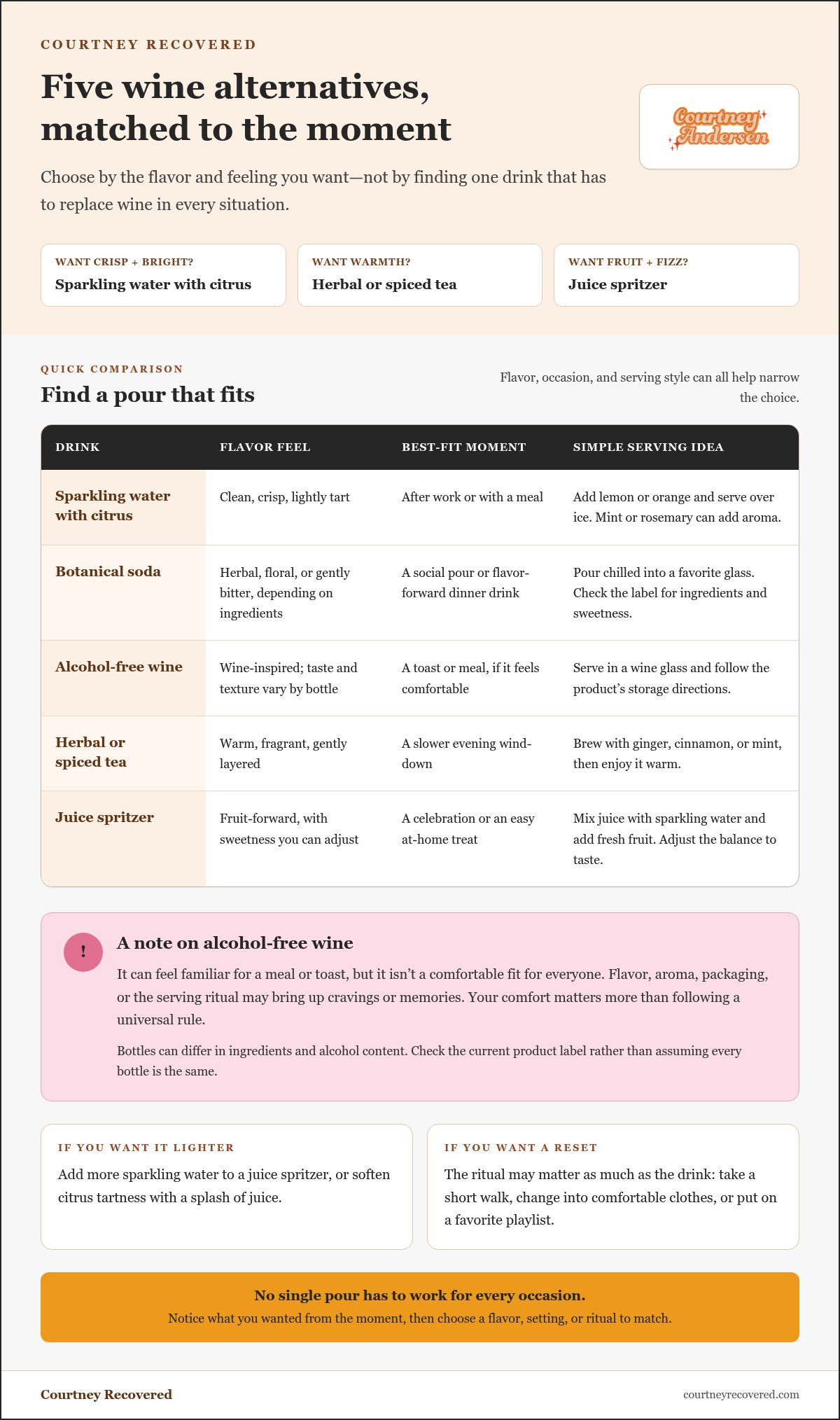
No single pour fits every craving. Some substitutes for wine when quitting drinking offer crisp fizz, while others bring fruit, warmth, or a more layered flavor. Use this comparison as a starting point, then adjust the sweetness, bubbles, and serving style to suit your taste.
| Drink type | Flavor feel | Best-fit moment | Simple serving idea |
|---|---|---|---|
| Sparkling water with citrus | Clean, crisp, lightly tart | After work or with a meal | Add a squeeze of lemon or orange and serve over ice. |
| Botanical soda | Herbal, floral, or gently bitter, depending on ingredients | A social pour or a flavor-forward dinner drink | Pour chilled into a favorite glass; check the label for ingredients and sweetness. |
| Alcohol-free wine | Wine-inspired, with taste and texture that vary by bottle | A toast or meal, if it feels comfortable for you | Serve in a wine glass and follow the product’s storage directions. |
| Herbal or spiced tea | Warm, fragrant, and gently layered | A slower evening wind-down | Brew with ginger, cinnamon, or mint, then enjoy it warm. |
| Juice spritzer | Fruit-forward, with sweetness you can adjust | A celebration or an easy at-home treat | Mix a small pour of juice with sparkling water and add fresh fruit. |
What to pour when you want something dry, crisp, or bubbly
For a bright, uncomplicated sip, start with sparkling water and citrus. Herbs such as mint or rosemary add aroma; a splash of juice softens the tartness without making the whole drink taste sweet. A botanical soda is a non-alcoholic drink flavored with botanicals, such as herbs, spices, roots, or flowers. Its flavor can feel more layered than plain soda water, but ingredients and sweetness vary, so check the label.
Alcohol-free sparkling wine is another option if you’re after bubbles and a celebratory feel. It won’t necessarily taste or feel like traditional wine, and it may not suit everyone. You get to decide whether it belongs in your rotation.
What to choose when you want warmth, sweetness, or complexity
Herbal or spiced tea brings warmth and gives you something to sip slowly. For fruit and fizz, a juice spritzer lets you control the balance: add more sparkling water for a lighter drink or more juice for a fuller fruit flavor. Try small adjustments. Carbonation, sweetness, and ingredients differ from one option to another, so let your own taste lead.
If finding a drink is only one part of building an alcohol-free routine, sobriety support and community can offer encouragement as you figure out what works for you.
Is non-alcoholic wine a good substitute when you quit drinking?
It can be a good fit for some people and feel uncomfortable for others. A wine-like drink might make dinner or a toast feel familiar, but its flavor, aroma, packaging, or serving ritual could bring up cravings or memories you’d rather not revisit. There’s no universal right answer. Personal comfort matters more than following a universal rule.
Don’t assume every bottle described as “non-alcoholic” or “alcohol-free” has the same ingredients or alcohol content. Read the current label and check the wording and alcohol-content details before choosing. If avoiding all alcohol is important to you, use the information on the specific product rather than relying on a general category name.
When alcohol-free wine might feel satisfying
If you enjoy a wine-like taste, holding a familiar glass, or having something to pair with food, an alcohol-free option may suit the moment. You could try a small amount in a setting where you feel comfortable, rather than making it the centerpiece of a high-pressure occasion. There’s no need to prove anything by choosing it.
Pay attention to how you feel before and after. Does the drink make the meal more enjoyable, or do its familiar cues leave you wanting more? Your mood and cravings are useful information. A choice that feels comfortable today can still be one you reconsider later.
When a wine-like drink might not feel right
Sometimes resemblance is the problem. A familiar aroma, bottle, pour, or taste may make the experience feel too close to drinking wine. If you notice discomfort or stronger cravings, stop, set it aside, and choose something clearly different, like tea or sparkling water. You don’t have to finish the glass or give the choice another chance.
Opting out needs no explanation, whether you’re at home or with other people. “I’ll have something else” is enough. Choosing a different drink isn’t a setback; it’s a way to respect what feels supportive for you right now. The best substitutes for wine when quitting drinking aren’t necessarily the ones that imitate wine. They’re the ones that help you feel at ease in the moment.
How to choose a wine substitute for cravings, dinner, and social plans
A little planning can make a familiar wine moment feel less automatic. Try this four-step check-in: name the need, choose a flavor, select a setting, then reassess. Are you looking for a pause, something crisp with dinner, or a celebratory glass? Pick a drink that fits, decide where you’ll enjoy it, and notice afterward whether it helped. This keeps choosing substitutes for wine when quitting drinking practical, not a pass-or-fail test.
- Name the need: Is this about taste, transition, celebration, or feeling included?
- Choose a flavor: Go crisp and bubbly, warm and spiced, or fruity, depending on what sounds good.
- Select a setting: A quiet night at home, dinner out, and a party may call for different choices.
- Reassess: Did the drink feel satisfying and comfortable? Keep what works and change what doesn’t.
If you know the urge tends to show up while cooking or after work, prepare your preferred option before that moment arrives. A chilled glass and ready-to-pour sparkling water can make the choice simple. For more ways to shape the evening, explore things to do instead of drinking.
Build a short list of go-to drinks for different moments
Keep three easy options in mind: one crisp, such as sparkling water with citrus; one warm, like herbal tea; and one celebratory, such as a juice spritzer or another alcohol-free drink you enjoy. You don’t need a complicated recipe or a stocked bar. Keep ingredients visible and preparation simple while you experiment. If it helps, jot down which drinks you liked and when, without turning each choice into a verdict.
Make social settings easier without making a big announcement
At a restaurant or gathering, you can order your preferred non-alcoholic drink early, before deciding what everyone else is having. If you’re hosting or bringing something, choose an option you already know feels comfortable. A short response is enough: “I’m good with this,” or “I’ll have sparkling water.” You can also say nothing beyond placing your order. You don’t owe anyone a story.
Sometimes the harder part isn’t choosing a drink. It’s wanting to feel understood and connected while you make a change. If that support would help, explore finding a sober community online. For ongoing encouragement as you build alcohol-free routines, explore sobriety support with Courtney Andersen.
Beyond the glass: build an alcohol-free ritual that feels like yours
A drink can be part of an evening routine, but it doesn’t have to carry the whole experience. Substitutes for wine when quitting drinking are tools, not a requirement to recreate drinking exactly. Keep the parts of your evening you enjoy and build something new around them.
Make the wind-down about more than what is in your glass
Pair a drink you like with a deliberate transition out of the day. Change out of work clothes, step outside for a few minutes, or put on music while you make dinner. A favorite glass or mug can make an everyday drink feel considered, while a screen-free pause can give you a moment to settle before the evening picks up.
Keep the ritual flexible. Maybe a walk helps one night, and a favorite meal or playlist feels better another time. Keep what feels good; drop what feels forced. You’re not trying to copy every detail of the old routine. You’re making room for an evening that works for you. For ideas beyond the glass, explore building a life after sobriety.
When a drink swap is not enough support
Sometimes an urge keeps returning, or the feelings around drinking feel bigger than a beverage choice can address. That doesn’t mean you’ve done anything wrong. It may be a sign that you could use support alongside the practical routines you’re building. Courtney Recovered offers personalized sobriety coaching and the Sobriety Circle community as non-clinical options for guidance and connection.
If you drink heavily or regularly, stopping can carry withdrawal risks. Talk with a medical professional before making a sudden change, so you can get guidance suited to your situation. Coaching and peer community can support your alcohol-free routine, but they don’t replace medical care.
You don’t have to figure out every new ritual on your own. If personalized guidance or connection with others would feel helpful, explore personalized sobriety coaching and community support as you shape an alcohol-free life that feels like yours.
Make your next alcohol-free evening your own
The best substitutes for wine when quitting drinking aren’t necessarily the ones that taste most like wine. Start by noticing what you want from the moment, then choose a drink and ritual that feel comfortable. A crisp pour might suit dinner, while a warm drink or a walk may better match a quiet wind-down. If alcohol-free wine doesn’t feel right, you’re allowed to choose something completely different.
Keep experimenting without turning every choice into a test. Your preferences can change, and the ritual can be about more than what’s in your glass. Music, a favorite meal, or a little breathing room can help an evening feel satisfying in its own way.
If you’d like support as you shape your alcohol-free routine, Courtney Recovered offers personalized 1:1 sobriety coaching, the Sobriety Circle membership community, and practical resources like the Sober Toolkit. Explore personalized sobriety support with Courtney Andersen. You deserve a routine that fits you, and you can build it one choice at a time.
Frequently Asked Questions
What can I drink instead of wine when quitting drinking?
Start with what you miss most: fizz, dryness, fruit, warmth, or the pause that marks the end of your day. Sparkling water with citrus, botanical soda, tea, a juice spritzer, or alcohol-free wine may suit different moments. These substitutes for wine when quitting drinking don’t need to recreate wine perfectly. Try options without pressure, and choose a clearly different drink if a wine-like flavor or ritual feels uncomfortable.
Is non-alcoholic wine a good substitute when quitting drinking?
It depends on what feels comfortable for you. Some people enjoy a familiar flavor with dinner, while others find wine-like aromas, packaging, or serving rituals uncomfortable. If it feels appropriate, you could try a small amount in a setting where you feel at ease and notice how you respond. Check the product label, too. You don’t have to drink alcohol-free wine to make sobriety work.
Can non-alcoholic wine trigger cravings?
It can bring up cravings or distress for some people, while others feel comfortable drinking it. Pay attention to your own response rather than assuming everyone will react alike. If the taste, smell, or ritual feels unsettling, set it aside and choose something different, such as tea or sparkling water. You can also reach out to someone supportive. Your comfort matters more than keeping a familiar routine.
What is the best drink to replace wine at dinner?
There isn’t one best choice for every dinner. For a crisp pairing, try sparkling water with citrus; a botanical soda may offer a more layered flavor, while tea can feel comforting with a warm meal. Alcohol-free wine is another option if it suits you. Consider the taste, ingredients, and how you feel drinking it. The right choice is the one that feels enjoyable and comfortable for you.
How do I replace my nightly glass of wine?
First, notice what that nightly glass represents. Is it a boundary between work and home, a flavorful treat, or a cue to unwind? Choose a drink that fits the need, then add another transition, like changing clothes, taking a walk, or playing music while dinner comes together. Experiment gently. If changing the routine feels hard to do alone, a supportive conversation or community may help.
Are alcohol-free wine and non-alcoholic wine always completely alcohol-free?
No, don’t assume every product contains exactly zero alcohol based on a general label description. Wording and alcohol content can vary, so read the current label and verify the details for the specific bottle, especially if avoiding all alcohol matters to you. If you’re unsure what’s appropriate for your situation, talk with a qualified healthcare professional rather than relying on a broad rule or someone else’s experience.
What if I am struggling to stop drinking, not just find a substitute?
A drink swap may help change a routine, but it isn’t a substitute for medical care or recovery support. If you drink heavily or regularly, stopping suddenly can cause dangerous withdrawal, so seek medical guidance before making a change. For non-clinical support, personalized sobriety coaching or a peer community can offer connection as you consider next steps. You don’t have to figure everything out on your own.
I want you to feel sober NOT boring!
Kickstart your sobriety with my free 2-day video workshop series to master your sober mindset and have FUN in your sobriety journey!


