
What to Do Instead of Drinking: 50+ Vibrant Ways to Reclaim Your Time in 2026
Jul 16, 2026
Let’s be honest. The question isn’t just “what to do instead of drinking.” The real question, the one that keeps you up at night, is probably closer to: “What on earth do people do on a Tuesday night if they aren’t pouring a glass of wine?”
If you’re here, you’ve likely felt that 5 PM pull. The itch. The deep-seated belief that a drink is the only thing that can smooth the rough edges of a long day. You’ve also probably felt the morning-after regret, the low-grade anxiety, and the creeping suspicion that this habit is taking more than it’s giving.
Here’s the secret no one tells you about ditching alcohol: it’s not about deprivation. It’s not about white-knuckling your way through a boring, colorless life. It’s about an upgrade. It’s about reclaiming your time, your energy, and your clarity to build a life so vibrant, so full of joy, that you no longer need or want to escape from it.
This isn’t just a list of 50 hobbies. This is your roadmap to rediscovering the person you are without alcohol. Let’s dive in.
Why the 'Boredom' of Sobriety is Actually Your Greatest Opportunity
That initial feeling of emptiness when you stop drinking? That's not a sign of failure. It’s the sound of opportunity knocking. For years, alcohol has been filling time, numbing feelings, and dictating your schedule. When you remove it, you create a space—let’s call it the "Sobriety Gap." It feels like boredom, but it’s actually a blank canvas.
- Your Brain on Pause: When you drink, your brain gets a huge, unnatural surge of dopamine, the "feel-good" chemical. When you stop, your brain's natural dopamine system is out of whack. It needs time to recalibrate. That’s why things feel “flat” or uninteresting at first. This is a temporary, biological process—not a permanent state of being.
- Boredom is Just Peace in Disguise: For the high-achieving woman, a quiet mind can feel terrifying. We’re used to chaos, to-do lists, and constant stimulation. The initial quiet of sobriety isn’t boredom; it’s peace. It’s your nervous system finally getting a chance to breathe. Your job is to learn how to sit in it, and then, how to fill it with intention.
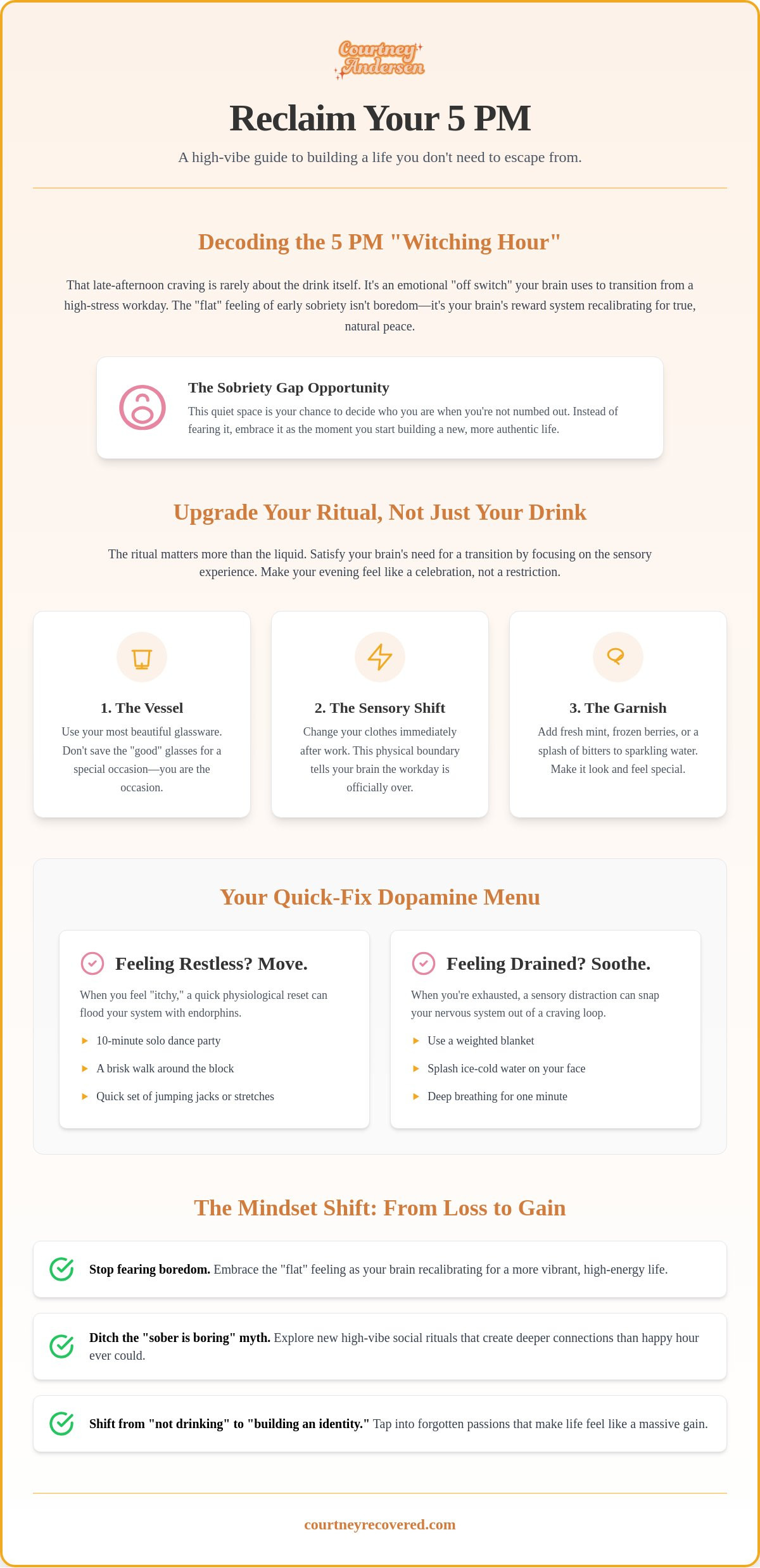
- Reclaiming Your Power Hour: That 5 PM to 7 PM window—the infamous "witching hour"—no longer has to be a time of anxiety and craving. By swapping the drink for a new ritual, you transform it from a moment of weakness into your personal power hour, a time dedicated to nourishing yourself. If you're struggling with this specific feeling, you're not alone. In fact, many people find that what to do when sobriety feels boring is the biggest hurdle to overcome.
Decoding the 5 PM Itch
That five o'clock feeling isn't just about a physical craving for alcohol. It's a deeply ingrained psychological cue. After a high-stress day of making decisions, meeting deadlines, and managing people, your brain is screaming for a transition—an "off switch." For many of us, a glass of wine became the symbol of that transition. It signaled "the workday is over, and you can now relax."
The key is to recognize the difference between physical thirst and an emotional need for a mental shift. You're not craving ethanol; you're craving a ritual that separates your professional life from your personal life. This pattern is incredibly common for those in the space of Gray Area Drinking, which is the middle ground between moderate social drinking and clinical alcohol dependence, where the habit causes more negative consequences than positive ones.
Replacing the Ritual, Not Just the Liquid
Think about your drinking habit. Was it really just about the wine? Or was it about the satisfying pop of the cork, the weight of your favorite glass in your hand, the clinking of ice, the slice of lime? Those sensory details are a huge part of the ritual. To successfully find an alternative, you need to replace the *entire experience*, not just the liquid inside the glass.
This is where you create a new "Transition Ritual." It's a series of small, deliberate actions that tells your brain, "Okay, we're shifting gears now." This is the core of "Sober Vibes"—it's not about grimly sipping water from a plastic cup. It’s about celebrating the end of the day with something that feels special, luxurious, and intentional, all without the fog of alcohol.
25 Immediate Things to Do Instead of Drinking When a Craving Hits
Willpower is finite. When a craving hits hard, you can’t just think your way out of it. You need an immediate, actionable plan. This is your "Dopamine Menu"—a list of quick wins you can turn to for an instant mood boost, categorized by your energy level and what your brain is *really* asking for.
The Quick-Fix Dopamine Menu (10-Minute Micro-Habits)
Keep this list on your phone or your fridge. When the urge strikes, don't argue with it. Just pick one and do it for 10 minutes.
- Craft a Fancy Mocktail: Use your best glass. Muddle fresh mint and lime, add sparkling water, and garnish with a raspberry. Make it an event.
- Have a Solo Dance Party: Put on your favorite high-energy song from high school and dance around your kitchen for its entire length. Movement is medicine, and it works faster than anything else.
- Take a "Sensory Shower": Hop in for a quick shower, but focus entirely on the senses. The smell of the soap, the feeling of the hot water, the sound it makes. It’s a full-body reset.
- Do a "Brain Dump" Journal Entry: Set a timer for 10 minutes and write down everything and anything on your mind. Don’t edit, don’t judge. Just get it out of your head and onto the page.
- Organize One Small Thing: Your junk drawer, your spice rack, the books on your nightstand. Creating a tiny bit of external order can create a huge amount of internal calm.
- Stretch Your Body: You don’t need a full yoga class. Just lie on the floor and do a few simple stretches. Touch your toes. Do a spinal twist. Pay attention to where you’re holding tension.
- Listen to One Chapter of an Audiobook: Escape into a different world for a few minutes.
- Drink a Huge Glass of Ice Water: Sometimes, the craving is just dehydration in disguise. Gulp down a full 16oz of cold water and see how you feel.
- Step Outside: Even if it’s just onto your balcony or front step. Take five deep breaths of fresh air. Notice the temperature, the sounds, the sky.
- Watch a Funny Animal Video: A quick, reliable hit of pure, uncomplicated joy.
Nourishing Your 'Inner Child' Activities
As high-achievers, we’re obsessed with productivity. But recovery requires play. It demands that we do things for the simple, unadulterated joy of it. Doing something "unproductive" is the ultimate act of rebellion against the hustle culture that often fuels the drinking cycle.
- Get an Adult Coloring Book: The focus required is meditative, and the colorful result is surprisingly satisfying.
- Build a LEGO Set: Following instructions and creating something with your hands is incredibly grounding.
- Read "Quit Lit": Immersing yourself in stories from others who have walked this path is a powerful reminder that you aren't alone. Books like the Sober Vibes Book can provide daily inspiration and keep you connected to your goal.
- Work on a Jigsaw Puzzle: Spread it out on a table and leave it there. It's a low-pressure activity you can return to whenever you have a few spare minutes.
- Play a Cozy Video Game: Games like Stardew Valley or Animal Crossing are designed to be relaxing, not stressful.
Grab the 30 Day Sober Not Boring Calendar for daily activities and things to do without alcohol.
Reclaiming Your Social Life: Things to Do Instead of Drinking with Friends
One of the biggest fears in early sobriety is social fallout. You’re probably thinking, "Will my friends still want to hang out with me? Will I be the boring one?" Let’s debunk that myth right now: your value as a friend has absolutely nothing to do with the liquid in your cup. True friends will support your journey; the ones who don’t were likely just drinking buddies to begin with.
The key is to shift the focus of your social events from *sitting and drinking* to *doing and connecting*.
Active Socializing Alternatives
When you're engaged in an activity, the absence of alcohol becomes a non-issue. The focus is on the fun, the competition, and the shared experience.
- Get Active: Try a pickleball match, a bowling night, an escape room, a trivia night (with soda water and lime!), or a group fitness class like yoga or spin.
- Explore High-Vibe Nightlife: The sober-curious movement is booming. Look for sober bars and zero-proof tasting rooms in your city. Explore late-night coffee shops, live music venues, comedy clubs, or even events like sound baths or ecstatic dance.
- Host a "Sober Vibes" Gathering: Take control of the environment. Host a board game night, a movie marathon with a gourmet popcorn bar, or a backyard bonfire with s'mores. When you provide delicious non-alcoholic options and a fun activity, people won't even miss the booze.
- Find Your People: If your current circle isn't supportive, it might be time to find a new one. Online communities, like the Sobriety Circle, connect you with like-minded women who are on the same path and understand the journey.
And for that dreaded question, "Why aren't you drinking?" Keep it simple, direct, and unapologetic. You don't owe anyone a lengthy explanation. Try one of these scripts:
- "I'm not drinking tonight." (Simple and effective.)
- "I'm taking a break from alcohol for a bit." (True and non-confrontational.)
- "Alcohol hasn't been making me feel great lately, so I'm sticking with this." (Honest and relatable.)
Navigating Professional Events Sober
Networking events, client dinners, and holiday parties can feel like a minefield. But sobriety can actually be your professional superpower. Think about it: while others are getting sloppy, you’re making genuine connections with a clear head. You’ll remember names, follow up on conversations, and leave a lasting impression of being sharp and composed.
- Always Have a Drink in Hand: Get a sparkling water with lime in a rocks glass the moment you arrive. It serves as a social shield.
- Master the "Early Exit": You don't have to be the last one standing. Arrive on time, make your key connections in the first 60-90 minutes, and then politely excuse yourself. Leaving at 9 PM feeling great is a power move.
- Focus on Genuine Connection: Instead of relying on "liquid courage," make it your mission to ask thoughtful questions and listen intently. People will remember you for your engagement, not for what you were drinking.
Deep Work: Hobbies That Help You Build a New Identity
The "Dopamine Menu" is for survival. This next level is for transformation. The long-term goal isn't just to distract yourself from drinking; it's to build a new identity—one that is so fulfilling that alcohol becomes irrelevant. This is where you move from distraction to deep, meaningful engagement.
This process is rooted in neuroplasticity. When you learn a new, complex skill, you are literally rewiring your brain, creating new neural pathways that don’t lead back to the bottle. You’re building a new you, one neuron at a time.
Physical Mastery and Mind-Body Connection
Alcohol disconnects you from your body. The path back is through mindful movement. These hobbies aren't just about fitness; they're about discipline, presence, and earning a natural high.
- Practice Yoga or Pilates: These disciplines teach you to connect your breath with movement, grounding you in the present moment and building a deep respect for your body.
- Train for a Goal: Sign up for a 5K, a half-marathon, or a charity bike ride. Having a concrete goal to work towards provides structure and a powerful "why" on days when motivation is low. It becomes a sobriety anchor.
- Learn a Martial Art: Activities like kickboxing or jiu-jitsu require immense focus and discipline, channeling your energy and building confidence in a whole new way.
Intellectual and Soul-Level Growth
What did you love to do as a child before you discovered alcohol? What passions did you set aside because you were too busy or too tired? Now is the time to reclaim them.
- Learn Something New: Take a Masterclass on a topic that fascinates you. Use an app like Duolingo to learn a new language. Sign up for a local pottery or coding class. Challenge your brain.
- Start a Side Hustle: Channel your newfound energy and clarity into that business idea you've been dreaming about. Professional success is amplified by a clear head.
- Go Inward with Journaling and Shadow Work: Sobriety brings up a lot of feelings. Instead of numbing them, get to know them. Use journaling prompts to explore your patterns, fears, and dreams. This is the "un-boring" way to get to know the real you.
Ultimately, the goal is to build a "Sober Identity" that you are genuinely proud of. When someone asks what you do for fun, you'll have a dozen exciting things to talk about that have nothing to do with a bar.
Beyond the List: How to Make Sobriety Stick with Courtney Recovered
A list of things to do instead of drinking is a fantastic start. But let’s be real: if hobbies alone were enough to solve the problem, you would have done it already. Lasting change doesn't come from a list; it comes from a mindset shift, a deep-seated belief in your own worth, and—most importantly—support.
You cannot and should not do this alone. The power of accountability is the secret sauce that makes sobriety stick. Sharing your journey with others who just *get it* is the difference between feeling like you're struggling in isolation and feeling like you're on a shared adventure.
The Sobriety Circle Advantage
Imagine having a 24/7 community in your pocket—a group of brilliant, supportive women who are navigating the exact same challenges and celebrating the same wins. That’s the power of peer support. It turns a private struggle into a collective strength. Inside a community like the Sobriety Circle, you'll find monthly membership calls, shared resources, and a constant stream of encouragement. It’s the secret weapon against relapse because you're never truly alone with your thoughts.
1:1 Coaching: The Ultimate Shortcut
A generic Google search will give you a list of hobbies. A personalized mentorship will give you a roadmap tailored to your specific life, triggers, and goals. Working with a coach is the ultimate shortcut to breaking the cycle for good. It’s for the woman who has tried everything—the 30-day challenges, the books, the podcasts—and is ready to stop starting over. Programs designed for this, like 1 on 1 sobriety coaching, provide the structure, accountability, and expert guidance needed to finally move from just 'trying' not to drink to truly 'thriving' in an alcohol-free life.
Ready to build a life you don't want to escape from? It’s time to take the next step.
Frequently Asked Questions
- What are the best things to do instead of drinking at home alone?
- Focus on activities that engage your hands and mind. Try cooking an elaborate new recipe, working on a jigsaw puzzle, learning an instrument via YouTube, taking a bubble bath with a good book, or diving into a home organization project. The goal is to replace the passive act of drinking with an active, engaging one.
- How do I deal with the 'witching hour' without wine?
- Create a new "Transition Ritual." This could be a 15-minute walk the second you finish work, brewing a special pot of herbal tea in a fancy mug, a 10-minute meditation, or changing into comfortable clothes while listening to a specific "end of day" playlist. The key is to have a planned, non-negotiable activity that signals the shift from work to rest.
- Is it normal to feel bored when you first stop drinking?
- Yes, it is 100% normal. Your brain's dopamine system is recalibrating from the artificial highs of alcohol. This initial flatness is a temporary phase. Reframe it: you're not bored, you're free. You now have hours of time and extra money to pour into things that genuinely light you up. It’s an adjustment, but it’s also an incredible opportunity.
- How can I be social and have fun without alcohol?
- Shift your social life from "sitting and talking" at a bar to "doing things together." Suggest coffee dates, hiking, bowling, pottery classes, concerts, or exploring a new neighborhood. When you're the one suggesting the fun, alcohol-free plan, you take control of the situation. And always have a fun non-alcoholic drink in your hand so you don't feel awkward.
- What are some healthy ways to relax after work instead of drinking?
- Healthy relaxation involves calming your nervous system, not numbing it. Try gentle stretching or yin yoga, listening to a calming podcast or playlist, using an aromatherapy diffuser with lavender oil, taking a warm bath with Epsom salts, or practicing mindfulness with an app like Calm or Headspace.
- Do I need a sobriety coach to help me find new hobbies?
- You don’t need a coach to find hobbies, but you might need one to address the underlying reasons you were drinking in the first place. If you find that new activities still feel empty or you keep returning to old habits, a coach can provide the accountability, strategy, and support needed to create lasting change and build a new identity beyond just "someone who doesn't drink."
- What should I do if my friends only want to hang out at bars?
- This is a tough but important moment of reflection. First, be the one to suggest new, different activities. If they consistently refuse, you may need to set boundaries for your own well-being. This could mean meeting them for a pre-dinner mocktail and leaving when they head to the bar, or prioritizing time with friends who are open to activities that support your new lifestyle. True friends will respect your journey.
- Can hobbies really replace the feeling of a drink?
- In the beginning, no single hobby will replicate the immediate chemical rush of alcohol. The goal is not a 1-to-1 replacement. The goal is to build a life so rich with connection, accomplishment, and genuine joy that the dull, fleeting buzz of alcohol pales in comparison. Over time, the pride from running a 5K, the peace from a yoga class, and the connection from a real conversation will become far more rewarding than a drink ever was.
I want you to feel sober NOT boring!
Kickstart your sobriety with my free 2-day video workshop series to master your sober mindset and have FUN in your sobriety journey!


