
Timeline of Quitting Alcohol Benefits: What to Expect
Oct 27, 2026
What if the first days without alcohol feel harder before they feel better? That doesn’t mean you’re failing. The timeline of quitting alcohol benefits is a flexible guide, not a promise that everyone will feel better by a certain day.
You may be wondering when sleep, energy, mood, or mental clarity could shift, and whether your experience will match someone else’s. This guide looks at possible changes over the first days, weeks, and months, along with some of the challenges that can come with adjusting. Progress can be gradual and uneven, and still be real.
One important safety note before you stop: alcohol withdrawal can begin 6 to 24 hours after your last drink, and it can become dangerous. If you’ve been drinking heavily or regularly, talk with a healthcare professional before quitting. Seek urgent medical help for severe symptoms such as seizures or hallucinations. The sections below distinguish possible adjustment experiences from warning signs, so you can consider your next step without shame or pressure.
Key Takeaways
- The timeline of quitting alcohol benefits is a flexible guide, not a guaranteed schedule. Your starting point and experience matter.
- Notice changes in sleep, energy, mood, digestion, and clarity without expecting them to improve all at once.
- Use the weeks and months ahead as check-in points for possible changes, while remembering that progress can be uneven.
- Track what’s changing, name what feels hard, and choose a supportive next step. A setback doesn’t erase what you’ve learned.
- Connection and practical support can help you keep moving forward. Medical concerns belong with a healthcare professional.
Timeline of Quitting Alcohol Benefits: What Changes, and When?
Want to know what might change after you stop drinking? Curiosity can come with excitement, nerves, or the reasonable question, “What if this is harder than I expect?” The timeline of quitting alcohol benefits can offer a hopeful frame, but it can’t predict exactly what your body or daily life will do next.
A timeline is a flexible guide to possible changes, not a promise or a personal medical prediction. Your alcohol use patterns, overall health, medications, and circumstances all shape the experience. Some shifts may be noticeable early; others may take time or be hard to spot. Sleep, for example, might feel unsettled even as you build new evening habits.
What counts as an alcohol-free timeline?
It helps to separate the immediate change of not drinking from the longer process of adjusting and building new routines. The first days involve getting through a near-term change safely. Over time, you may also notice shifts in sleep, mood, energy, digestion, or everyday habits. These aren’t boxes to tick in order. Think of them as areas to observe, not deadlines to meet.
Why your experience may not match someone else’s
Two people can stop drinking on the same day and have very different weeks. Drinking patterns, health conditions, medications, stress, and available support can all affect how the adjustment feels. An online timeline can’t assess your personal risk or predict your outcome. If changes are subtle or slower than you hoped, you’re not doing it wrong. Your progress isn’t measured against somebody else’s highlight reel.
One safety point matters more than any milestone: stopping alcohol can cause dangerous, even life-threatening withdrawal for some people. Symptoms may begin 6 to 24 hours after the last drink and can become most severe within 24 to 72 hours. The overview of Alcohol withdrawal syndrome describes how symptoms can range from mild to severe, but it can’t replace personal medical advice. If you drink heavily or regularly, contact a healthcare professional before stopping rather than trying to detox alone. Seizures, hallucinations, or severe confusion require urgent medical attention.
Getting medical guidance isn’t a sign that you’re overreacting. It’s a practical way to make the next step safer. The rest of this timeline maps possible changes, with room for your own pace and circumstances.
The First Days Without Alcohol: Safety Comes Before Benefits
The first few days can feel unpredictable. You might hope for better sleep or a clearer head, but instead find yourself tired, restless, anxious, or physically uncomfortable. Some people notice few immediate changes; others feel a lot. This early stretch isn’t a reliable preview of later benefits, and a general timeline can’t tell you whether stopping is medically safe for you.
What might happen in the first 24 to 72 hours?
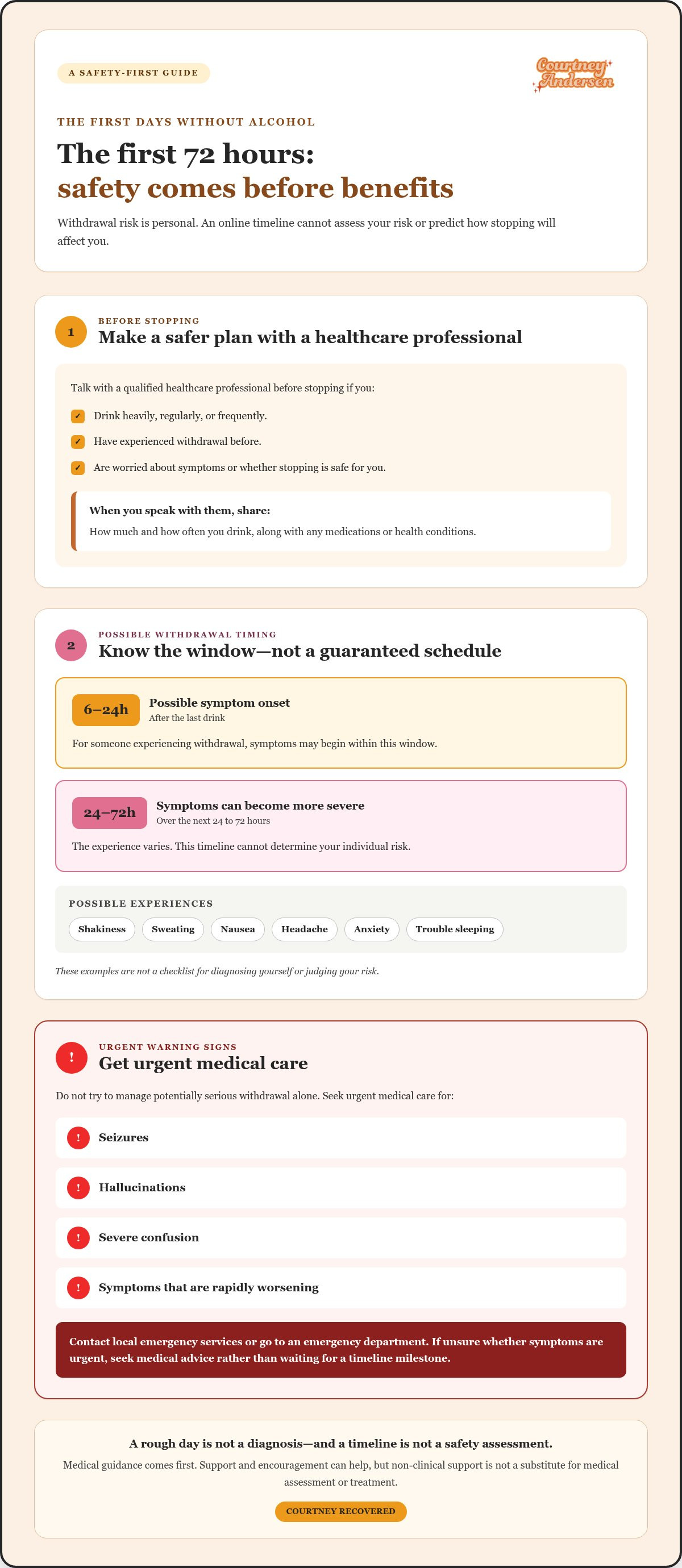
For someone experiencing withdrawal, symptoms may start within 6 to 24 hours after the last drink and can become more severe over the next 24 to 72 hours. Possible experiences include shakiness, sweating, nausea, headache, anxiety, or trouble sleeping. These examples aren’t a checklist for diagnosing yourself or judging your risk. For more on the range of symptoms of alcohol withdrawal, see MedlinePlus, a resource from the U.S. National Library of Medicine.
Even without withdrawal, sleep, mood, energy, and physical comfort can fluctuate as routines change. Don’t treat one rough night or one better morning as proof of how the whole process will go. The timeline of quitting alcohol benefits is not a reason to push through symptoms that concern you.
When should you get medical help?
Withdrawal risk depends on individual circumstances, including drinking history and health. No online timeline can assess it for you. If you drink heavily or frequently, have experienced withdrawal before, or are worried about symptoms, contact a qualified healthcare professional before stopping. Be honest about how much and how often you drink, and mention medications or health conditions. Getting advice is a practical safety step, not something to be ashamed of.
Don’t try to manage potentially serious withdrawal alone. Seizures, hallucinations, severe confusion, or symptoms that are rapidly worsening call for urgent medical care. Contact your local emergency services or go to an emergency department. If you’re unsure whether what you’re experiencing is urgent, seek medical advice rather than waiting for a milestone on a timeline.
Once you've addressed immediate safety, steady encouragement can also make change feel less isolating. Courtney Andersen, creator of Sober Vibes offers non-clinical sobriety support and resources. Coaching or community support isn’t a substitute for medical assessment or treatment. If withdrawal could be a concern, first make a safe plan with a healthcare professional. Then focus on the next step, one day at a time.
Weeks One to Four: Notice the Small Wins Without Expecting a Straight Line
After the first days, you may start looking for signs that something is shifting. Maybe mornings feel a little easier, or you notice a clearer moment in an otherwise ordinary day. You might also have restless nights, low energy, cravings, or emotions that seem to swing around. Those experiences can coexist. One doesn’t cancel out the other.
Early progress can be uneven and still be meaningful. The timeline of quitting alcohol benefits isn’t a daily scorecard, and there’s no single change you need to feel by the end of week one or week four.
What changes might show up in the first few weeks?
People sometimes describe changes in sleep, energy, mood, digestion, or mental clarity during this stretch. Treat these as personal observations, not guaranteed outcomes or proof that a particular body system has healed. Feeling more focused one afternoon is a real experience, but it isn’t the same as a clinically measured change. A rough night doesn’t mean you’ve lost ground, either.
If you notice a health change that worries you, or a symptom that persists or gets worse, check in with a qualified healthcare professional. They can interpret what’s happening in light of your health and circumstances. This is especially important if you’re concerned about withdrawal. A general timeline can’t assess your individual safety.
How to handle days that feel harder than expected
Some days bring cravings, awkward gaps in familiar routines, or feelings you used to push aside with a drink. That can be uncomfortable. It doesn’t mean you’re weak, and you don’t have to pretend it’s easy. Try reaching out to someone you trust, or consider appropriate professional support if you need help sorting through what’s coming up.
Keep tracking simple and kind. At the end of the day, jot down a few notes:
- What felt different, even if it was small?
- What felt hard, and what was happening around that moment?
- What support or next step might help tomorrow?
You’re collecting clues, not grading yourself. If a daily log starts to feel like pressure, take a break or shorten it. Practical early-sobriety tips can help you think through new routines and tough moments. Choose ideas that fit your situation, and bring health concerns to a professional.
Some wins are quiet: getting through a familiar trigger, asking for company, or being honest about a hard day. Give those moments credit. Progress doesn’t have to look dramatic to count.
Months One to Twelve: How Benefits Can Build Beyond the First Month
As alcohol-free routines become more familiar, your focus may shift from getting through each day to building a life that feels good to live. You might feel more confident in social situations, rethink how you spend evenings, or clarify the relationships and priorities you want to nurture. These shifts don’t happen on a set schedule. Emotional adjustment can continue even when parts of your routine start to feel easier.
Use the periods below as broad check-in points, not deadlines. Physical-health changes vary, and personal impressions can’t confirm what’s happening inside your body. A healthcare professional can discuss concerns and determine whether clinical assessment is appropriate.
| Broad period | Possible areas of change | Keep in mind |
|---|---|---|
| Weeks 4 to 12 | Alcohol-free routines may feel more familiar; you may notice shifts in how you handle social plans, stress, or cravings. | Emotions can still be mixed, and new habits may take practice. |
| Early months | Some people find more room to build confidence, reconnect with others, or explore activities that aren’t centered on drinking. | There’s no required milestone for feeling settled or “fully recovered.” |
| Later months of the first year | Support, routines, and personal priorities may keep evolving as you learn what helps you sustain change. | Progress can include difficult patches, and health outcomes vary. |
| Beyond one year | You may continue shaping relationships, goals, and everyday life around what matters to you. | The first year isn’t a finish line or a guarantee of any particular result. |
What might feel different after one to three months?
You may find that familiar moments, like dinner out or winding down after work, require less planning than they did at first. Or those situations may still bring up questions and feelings. Both are possible. Some routines can grow steadier, while confidence, mood, and relationships may still need attention. For another perspective on ongoing adjustment, see the article Life After Sobriety.
What can change over the rest of the first year?
Over time, you might adjust your support network, try new ways to celebrate, or make plans around priorities that once took a back seat. Physical health may also be part of your personal picture, but don’t treat a calendar milestone as evidence that an organ has healed or disease risk has changed. Those questions call for current medical guidance tailored to you. A timeline can help you reflect, not diagnose.
If you want ongoing, non-clinical support as you build routines and accountability, explore sobriety coaching and community support. This support can complement, but never replace, medical care when that’s needed. Keep taking stock of what’s working, and let your next steps fit your life rather than someone else’s calendar.
Make the Timeline Work for You: Support, Setbacks, and Next Steps
A timeline is most useful when it helps you notice what’s happening, not when it becomes another standard you have to meet. Your experience can include progress and hard days at the same time. If you return to drinking, that doesn’t erase what you learned or mean you can’t seek support now. You can pause, consider what made things difficult, and choose what might help next.
How can you track progress without judging yourself?
If keeping notes helps, keep them simple. Jot down observations about sleep, mood, energy, routines, cravings, or moments that mattered. A note like “I felt nervous about dinner, but I stayed and enjoyed the conversation” can tell you more than a pass-or-fail score.
Try this gentle reflection plan:
- Notice. What felt different today, even if it was small?
- Name the challenge. What felt tough, and what was happening around it?
- Choose a next step. Would rest, a conversation, a changed routine, or extra support be useful?
Tracking is optional. You don’t need to produce daily proof that you’re improving. For practical sobriety tools and resources, explore the relevant article on the Courtney Recovered site.
What kind of support fits your next step?
Different needs call for different support. If you’re concerned about withdrawal or your health, talk with a qualified healthcare professional. Coaching and peer community don’t provide medical assessment or detox. For accountability, connection, or help building alcohol-free routines, non-clinical support may be a useful addition. Courtney Recovered offers 1:1 Sobriety Coaching and the Sobriety Circle, a membership-based community with shared resources. These options aren’t substitutes for medical care when you need it.
You don’t have to have your whole plan figured out before asking for support. Start with the kind of help that fits what you need right now, and adjust as you learn more about yourself. If personalized encouragement feels like a good next step, you can explore support for your alcohol-free journey.
Take Your Next Step at Your Own Pace
The timeline of quitting alcohol benefits is a guide, not a deadline. Changes in sleep, mood, energy, and routines may unfold unevenly, and a difficult day doesn’t erase what you’ve learned. If stopping could bring withdrawal symptoms, put safety first and speak with a qualified healthcare professional before making a change.
You don’t have to figure out every next step on your own. Personalized 1:1 Sobriety Coaching can provide accountability as you work toward sustainable sober living, while the Sobriety Circle offers membership-based community and shared resources. These are non-clinical support options, not medical detox or a replacement for medical care.
If connection or accountability would help you keep moving forward, explore 1:1 Sobriety Coaching and the Sobriety Circle. Your path doesn’t need to look like anyone else’s. Start with one safe, manageable step, and give yourself credit for taking it.
Frequently Asked Questions
How soon do you notice benefits after quitting alcohol?
Some people notice changes within days, while others need more time or notice different things first. Sleep, energy, mood, digestion, and mental clarity can each shift on their own schedule. The timeline of quitting alcohol benefits is a guide to possible experiences, not a guarantee. Your drinking pattern, health, medications, and circumstances all matter, so try not to measure your progress against someone else’s story.
What happens to your body in the first week without alcohol?
The first week can bring mixed experiences. Some people report changes in sleep, energy, mood, or physical comfort, while others feel restless or unwell. If withdrawal occurs, symptoms can begin 6 to 24 hours after the last drink and may be most severe within 24 to 72 hours. Alcohol withdrawal can be dangerous, so anyone concerned about withdrawal should contact a healthcare professional rather than trying to manage it alone.
Can quitting alcohol make you feel worse before you feel better?
Yes, some people feel worse at first. Sleep disruption, anxiety, low energy, or other uncomfortable symptoms may occur, and withdrawal can be serious for people at risk. Feeling rough doesn’t automatically mean you’re failing, but don’t dismiss symptoms that concern you. If you’ve been drinking heavily or frequently, ask a healthcare professional for guidance before stopping. Severe or rapidly worsening symptoms need urgent medical attention.
How long does it take to feel better after stopping drinking?
There isn’t one set timeframe for feeling better. Some changes may be noticeable in the early days or weeks, while other shifts take longer or aren’t obvious. Sleep, mood, energy, and routines can improve unevenly, and a difficult stretch doesn’t mean progress has stopped. If symptoms are severe, persistent, or worrying, talk with a healthcare professional instead of relying on a general timeline to explain them.
What happens after one month without alcohol?
After a month, you may notice changes in routines, sleep, mood, energy, or how you approach social situations, but there’s no guaranteed milestone. Some people still have unsettled sleep or emotional ups and downs. Personal impressions also can’t confirm changes in liver function or other health measures. If you have questions about your health, a healthcare professional can offer guidance based on your individual circumstances.
Is it safe to quit alcohol cold turkey?
It isn’t safe for everyone to stop suddenly without medical guidance. Alcohol withdrawal can be life-threatening, and a general timeline can’t determine your personal risk. If you drink heavily or frequently, have had withdrawal symptoms before, or are worried about stopping, contact a qualified healthcare professional before making a change. Seizures, hallucinations, severe confusion, or rapidly worsening symptoms require urgent medical care or emergency services.
Do the benefits of quitting alcohol continue after one year?
They can, but there’s no universal one-year finish line or guaranteed outcome. Alcohol-free routines, relationships, confidence, and personal priorities may keep evolving over time. Physical health changes and disease risks depend on individual factors, so discuss specific health questions with a healthcare professional. If progress feels uneven after a year, that doesn’t mean you’ve failed or that support is no longer available. Keep choosing steps that fit your needs.
I want you to feel sober NOT boring!
Kickstart your sobriety with my free 2-day video workshop series to master your sober mindset and have FUN in your sobriety journey!


