
Sobriety Books for Women: Find Your Recovery Read
Oct 28, 2026
Which sobriety book for women will meet you where you are right now? The best starting point isn’t necessarily the most popular title or the one with the strictest plan. A broad recovery list can leave you wondering whether you need someone else’s story, practical ideas, or simply words that help you feel less alone. You don’t have to pick the perfect book. Choose one that feels useful today.
This guide compares women-centered memoirs, practical guides, and reflective reads so you can match a book to what you need. Maybe you want inspiration from a lived experience, ideas to try, or a gentler book to read at your own pace. Think about the support you want from the page, then start there. Reading can be one part of recovery, alongside community or professional care when appropriate. You’re allowed to change direction as your needs shift.
Key Takeaways
- Choose sobriety books for women by the kind of support you want right now: a lived story, practical guidance, or space to reflect.
- Compare a book’s format and tone with your needs instead of relying on a one-size-fits-all “best” list.
- Try one book at a manageable pace, then note what resonates, what feels difficult, and what support could help.
- Consider Courtney Andersen’s Sober Vibes Book as one practical recovery resource among a range of possible reads.
- Let reading support your personal recovery journey alongside community or professional care when appropriate.
Why sobriety books for women can feel more personal than a generic recovery list
You’re looking for a book that speaks to your life, not just the word “sobriety.” Maybe drinking has been woven into work events, friendships, parenting, dating, or the quiet ritual of finally getting a moment to yourself. A broad recovery list can offer plenty of titles and still leave you asking, “Which one gets where I’m coming from?”
Women-centered sobriety books aren’t defined by one identity or one path to recovery. They bring perspectives, stories, or guidance that may feel relevant to women’s experiences, while making room for differences in culture, age, relationships, family, and goals. Memoirs can offer recognition; practical guides can share exercises or ideas to try; reflective books can help you consider your own choices. None decides what recovery should look like for you.
What makes a sobriety book for women feel relatable?
Often, it’s the details. A candid story about social pressure, “wine o’clock” jokes, or feeling expected to keep everyone else happy may feel more personal than a general explanation of alcohol use. But representation isn’t a checklist, and no author can speak for every woman. Notice how the voice feels as you read: grounding, judgmental, or genuinely useful? You can appreciate a story without sharing every part of it.
If you’re browsing broadly, a list of sobriety books can help you find titles across the genre. Use it to discover options, then look for voices and approaches that speak to your own questions.
Memoir, practical guide, or both: where should you start?
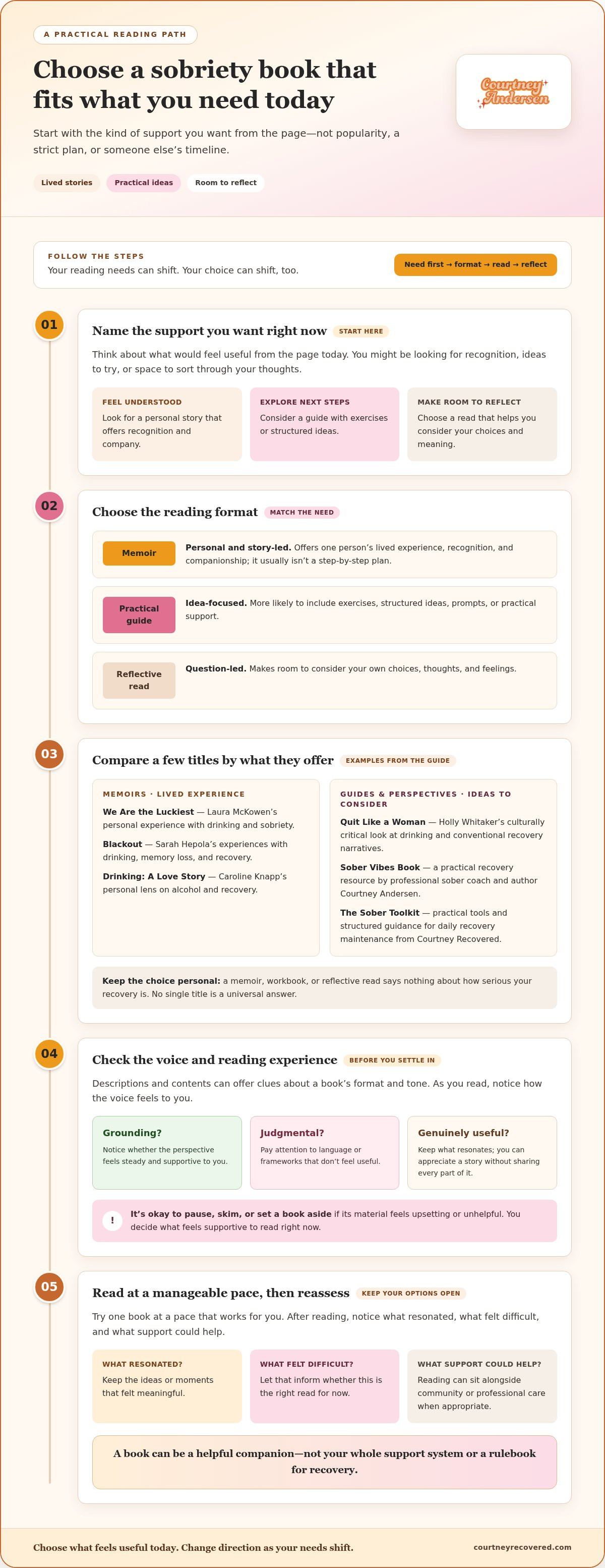
A memoir follows someone’s lived experience. It may offer recognition, company, and a glimpse of how change unfolded, but it usually isn’t a step-by-step plan. A practical guide is more likely to include exercises, structured ideas, or prompts for taking action. Reflective books make room for questions and personal meaning. You might prefer one format or find a mix more useful.
Choose the format that fits your need today, not the title everyone else is reading. If you want to feel understood, begin with a story. If you’re ready to explore next steps, try a guide. If you’re still sorting through what you think or feel, choose a reflective read. Your needs can shift, too. A book can be a helpful companion without becoming your whole support system or a recovery rulebook.
Top Sobriety Books for Women: Memoirs and Guides
No single book is “best” for every reader. The right pick depends on whether you want to recognize yourself in someone else’s story, question the culture around drinking, or explore practical ideas. Women’s experiences with alcohol can be shaped by distinct social expectations and health factors; Yale School of Medicine discusses the science of sex-based risks. That context can make women-centered perspectives meaningful, but it doesn’t mean every woman needs the same recovery approach.
Memoirs for readers who want to feel less alone
Memoirs offer one person’s account, not a template you have to follow. They can bring recognition and companionship, but another reader’s choices or timeline may not match yours. Take what resonates and leave the rest.
- We Are the Luckiest by Laura McKowen shares her personal experience with drinking and sobriety. Consider it if you want candid storytelling rather than a step-by-step program.
- Blackout by Sarah Hepola explores her experiences with drinking, memory loss, and recovery. Its direct account may suit readers who want to reflect on alcohol’s place in their own lives.
- Drinking: A Love Story by Caroline Knapp is a memoir about her relationship with alcohol and recovery. It offers a personal lens on how drinking can become entangled with identity and daily life.
Memoirs can include difficult material. Pause, skim, or set a book aside if it feels upsetting or unhelpful. You get to decide what feels supportive to read right now.
Practical and perspective-shifting books for readers ready to reflect
If you want ideas to consider, these titles and resources offer different angles. None is a universal answer. Pay attention to the language and framework, then decide what feels useful for you.
- Quit Like a Woman by Holly Whitaker takes a culturally critical look at drinking and conventional recovery narratives. It may appeal if you want to question messages around alcohol and the systems often presented as the default path.
- Sober Vibes Book by Courtney Andersen is a recovery resource for readers looking for practical support. Courtney Andersen is a professional sober coach and author.
- The Sober Toolkit from Courtney Andersen offers practical tools and structured guidance for maintaining daily recovery.
Approaches and tone vary, and a book or toolkit isn’t a substitute for individualized medical or mental-health care. To explore a practical recovery resource, take a look at the Sober Vibes Book as one possible part of a broader support toolkit.
How to compare sobriety books for women and choose what fits you
A useful book fits what you’re looking for; it doesn’t measure your commitment. Choosing a memoir over a workbook says nothing about how serious you are about your recovery. Compare the reading experience: Do you want someone’s story, ideas to consider, prompts to work through, or a collection of resources? Check the description or contents for clues about format and tone. A broader list of acclaimed books on addiction and recovery can help you discover titles, but your needs are a better guide than popularity.
| Format | Tone | Reader need | Representative title |
|---|---|---|---|
| Memoir | Personal and story-led | Company and recognition through another person’s experience | We Are the Luckiest by Laura McKowen |
| Practical guide | Idea-focused and instructive | Prompts, structured ideas, or possible next steps | The Unexpected Joy of Being Sober by Catherine Gray |
| Reflective book | Questioning and perspective-shifting | Space to reconsider drinking culture and personal beliefs | Quit Like a Woman by Holly Whitaker |
| Recovery-resource collection | Practical and resource-oriented | A range of support materials to explore | Sober Vibes Book by Courtney Andersen |
Which book should you choose if you are newly sober?
There’s no required reading order or timeline. If you want company, try a memoir. If you’re looking for ideas, browse a practical guide. If you’d like something to work through, choose a book with exercises or prompts. Read a preview or short excerpt first when available. Notice whether the language feels approachable and whether the format seems manageable for you today.
What if recovery language or a book’s approach does not fit?
Set it aside. A phrase that feels shaming or a framework that feels rigid may not work for you, and an author’s personal approach isn’t a rule every reader must follow. The right sobriety books for women are the ones that support your own reflection and next steps. If you want ideas beyond reading, explore a broader guide to the best sobriety tools and resources.
How to Use Sobriety Books Effectively
A book can offer a fresh perspective, a question to sit with, or an idea to consider. It doesn’t have to become homework, and you don’t have to finish it on a set schedule. Sobriety books for women can support reflection, but reading is just one tool in a personal recovery journey.
Turn a chapter into one small, realistic action
Keep it simple: choose one book, read at a pace that works for you, pause to reflect, and pick one useful takeaway. That might be a question to journal about, a boundary to consider, or a phrase you want to remember. You don’t need to overhaul everything at once.
Short on time? Read a few pages, listen to a chapter, or return to a passage that stayed with you. You could jot down a few quick notes:
- What felt familiar or encouraging?
- What felt difficult, uncomfortable, or unhelpful?
- What kind of support might help me explore this further?
Keep what helps and leave behind advice that doesn’t fit. An author’s suggestion can spark reflection without becoming a rule you have to follow.
Know when reading alone is not enough
Books are educational or reflective resources. They can’t diagnose a health concern or provide individualized treatment. If you’re concerned about alcohol withdrawal, talk with a medical professional before stopping suddenly. Withdrawal can carry health risks for some people, and medical guidance can help you understand what’s safe for your situation.
Connection can matter, too. A trusted person, peer community, or professional support may help you feel less alone as you put ideas into practice. Sobriety coaching and peer community can offer support, but they don’t replace medical detox or inpatient care when those are needed. A book can be part of your toolkit, not the whole toolkit.
Support beyond the page can take different forms, from an online sober community to resources for life after sobriety. Courtney Andersen offers 1:1 Sobriety Coaching, the Sobriety Circle community, and practical recovery resources. Coaching and community can complement other support as you decide what fits your needs.
Want reading to be one piece of a more connected recovery toolkit? Explore sober support resources and find options that fit your next step.
Your next read: build a sober support toolkit that feels like you
You don’t need to find the one perfect book or assemble an entire recovery library before you begin. Choose a voice that feels respectful, a format you’ll want to read, and a level of practical guidance that fits where you are today. Your next choice can be small, and it can change as your needs do.
Where Courtney’s Sober Vibes Book may fit in your reading mix
Sober Vibes Book by Courtney Andersen is one resource to consider as you explore your options. It sits alongside independent memoirs and guides, not above them, and different readers will prefer different approaches. Explore the book and decide whether it belongs in your personal mix. Keep choosing based on what feels useful to you.
A support toolkit can include more than reading. Courtney Andersen also offers the Sober Toolkit and Sobriety Circle as complementary resources. They can be part of a broader recovery journey, but they don’t replace individualized medical or mental-health care.
Make your next step small, supported, and yours
Pick one book or resource, not five. You might read a few pages, write down a question, or notice how a particular perspective lands. If you’re craving shared experience, an online sober community can offer another way to find connection; the guide to online sober communities can help you explore that kind of support.
There’s no prize for doing recovery alone or getting every choice right on the first try. Asking for support is a strong, practical move, whether that means talking with someone you trust, connecting with a community, or seeking professional care that fits your needs. Books can offer perspective, but you’re allowed to build a support system beyond the page.
Let your next read be a beginning, not a test. Choose one voice that feels right for this moment, and give yourself permission to change course if it doesn’t. Your path can be personal, supported, and shaped by you.
Choose a Read That Meets You Where You Are
The right sobriety books for women aren’t the same for everyone. A memoir can offer recognition, a practical guide can help you explore ideas, and a reflective read can give you room to consider what feels true for you. Choose one that fits your needs today, and take what’s useful at your own pace.
Courtney Andersen, a professional sober coach and author, offers the Sober Vibes Book and the Sober Toolkit. The Sobriety Circle also provides a community-based support option. These resources can complement other support, while individualized medical or mental-health care remains important when needed.
If practical recovery support feels like the right next step, explore Courtney’s Sober Vibes Book. You don’t need to map out the whole journey today. One page, one useful idea, or one connection can be a meaningful beginning. You deserve support that feels like it fits you.
Frequently Asked Questions
What are the best sobriety books for women?
The best choice depends on what you want from a book right now. For personal storytelling, consider We Are the Luckiest by Laura McKowen or Blackout by Sarah Hepola. For a culturally critical perspective, explore Quit Like a Woman by Holly Whitaker; for practical support, consider Courtney Andersen’s Sober Vibes Book. These titles take different approaches, so choose the voice and format that feel useful to you.
Is there a good sobriety book for women who are newly sober?
Yes. A good starting book feels manageable and meets your immediate need, whether that’s a personal story for company, practical ideas to consider, or prompts for reflection. There’s no required title or reading order for being newly sober. Try a preview or excerpt if one is available, and notice whether the language feels supportive. You can pause, switch books, or return to a title later as your needs change.
Can reading sobriety books help you stop drinking?
Reading can help you reflect on your relationship with alcohol, encounter other perspectives, and find ideas to discuss or explore. But a book can’t promise that you’ll stop drinking, and reading alone may not offer the support you need. Treat it as one possible tool alongside appropriate personal, professional, or community support. If you’re concerned about withdrawal, seek medical guidance before stopping alcohol, since withdrawal can carry risks for some people.
What is the difference between a sobriety memoir and a recovery guide?
A sobriety memoir tells an author’s personal story, offering a window into their experiences, choices, and reflections. A recovery guide is generally organized around ideas, exercises, or practical suggestions for readers to consider. One isn’t automatically more useful than the other. If you want to feel less alone, a memoir may speak to you; if you want prompts or structured ideas, a guide may be a better fit.
Are sobriety books for women only useful if you attend AA?
No. You don’t have to attend Alcoholics Anonymous to read or benefit from a sobriety book. Readers with different recovery goals and support preferences can explore memoirs, reflective books, and practical guides. Some books may discuss AA or other specific approaches, but you don’t need to follow an author's experience. Choose a book for its relevance to your questions, and consider what other support feels right for you.
What should I do if a sobriety book makes me feel judged or overwhelmed?
Put it down, take a break, or skip the parts that aren’t helping. Feeling judged or overwhelmed doesn’t mean you’ve failed or aren’t ready for support. A book reflects its author’s voice and approach, not a rule you must accept. You might try a different format or tone, or talk through your reaction with someone you trust or a qualified professional. You can read at your own pace.
Can a sobriety book replace medical or recovery support?
No. A book can offer education or reflection, but it can’t diagnose a condition or provide individualized medical or mental-health care. If you’re worried about withdrawal, consult a medical professional before stopping alcohol. Peer community and sobriety coaching may offer connection and support, but they don’t replace medical detox or inpatient care when those are needed. Reading can complement appropriate support, not replace it.
I want you to feel sober NOT boring!
Kickstart your sobriety with my free 2-day video workshop series to master your sober mindset and have FUN in your sobriety journey!


