
How to Find the Perfect Sobriety Coach in 2026
Sep 24, 2026
What if your sobriety didn't feel like a life sentence of fluorescent lights and stale coffee? You've likely spent years stuck in that exhausting relapse-reset cycle, fearing that quitting booze means your social life is officially over. It's lonely in your professional circles when you're trying to keep it together while secretly drowning in a glass of Chardonnay. You're ready to learn how to find a sobriety coach who doesn't treat you like a medical case or force a label on you that feels like a lead weight. You don't need a clinical diagnosis; you need a way out of the fog that actually feels like a promotion.
Finding a mentor who gets your lifestyle is the difference between just surviving and truly thriving. You deserve a partner who bridges you to a more connected reality. I'll show you how to cut through the noise of the recovery industry so you can find someone who provides personalized accountability and practical tools for your daily life. We'll explore how to identify a real vibe match in 2026, ensuring you build a vibrant social life and the confidence to handle any high-stakes situation without needing a drink to escape it.
Key Takeaways
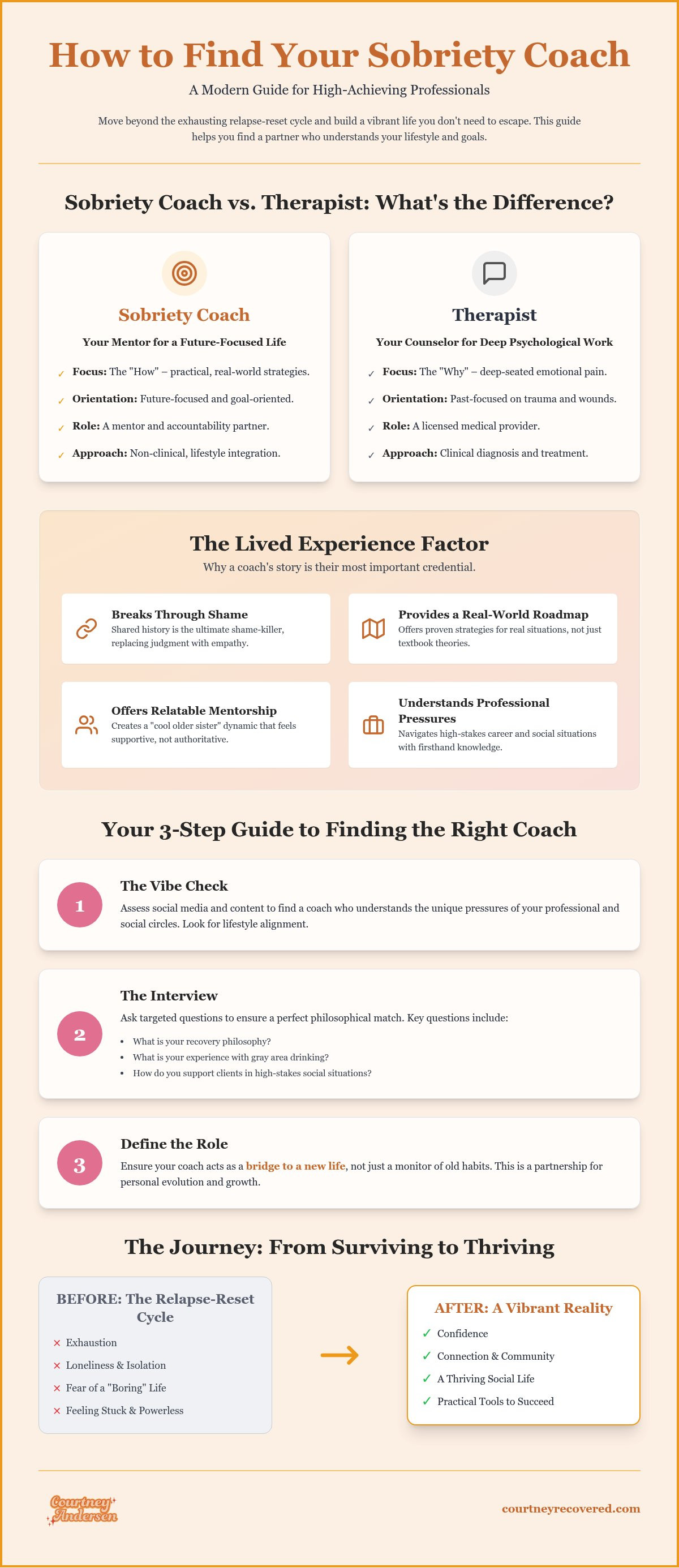
- Learn how sobriety coaching serves as a proactive, future-focused partnership that differs from the clinical, past-oriented nature of traditional therapy.
- Discover how to find a sobriety coach who passes the social media vibe check and understands the unique pressures of your professional social circles.
- Understand why a coach's lived experience is the ultimate tool for breaking through shame and moving past the fear that life without booze will be boring.
- Master the interview process by asking specific questions about recovery philosophy and experience with gray area drinking to ensure a perfect lifestyle match.
- Identify how the right coach acts as a bridge from the exhausting relapse-reset cycle to a vibrant, optimistic reality you actually enjoy.
What is a sobriety coach and how do they differ from therapy?
You aren't broken. You're just ready for a massive lifestyle upgrade. Many people starting this journey ask, What is a sobriety coach exactly? Unlike a clinical setting that focuses heavily on your past traumas or childhood wounds, sobriety coaching is a proactive, goal-oriented partnership. It's about where you're going, not where you've been. Think of it as having a mentor who's already walked the path and can show you shortcuts to a life you don't actually need to escape.
Therapy is incredible for processing deep-seated emotional pain, but it often leaves you hanging when Friday night rolls around, and you're staring at a cocktail menu. Coaching bridges clinical treatment and your actual, messy, real-world social life. It's built on future-focused action. We aren't here to diagnose you with a disorder or keep you stuck in a "patient" mindset; we're here to give you the tactical roadmap to stay dry while still being the life of the party. Coaches act as mentors and fierce accountability partners, not medical providers.
The non-clinical advantage for high-performers
High-achieving professional women often feel isolated in traditional recovery rooms. You don't want to sit in a sterile office feeling like a case study. You want personal evolution. This model is especially powerful for those navigating gray area drinking, where you're still "successful" on paper but losing the internal battle. When you're learning how to find a sobriety coach, look for someone who understands that your career and social standing are parts of your identity you want to keep. We focus on removing the stigma so you can focus on your growth.
When to choose a coach over a therapist
If you need to unpack the "why" behind your drinking on a deep psychological level, a licensed therapist is your best bet. But if you need to know "how" to survive a high-stakes wedding sober or how to tell your boss you're skipping the wine pairing at dinner, you need a coach. Coaching provides immediate, real-time accountability that a weekly therapy hour just can't match. Many of my clients find that combining the two creates a holistic recovery approach that covers both the heart and the habit. When you figure out how to find a sobriety coach who fits your lifestyle, you're investing in a designer for your new life, not just a counselor for your old one.
The Lived Experience Factor: Why your coach’s story matters
When you're looking for a sobriety coach, the most important credential isn't a certificate on a wall. It's the "I've been there" look in their eyes. Clinical settings often make you feel like a patient to be managed, but a coach with lived experience is a peer who's already cleared the hurdles you're staring down. This shared history is the ultimate shame-killer. It's much harder to feel like a failure when you're talking to someone who has navigated the same professional social pressures and come out the other side with a life that's actually better than before.
The way a coach uses their history to guide you is part of what sets coaching apart from therapy. While a therapist might offer a textbook explanation for a craving, a coach gives you a real-world roadmap for surviving a three-hour networking event without a drink in your hand. This creates a "tough love" dynamic that works because it's rooted in reality, not theory. It's the difference between a doctor telling you to exercise and a gym partner who actually knows how heavy the weights feel. They can call you out on your excuses because they've used those same excuses themselves.
Finding a mentor, not just a monitor
Forget about the sterile vibe of drug tests and clinical monitoring. You need a mentor who cares more about your happiness than your compliance. The "cool older sister" dynamic is vital because it shifts the energy from authority to relatability. When your coach can predict your triggers before you even feel them, it's because they've felt that exact same hollow sensation at 5:00 PM on a Tuesday. They aren't just watching you; they're showing you how to build a life you actually enjoy living. This connection helps you move past the "alcoholic" label and into a space of personal evolution.
Vetting for professional and lifestyle alignment
Your career and social stakes are high. You shouldn't have to explain why skipping the company retreat's wine tasting feels like a professional risk. When researching how to find a sobriety coach, prioritize someone who views sobriety as a massive gain, not a restrictive loss. Look for a mentor who radiates vibrant optimism. If their life looks boring or somber, they aren't the right match for you. You want someone who celebrates the freedom of a clear head and a vibrant social life. If you're ready for that kind of personalized support, exploring 1:1 sobriety coaching can help you find the right fit.
Where to look: Navigating the world of sobriety coaching
Stop scrolling through those dusty, clinical directories that look like they haven't been updated since 1995. When you're figuring out how to find a sobriety coach, look where the life is. Modern recovery advocates don't hide behind sterile hospital walls; they're out in the world, living vibrantly and sharing their journey openly. You want to find someone whose lifestyle actually looks like something you'd want to emulate. If their online presence feels somber or overly corporate, they probably won't get your need for a life that's both sober and exciting.
Social media is your best friend for a "vibe check." It's the most honest window into a coach's personality and recovery philosophy. Look for someone who shares practical, everyday tools rather than just inspirational quotes. You should also check for published resources like the Sober Vibes Book or a tangible Sober Toolkit. These aren't just products; they're proof of a proven method. A coach who has taken the time to codify their approach into a structured system is far more likely to help you achieve lasting results than someone who is just "winging it" based on vibes alone.
Online vs. In-person coaching: What works in 2026?
The digital age has completely transformed how we access help. For high-performing professionals, online sobriety support is often the superior choice. It fits seamlessly into a packed schedule, giving you the accountability you need without the commute. Virtual coaching also offers privacy and discretion that are vital when you're navigating professional circles. You can connect with a world-class mentor from the comfort of your home, keeping your personal evolution your business and no one else's.
Red flags to watch out for in your search
As you learn how to find a sobriety coach, stay alert for "miracle" workers. If someone promises an instant cure or claims to provide medical results without a license, run the other way. Sobriety is a journey, not a magic trick. You should also be wary of coaches who lack clear boundaries or structured programs like Stop Starting Over. A "one-size-fits-all" approach is another major red flag. Your life, your career, and your relationship with alcohol are unique; your roadmap to freedom should be just as personalized.
The Sobriety Coach Interview: Questions to find your match
You've done the research and narrowed down your list. Now it's time to take the wheel. Unlike a medical referral where you're assigned a provider, learning how to find a sobriety coach is about interviewing for a partnership. You are the CEO of your recovery, and you're looking for the best possible consultant to help you scale your life. This conversation is your chance to see if their energy matches your ambition and if their "tough love" feels like a supportive push or a clinical weight.
Start by asking about their personal recovery philosophy. Do they lean heavily on 12-step traditions, or do they offer a non-12-step, lifestyle-based approach? Neither is objectively better, but the fit must align with your values. Next, ask about their experience with high-functioning or gray-area drinking. You need a mentor who understands that you aren't looking for a "rock bottom" story; you're looking for an exit ramp from a cycle that's keeping you from your full potential. Ask for a breakdown of their Sober Toolkit and what practical resources they provide for the hours between your sessions.
Availability is another non-negotiable. Real life doesn't happen in a neat 50-minute hour once a week. Ask if they offer "in-the-moment" support via text or voice notes for those high-pressure social situations. Finally, ask how they handle slips. You want a coach who uses the Stop Starting Over mindset, viewing a relapse as vital data rather than a reason for shame. If you're ready to stop the endless interview process and start your evolution, explore 1:1 sobriety coaching to see if we're the right match.
The "Vibe Check" questions
Beyond the basics, you need to know if they actually get your world. Ask them: "How do you help clients navigate social events like weddings or high-stakes bachelorette parties?" Their answer will tell you if they focus on hiding away or thriving in public. Ask if they view sobriety as a lifestyle gain or a restrictive loss. You want someone who celebrates the vibrant reality of a clear head. Make sure they offer structured programs rather than aimless chatting; you're paying for a roadmap, not a pen pal.
Logistics and commitment
Most coaching engagements last between three and six months to truly rewire your habits. Ask about the balance of 1:1 time versus access to a broader community like the Sobriety Circle. Setting clear expectations for communication between sessions ensures you never feel isolated when a trigger hits. As you learn how to find a sobriety coach, these logistical details provide the structure you need to feel safe and supported in your new lifestyle.
Ready to stop starting over? Why Courtney Andersen is the bridge
You've learned how to find a sobriety coach who understands your world, but now you need to know why this specific bridge is the one that actually leads to freedom. Many traditional programs focus on "monitoring" you, relying on drug tests or clinical check-ins that feel like a punishment. At Courtney Recovered, we don't just check boxes. We care about your evolution. Our approach is vibrantly optimistic and deeply empathetic because we've been exactly where you are. We focus on lifestyle gains rather than restrictive losses, moving you away from the "patient" mindset and toward a life you actually enjoy.
Our 1-on-1 sobriety coaching provides the customized roadmap you've been missing. It's the difference between a generic map and a personal GPS that knows exactly where your specific roadblocks are. While the individual sessions provide deep, personalized strategy, the Sobriety Circle offers collective momentum. You'll also have the Sober Toolkit at your fingertips, giving you tangible resources to navigate daily life without the constant urge to escape it. When you're figuring out how to find a sobriety coach, you're really looking for a mentor who provides the tools to make your new reality sustainable.
Moving from Day 1 to "The After"
Breaking the cycle for good takes more than willpower; it takes a new identity. Our structured programs, like Stop Starting Over, are designed to move you past the early struggle and into a space of true vibrancy. We focus heavily on life after getting sober, helping you rediscover who you are when you aren't numbing out. Recovery isn't a life sentence of boredom; itis an invitation to finally show up for your own vibrant reality. We help you build that reality one social event and one professional win at a time.
Your next step forward
Waiting for a "rock bottom" is a dangerous game you don't need to play. You don't have to lose everything to decide you deserve more. If you're tired of the mental gymnastics of gray area drinking and the exhaustion of the reset cycle, it's time to take a real step. Booking your first discovery call is the simplest way to see if we're a vibe match. You've spent enough time trying to figure this out in isolation. You don't have to do this alone anymore; let's build a life you're proud of together.
Your vibrant life is waiting for you
You've spent enough time stuck in the exhausting loop of the relapse-reset cycle. Now you have the tactical roadmap for how to find a sobriety coach who actually gets your professional lifestyle and social stakes. Remember, finding a mentor is about a vibe match; you need someone who sees your evolution as a massive gain, not a somber loss. By focusing on lived experience and asking the right interview questions, you can skip the clinical noise and find a partner who helps you build a reality you don't need to escape.
As the author of the Sober Vibes Book and the creator of the Sobriety Circle community, Courtney Andersen specializes in helping high-performing women navigate gray-area drinking and professional recovery. You don't have to navigate the social pressure of weddings or networking events alone anymore. It's time to stop starting over and finally step into "The After."
Book your 1:1 discovery call with Courtney Andersen today and start designing a life that feels as good as it looks. You're ready to finally show up for your own vibrant reality.
Frequently Asked Questions
Is a sobriety coach the same as a sponsor in AA?
A sobriety coach is a professional mentor, while a sponsor is a volunteer peer within the 12-step tradition. While both offer support, a coach provides a structured, goal-oriented partnership focused on your specific lifestyle and career goals. You're paying for professional accountability and a customized roadmap, whereas a sponsor guides you through a specific program for free. Coaching often appeals to those seeking a non-clinical, future-focused approach to personal evolution.
Can a sobriety coach help me if I haven’t gone to rehab?
Absolutely. You don't need to hit a "rock bottom" or attend inpatient treatment to benefit from coaching. Many of my clients are gray area drinkers who are still successful on paper but want to break the cycle of using alcohol as an escape. Coaching acts as a bridge to a vibrant social life, providing the tools you need to stay dry in high-stakes professional and social circles without ever entering a clinical facility.
How much does it typically cost to hire a sobriety coach in 2026?
Industry rates for individual coaching sessions in 2026 generally range from $75 to $300 per hour, with many specialized professionals charging between $100 and $175. Monthly retainer packages, which often include support between sessions, typically range from $800 to over $3,000. When you're researching how to find a sobriety coach, remember that you're investing in a personalized lifestyle designer who helps you save money on expensive booze and lost, hungover weekends.
What happens if I relapse while working with a coach?
We treat a relapse as vital data, not a reason for shame or "firing" you. My Stop Starting Over philosophy focuses on identifying the specific triggers that led to the slip so we can adjust your strategy. Relapse rates for individuals in recovery can range from 40% to 60%, according to WisHope Recovery data, but working with a coach provides the immediate accountability needed to get back on track quickly. We use it as a learning moment for your long-term evolution.
Do sobriety coaches offer medical advice or detox services?
No, sobriety coaches are not medical providers and do not offer detox services or in-patient rehabilitation. Our work is strictly non-clinical and focused on lifestyle, mentorship, and accountability. If you're experiencing severe physical withdrawal symptoms, you must seek professional medical help or a detox facility first. Once you're medically stable, a coach can step in to help you build the vibrant, connected reality you deserve through practical tools and community support.
How long do most people work with a sobriety coach?
Most clients find that a commitment of three to six months is the sweet spot for truly rewiring habits and building a sustainable lifestyle. This timeframe allows us to navigate several "firsts," such as your first sober holiday, wedding, or high-pressure work event. Some people continue longer through community programs like the Sobriety Circle to maintain their momentum and stay connected to a vibrantly optimistic group of like-minded women who value growth over perfection.
Can I work with a sobriety coach while still seeing a therapist?
Yes, and many people find this combination to be the ultimate power move for their recovery. While a therapist helps you process past traumas and deep-seated emotional wounds, a coach focuses on your future-focused actions and tactical lifestyle tools. Think of your therapist as the one who handles the "why" and your coach as the one who handles the "how" of surviving a Friday night without a drink. They are perfectly complementary for a holistic approach.
How do I know if I’m "ready" for a coach or if I need a higher level of care?
If you're physically dependent on alcohol and at risk for dangerous withdrawal symptoms, you need a medical detox or inpatient rehab before starting coaching. However, if you're safe to quit but find yourself stuck in a loop of "starting over" every Monday, you're likely ready for a coach. When you learn how to find a sobriety coach, you're looking for a mentor to help you transition from just surviving to truly thriving in your daily life.
I want you to feel sober NOT boring!
Kickstart your sobriety with my free 2-day video workshop series to master your sober mindset and have FUN in your sobriety journey!


